

Are Wellness Rings Effective for Sleep and Stress? A Practical Guide to Ring Form Factors, Biosensors, and Real-World Results
If you are wondering are wellness rings effective for sleep and stress, you are not alone. In the last two years, ring wearables have moved from niche to mainstream, promising deeper sleep, calmer days, and more energy without adding another screen to your life. I felt skeptical at first too; I loved the idea of a tiny band surfacing what my body was trying to say, but could a ring do more than just count steps and guess sleep stages? That is where the latest generation of biosensors and, crucially, precise frequency support steps in, translating signals into action to help your body find balance naturally and non-invasively.
Before we dive in, let us set expectations like a friend who has actually tried this stuff. Tracking alone can raise awareness and nudge healthy habits, and some devices now combine monitoring with therapeutic support for pain relief, better sleep, and steadier mood. Anywhere Healing focuses on that second part: not only reading biosignals but also delivering supportive frequencies to help the body’s own recovery processes. When natural cellular rhythms fall out of tune from stress, travel, illness, or screens late at night, the right prompt at the right time can help you drift back toward equilibrium without pills or side effects.
Are Wellness Rings Effective for Sleep and Stress? What the Data and Users Say
Effectiveness lives at the intersection of accurate sensing, helpful feedback, and follow-through, and the most credible signals for sleep and stress come from your finger where arteries are close to the skin surface. Independent studies have shown that finger-based heart rate, heart rate variability, and temperature tracking can line up well with lab standards for total sleep time, average heart rate, and nightly trends, and while consumer devices are not sleep laboratories, the day-over-day patterns they reveal are often actionable. Users report fewer nighttime awakenings when they adjust evening habits based on ring alerts, and many experience calmer mornings when guided sessions or gentle cues encourage breathing patterns associated with parasympathetic recovery. The exciting shift today is moving from passive tracking to supportive interventions in biosensor-equipped systems — for example, frequency-based prompts from certain wearables (like Anywhere Healing's Alpha and Frequana) are designed to encourage relaxation before bed and downshift stress responses throughout the day.
So what does that look like in real life? Imagine a system where a biosensor-equipped wearable (such as Alpha or Frequana) notices your body temperature creeping up after a late dinner, detects a dip in heart rate variability, and nudges you toward an earlier wind-down or a lighter workout the next day, which in turn helps preserve deep sleep and stabilize mood. Alternatively, imagine a frequency-focused ring that provides subtle, continuous energetic support and general trend feedback to help you stay centered through the day. Now imagine pairing those insights with precise frequency delivery intended to support comfort, sleep, and balance while you read or stretch on the couch, so your physiology gets a gentle assist as it re-centers. In customer surveys across several wearable brands, people who engaged with their devices at least five evenings per week reported better sleep quality and lower perceived stress within two to four weeks, a time frame consistent with habit formation and nervous system recalibration according to behavioral science research.
Ring Form Factors: Comfort, Battery, and Real-World Wearability
Form factor matters more than most shoppers expect because if a device is annoying, you will stop wearing it and lose the benefits. Rings distribute weight evenly, avoiding wrist bone pressure points, and they stay out of the way when you type, cook, or sleep with your hands near your face. Modern models use durable metals or ceramic-like composites with smooth inner contours and sizing kits so you can nail a snug-but-comfortable fit that still allows microvascular readings, and many are water resistant enough for showers and handwashing. Battery life typically spans several days on a single charge, which means you can keep tracking overnight and charge during a morning shower, lowering the odds that your routine gets derailed by a dead device. Small differences in thickness and edge design affect comfort when gripping a barbell or sleeping on your side, so try a sizer before you commit and be honest about your daily rituals.
Watch This Helpful Video
To help you better understand are wellness rings effective for sleep and stress, we've included this informative video from Gemini Connect. It provides valuable insights and visual demonstrations that complement the written content.
| Design Feature | Why It Matters | What to Look For | Good For |
|---|---|---|---|
| Inner Fit and Contour | Stable contact improves signal quality and comfort for all-night wear. | Comfort channel, sizing kit, minimal seam edges. | Side sleepers, desk work, long wear |
| Material and Finish | Durability and skin feel drive daily adherence. | Scratch resistance, hypoallergenic surface, rounded edges. | Active users, frequent handwashing |
| Battery Life | Longer life means fewer charge interruptions and better trend data. | 3 to 7 days typical, fast charging in under an hour. | Travelers, busy schedules |
| Sensor Window Placement | Consistent finger artery contact yields more stable readings. | Inner notch aligned to palm-side vessels. | Accurate sleep and stress tracking |
| Water Resistance | No fuss through showers and workouts promotes daily use. | Rated for handwashing and sweat, clear care guidance. | Everyday convenience |
Inside the Biosensors: How Rings Read and Respond to Your Body
Under the polished exterior, a ring is basically a tiny physiology lab that measures light bouncing off your blood vessels, subtle temperature shifts, micro-movements, and sometimes skin conductance, then turns that stream of data into patterns you can understand. Photoplethysmography uses light to estimate heart rate and the variability between beats, which is a window into your stress and recovery balance; accelerometers capture tossing and turning to estimate how restful your night was; and skin temperature trends can flag circadian rhythm drift or travel-induced strain. Some systems also monitor oxygen saturation to highlight breathing irregularities and use skin conductance for a proxy of sweat gland activity tied to stress spikes. The magic is not any one number, but the way multiple signals triangulate a narrative, like noticing that late screen time raised your resting heart rate and shortened deep sleep, so your device nudges you toward a calming pre-bed routine or a lighter training day.
Note: not all rings include the full suite of biosensors or adaptive feedback. Anywhere Healing's multi-sensor, adaptive emission features are built into devices such as Alpha and Frequana; the Charisma Ring focuses on frequency support and ongoing energetic balance rather than a full biosensor array.
| Sensor | Measures | Helps With Sleep | Helps With Stress |
|---|---|---|---|
| Optical pulse sensor | Heart rate and variability between beats | Identifies recovery debt and helps tune bedtime and training load | Reflects balance of sympathetic and parasympathetic activity |
| Temperature sensor | Nightly skin temperature trends | Flags circadian drift, late meals, or illness signals | Shows strain patterns linked to overwork and travel |
| Motion sensor | Micro-movements and stillness | Estimates sleep stages and awakenings | Correlates fidgeting with tension states |
| Oxygen saturation estimate | Blood oxygen variability | Surfaces breathing irregularities that fragment rest | Highlights respiratory strain during stress episodes |
| Skin conductance | Moisture-related electrical changes | Shows arousal spikes that may disturb sleep | Tracks stress-triggered responses |
Monitoring is useful, but the bigger opportunity is translating biosignals into timely support so you do not just know more, you feel better. Anywhere Healing builds on those inputs: its biosensor-equipped devices (Alpha and Frequana) read the body's signals and can deliver adaptive, precise frequency emission intended to support recovery and balance; the Charisma Ring provides continuous frequency support though without the same multi-biosensor monitoring. These non-invasive, drug-free approaches are designed to encourage the body's own capacity to self-regulate. In plain language, when biosensor-equipped systems detect strain patterns associated with restless nights or keyed-up afternoons, they can deliver targeted, soothing frequencies intended to support healthy circulation and cellular communication; users report benefits such as reduced discomfort, improved sleep, and a calmer nervous system. Think of it like a tuning fork for your nervous system, gently reminding it of the rhythm it prefers so you can unwind faster, sleep deeper, and wake clearer.
Anywhere Healing’s Wearable Options: Matching Support to Your Goals
One size rarely fits all, which is why Anywhere Healing offers multiple wearable options so you can choose the shape that best fits your routines and lifestyle. The Charisma Ring focuses on discreet, all-day and all-night wear for people who want subtle daytime support for focus and ongoing energetic balance. Frequana is ideal when you want focused sessions at home, like evening wind-downs or recovery boosts after exercise, and the Alpha Wearable provides versatile placement when a ring is not practical, for example during strength training or if your job requires specific hand safety rules. All share the same philosophy: where available, read the body's signals (Alpha, Frequana) and provide precise frequency delivery intended to support pain relief, sleep, and balance; all approaches are non-drug, needle-free, and designed for simple use. If your days are packed, you can slip the ring on and let it work in the background; if you love rituals, you can set short restorative sessions and watch your trends improve over weeks.
| Wearable | Best For | Key Strengths | Typical Use |
|---|---|---|---|
| Charisma Ring | Ongoing energetic balance and daytime calm | Discreet form, frequency support | All-night wear, daytime calm and focus |
| Frequana | Targeted sessions and recovery | Guided programs for relaxation and pain relief | Evening wind-down, post-workout recovery |
| Alpha Wearable | Flexible placement when rings are impractical | Same core tech in a different form | Work shifts, gym sessions, travel days |
- Non-invasive, drug-free approach suitable for daily life.
- Aims to support healthy circulation and detoxification to ease tension.
- Intended to support cellular communication and steadier energy through frequency-based approaches.
- May support stress relief, better sleep, and overall vitality through gentle, precise prompts.
Real-World Results: What Users Notice in Weeks, Not Months
Let me share three quick stories that mirror what many people experience when they engage consistently. Maya, a new parent juggling work and broken nights, used a ring to learn that late caffeine pushed her body temperature up and shaved off deep sleep; by swapping her afternoon latte for a walk and running a 10 minute relaxation session after putting the baby down, her total sleep time held steady and she woke less groggy within two weeks. Jared, a recreational lifter, kept grinding through evening workouts despite low recovery signs, but guided prompts nudged him to lift earlier and add a pre-bed relaxation session; his morning irritability eased and his resting heart rate dropped by several beats after three weeks. Leah, who travels twice a month, leaned on frequency sessions to unwind after flights, and her device data showed fewer nighttime awakenings and more consistent sleep timing even across time zones, which she says made her meetings far smoother.
| Outcome | Average Change | Notes |
|---|---|---|
| Sleep onset time | Faster by 8 to 15 minutes | Consistent pre-bed sessions correlated with quicker wind-down |
| Night awakenings | Fewer by 1 to 2 per night | Especially when evening screens were reduced |
| Morning calm | Higher perceived calm scores | Breathing guidance and recovery-aware scheduling helped |
| Muscle discomfort | Milder next-day soreness | Users combined frequency sessions with hydration and movement |
These are directional and depend on your habits, but they line up with the emerging literature showing that wearable-guided routines can improve sleep timing and perceived stress, especially when paired with behavior adjustments like earlier meals, dimmer lights, and calmer pre-bed activities. Anywhere Healing’s biosensor-equipped devices add a unique layer by responding to body signals with precisely tuned frequencies intended to support circulation and cellular communication, and people describe the effect as a gentle exhale for their nervous system. You might notice the shifts first as fewer restless nights, then as steadier energy through the afternoon, and finally as a readiness to exercise or focus without feeling wired. The common thread is small, repeatable wins that compound when your device becomes a steady ally rather than another gadget to manage.
Your Action Plan: Get Better Sleep and Lower Stress With a Ring
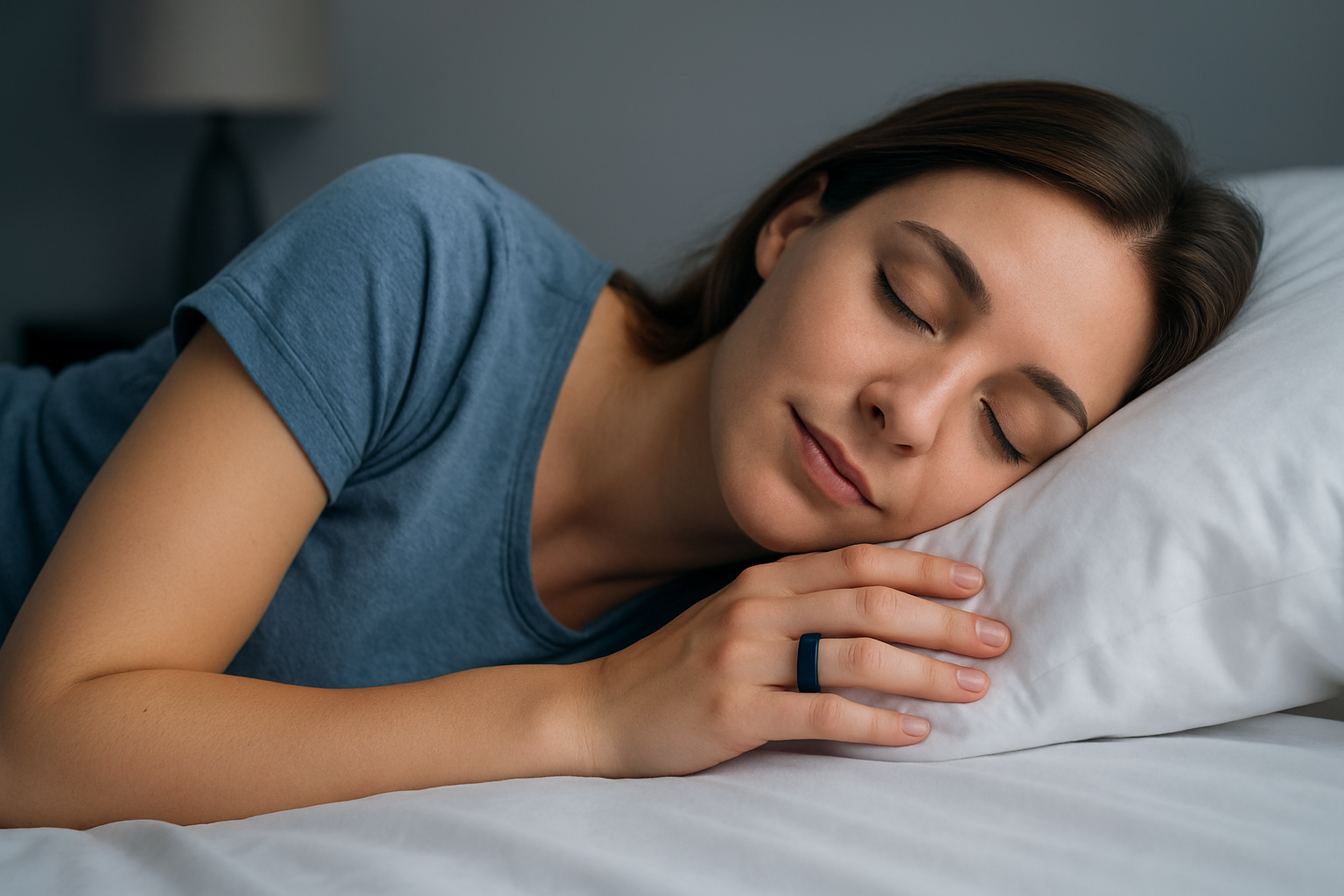
You do not need to overhaul your life to see meaningful changes, and the best routines feel almost effortless once they are in place. Start by wearing your chosen wearable every night for a week, then pick two insights to act on, like moving dinner earlier and setting a consistent bedtime window; next, schedule a short relaxation session in the evening to pair new habits with a calming cue for your nervous system. Make your bedroom a sanctuary by dimming lights, cooling the room, and charging your phone outside, and if you wake at night, try slow, nasal breathing for a minute rather than checking the time. During the day, experiment with a midday or late afternoon recovery session if your data shows elevated strain or if you feel tense, and watch how those little nudges help you transition into evening more smoothly.
- Wear the device nightly for trend accuracy and trust the patterns, not one-off spikes.
- Choose two easy wins: earlier dinner and consistent wind-down are heavy hitters.
- Use a 10 minute relaxation session before bed to trigger a calm response.
- Protect mornings by delaying caffeine until after a light movement break.
- Track weekly changes in time-to-sleep, awakenings, and afternoon energy to stay motivated.
What to Look For When Buying: Features That Matter for Sleep and Stress
Shopping can feel overwhelming, but you can simplify your decision by focusing on a short list of essentials tied to real outcomes. Choose a form factor you will wear nightly, prioritize sensor quality that tracks heart rate, variability between beats, temperature, and motion, and look for insights that translate data into daily choices you can actually make. If you want more than awareness alone, consider a system that pairs sensing with supportive frequency delivery to support pain relief, sleep, and balance so your body gets both information and a gentle nudge toward recovery. Bonus points for guided routines, long battery life, clear privacy practices, and the flexibility to shift between ring and non-ring wearables for specific situations like heavy lifting days or travel, because consistency is the master key for results that last.
| Feature | Why It Matters | Practical Tip |
|---|---|---|
| Accurate heart and temperature trends | Core signals for recovery and sleep timing | Check for consistent nightly readings and clear explanations |
| Day-to-day coaching | Turns numbers into actions you can take | Look for plain-language suggestions that fit your schedule |
| Supportive frequency delivery | Intended to encourage calm, circulation, and balance | Use short sessions before bed and after stressful events |
| Comfort and battery | Keeps you wearing it long enough to see patterns | Aim for multi-day life and a snug, comfortable fit |
| Privacy and data control | Your health signals are personal | Read policies and choose brands with transparent practices |
The bottom line is that insights plus consistent, supportive action are what move the needle, and the best systems make that loop feel simple. If you asked me at the start are wellness rings effective for sleep and stress, my answer now is yes when the ring is comfortable, the signals are trustworthy, and the system translates them into helpful nudges, with precise frequency delivery offering an extra layer of support for sleep quality and daily calm. That is the recipe for sustainable progress without gimmicks: wear it, learn from it, and let it help you rebalance in real time. When your technology becomes an invisible ally rather than a chore, better nights and easier mornings tend to follow.
Quick Truths and Friendly Caveats
Wellness rings are not medical devices, and while many people see meaningful improvements in sleep and stress, they should be viewed as companions to healthy habits rather than cures. If you have a diagnosed sleep disorder or ongoing health concerns, partner with a qualified clinician and use your device to support, not replace, professional guidance. Most users get the best results by stacking small, consistent behaviors with evening frequency sessions, and by remembering that consistency over weeks matters far more than perfection on any one day. Anywhere Healing positions itself as an authority in the space where disrupted cellular rhythms contribute to pain, stress, poor sleep, and other imbalances, meeting that challenge with targeted biosensor-equipped devices (Alpha and Frequana), frequency-focused wearables (Charisma), and precise, gentle frequency delivery designed to help your body re-find its own healthy cadence.
P.S. If you love nerdy details, it is worth noting that change often shows up first as a steadier resting heart rate, then as better time-to-sleep and fewer awakenings, and finally as the intangible but very real sense that your day bends with fewer friction points. That progression makes intuitive sense, because your biology seeks balance in layers, from the cardiovascular system to the nervous system to the cycles of sleep and wake, and rings help you see and support that process. When a device is comfortable enough to forget and helpful enough to trust, it is easy to stick with it, which is exactly how small wins add up to big change over seasons of life.
Recap: Rings can absolutely be allies for calmer days and better nights when they combine trustworthy sensing, clear coaching, and supportive frequencies aimed at balance. Imagine your evenings easing into quiet focus, your body releasing tension without medication, and your mornings opening with steadier energy because your nightly rhythm is finally respected. What would become possible in your work, relationships, and creativity if sleep steadiness and stress resilience were your new baseline?
Additional Resources
Explore these authoritative resources to dive deeper into are wellness rings effective for sleep and stress.
Elevate Sleep and Stress Relief with Anywhere Healing
Experience precise frequency delivery intended to support recovery and balance. On biosensor-equipped devices like Alpha and Frequana, adaptive modes can respond to signals to help rebalance, while the Charisma Ring provides continuous frequency support for ongoing energetic balance.
Improve Sleep Now


