
How Frequency Wearables Can Support Balance and Well-Being
Why a Checklist Matters Before You Start
When you are exploring frequency therapy for pain relief, deeper sleep, and steadier mood, a simple checklist can be the difference between guesswork and real progress. I have seen people try “everything” then declare nothing works, when in reality they just needed a plan that matched their body’s timing and feedback. Wearable frequency therapy can be subtle at first, then surprisingly powerful once you lock in the right settings and routine. That is why the steps you take before you begin matter just as much as how you use the device itself. You are not only wearing a gadget; you are inviting your nervous system into a calmer, more coherent rhythm.
Anywhere Healing builds around that idea. When natural cellular rhythms feel out of step, your body can signal it through pain, stress, restless nights, or daytime fatigue. Anywhere Healing’s wearable devices use biosensors to inform adaptive frequency programs that aim to support relaxation, recovery, and sleep. And because the approach is non-invasive and drug-free, you can fold it into your life without relying on willpower alone. Think of this guide as your friendly, step-by-step co-pilot: you will set a baseline, choose the right device, run sessions with clarity, and verify results with both how you feel and what the numbers say.
Pre-Work Checklist
Before touching a wearable, get your foundation right. This prep does not take long, but it prevents false starts and helps you spot wins faster. You will define outcomes, collect a quick baseline, tailor the device to your goals, and set expectations that leave room for your body to adapt. The best part is that this pre-work turns a vague hope like “sleep better” into a specific target such as “fall asleep 20 minutes faster and wake twice less per week.” With clarity up front, your device’s precise frequency delivery has a clear job to do.
Watch This Helpful Video
To help you better understand 432 hertz frequency, we've included this informative video from PowerThoughts Meditation Club. It provides valuable insights and visual demonstrations that complement the written content.
- Name your one primary outcome. Pick the change that would impact your life the most: reduce back pain to a tolerable level, fall asleep faster, wake up with steadier energy, or feel less on edge by midday.
- Capture a fast baseline. Jot down average pain level, minutes to fall asleep, night awakenings, and daytime energy on a 1 to 10 scale. If you track heart rate variability (HRV) or resting heart rate with a compatible tracker or if your device/app reports them, note last week’s averages.
- Map your daily rhythm. Circle three anchor moments you never miss: after brushing teeth, lunch break, and pre-bed reading. You will attach mini-sessions to these so consistency becomes automatic.
- Select the wearable that fits your aim. Use the table below to match goals to Anywhere Healing devices; entries reflect each product's sensor design and typical uses.
- Set realistic expectations. Early shifts are often subtle: easier exhale, a calmer jaw, a little less tossing at night. Over two to four weeks, the compounding adds up.
- Check any safety considerations. If you have questions related to implanted medical hardware or complex conditions, consult your clinician. Keep hydration consistent and avoid extreme heat exposure during sessions.
| Device | Primary Target | How It Helps | Best For | Typical Wear Time | Standout Feature |
|---|---|---|---|---|---|
| Frequana | Stress relief and balanced mood | Uses tri-sensor input to inform adaptive frequency programs that support calm and focus | Daily stress, focus slumps, emotional reactivity | 15 to 45 minutes per session | Tri-sensor system with AMOLED display; adaptive, biosensor-driven sessions (MSRP $649) |
| Alpha Wearable | Sleep quality and recovery | Pairs dual biosensors (infrared + bio-temperature) with app-guided sessions designed to support sleep and recovery | Difficulty falling asleep or staying asleep, jet lag | 20 to 60 minutes pre-bed | Wrist/band design with dual biosensors (infrared + bio-temperature); app integration (MSRP $399) |
| Charisma Ring | Daily vitality and discreet support | Titanium ring with dual biosensors (infrared emitter + green PPG sensor) for all-day wear; supports adaptive frequency programs for daytime vitality | Desk-heavy days, morning fog, post-exercise recovery | Intermittent wears of 10 to 30 minutes | Discreet titanium ring design with targeted biosensors for on-the-go use (MSRP $199) |
Two quick stats underscore why a structured start matters. Chronic pain affects roughly one in five adults globally, and tens of millions of people in the United States report ongoing sleep difficulties. Research and surveys from public health agencies such as the NIH (National Institutes of Health) and the CDC (Centers for Disease Control and Prevention) echo what you likely feel: stress loads are high, recovery windows are short, and most people juggle several issues at once. A clear, data-light plan gives you agency without turning your day into a lab experiment. You will keep the notes you need and ignore the noise.
| Week | Main Goal | Daily Session Length | Focus | Notes |
|---|---|---|---|---|
| Week 1 | Gentle introduction | 10 to 15 minutes | Learn sensations, observe calm signals | Hydrate well; record baseline metrics |
| Week 2 | Consistency | 15 to 25 minutes | Attach to daily anchors | Note any sleep onset changes |
| Week 3 | Personalization | 20 to 35 minutes | Adjust timing and intensity | Add a short midday reset if needed |
| Week 4 | Validation | 25 to 45 minutes | Measure outcomes against baseline | Decide which routine to keep or refine |
Execution Checklist: Deliver Frequency Therapy with Precision
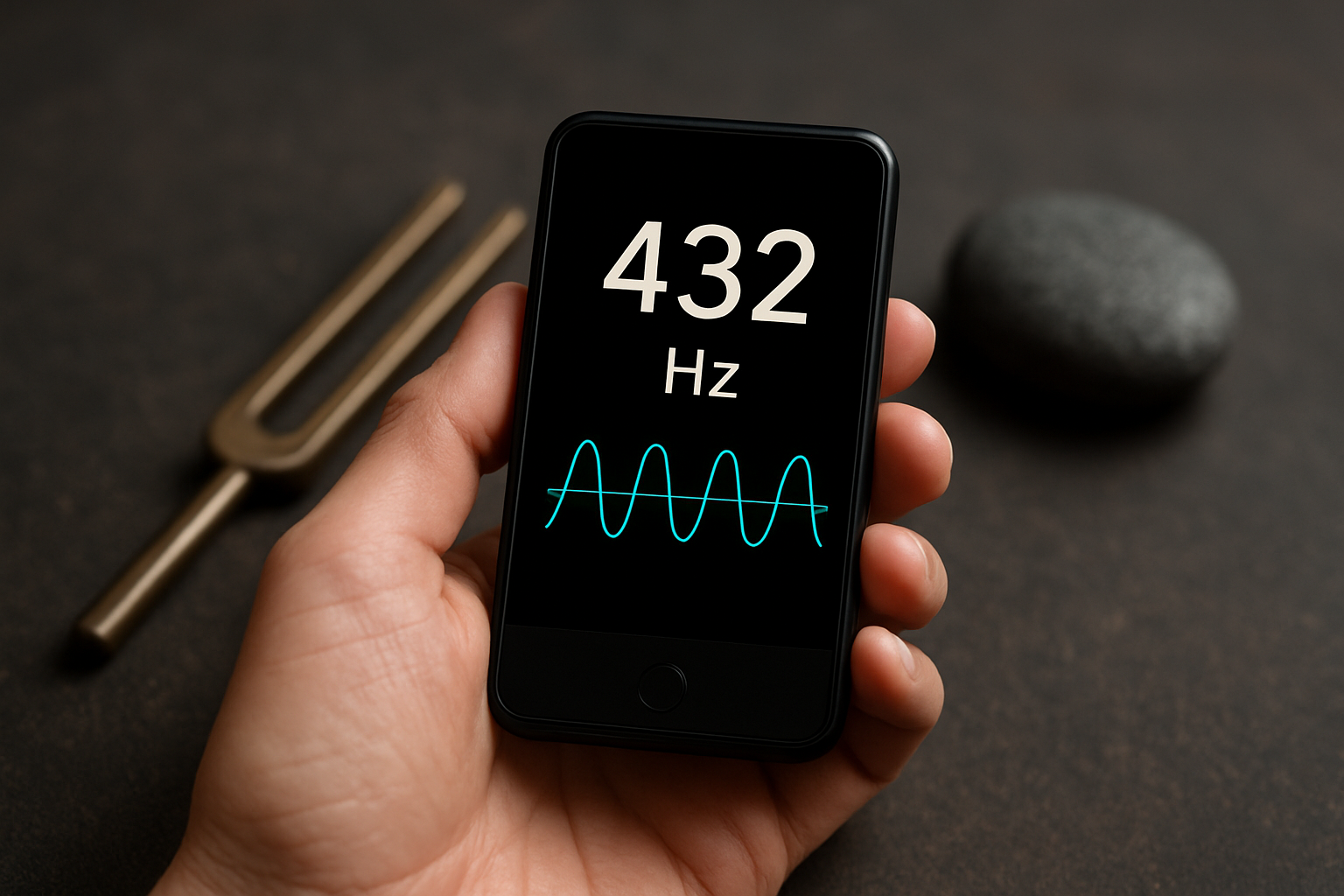
This is where you turn intention into felt change. Anywhere Healing devices use advanced biosensors to read your current state and deliver adaptive frequency programs that support relaxation, circulation, and cellular communication. You will start small, listen closely, and let the body’s feedback set the tempo. Think of it like tuning a guitar: tiny turns on the peg produce big shifts in tone. When you apply selected frequency programs consistently and with care, your system often moves from static to signal, from noise to resonance.
- Fit the device correctly. Ensure contact points are clean and comfortably snug. Too loose reduces feedback sensitivity; too tight distracts you.
- Run a quick biosensor scan. Let the wearable read your body’s signals so the session can start from your current state, not last week’s average.
- Start low and slow. Begin with the shortest session length from your ramp plan. Notice breath depth, jaw tension, and shoulder drop.
- Attach sessions to anchors. Morning grounding, afternoon reset, and pre-bed wind down. Repetition carves a groove your nervous system recognizes.
- Layer in breath cues. Inhale for four, exhale for six. Longer exhales invite parasympathetic calm and can amplify frequency effects.
- For sleep, dim early. Lower lights an hour before bed, finish large meals two to three hours earlier, and run your pre-bed session as scheduled.
- For pain, target timing. Use a short session before activities that usually flare symptoms, and another brief session after for recovery support.
- Keep volume gentle if you pair music. If you enjoy listening to music tuned at 432 Hz as a complement, keep it soothing and low. Let resonance be the guide, not loudness.
- Hydrate and move. Light walking or stretching during the day supports healthy circulation and detoxification, two pillars Anywhere Healing emphasizes.
- Note a single sensation each time. Pick one signal to track per day: warmth in the hands, jaw unclenches faster, mind chatter softens.
- Respect micro-breaks. If a session leaves you heavy-eyed or deeply relaxed, give yourself a minute to reorient before driving or complex tasks.
- Adjust by one variable at a time. Change timing or session length or placement, but not all at once, so you actually learn what works.
I like to use a simple three-step loop during execution: run, reassess, refine. Run your chosen session; reassess by asking “What is the smallest positive shift I felt?”; refine by adding two to five minutes or moving the session 30 minutes earlier or later. Anywhere Healing’s adaptive frequency delivery aims to support sleep, pain management, and balance, and pairing this approach with the three-step loop helps because the biosensor feedback helps inform adjustments. Over days, your routine starts feeling less like a routine and more like second nature.
Validation Checklist
Validation is about turning good hunches into credible evidence for yourself. You will blend subjective experience with objective markers, then decide what to keep, tweak, or drop. This is not about perfection or chasing flawless data. It is about checking whether your wearable genuinely helps you sleep deeper, feel less pain, and move through the day with steadier energy. The table below offers a template you can copy into your notebook or a notes app; fill it in once a week, not daily. The goal is a clear signal, not a spreadsheet hobby.
- Measure fewer things, more consistently. Track pain level, sleep onset time, night awakenings, and mood upon waking. Optional: HRV (heart rate variability) and resting heart rate if your device or another tracker provides them.
- Use the same time window. Compare Week 1 Monday to Week 3 Monday, not Monday to Saturday. That keeps work patterns consistent.
- Look for trend lines, not single wins. Two stronger nights out of seven beats one perfect night and six rough ones.
- Ask a partner or friend for observation. “Have I seemed calmer this week?” Outside eyes catch shifts we normalize.
- Run one small split test. For seven days, move your pre-bed session 30 minutes earlier and note the change in sleep onset; switch back the next week and compare.
| Metric | Baseline | Week 2 | Week 4 | Change | Notes |
|---|---|---|---|---|---|
| Pain Level (0 to 10) | ↓ / ↔ / ↑ | Where did it improve or flare? | |||
| Sleep Onset (minutes) | ↓ / ↔ / ↑ | Time from lights-out to sleep | |||
| Night Awakenings (count) | ↓ / ↔ / ↑ | Brief or prolonged? | |||
| Morning Mood (1 to 10) | ↓ / ↔ / ↑ | Refreshed, calm, focused | |||
| Optional: HRV (heart rate variability) | ↓ / ↔ / ↑ | Only if available from your device or another tracker |
Here is a real-world style example that mirrors what many users report. A desk professional with afternoon tension and scattered focus began with Frequana for 15 minutes mid-morning and 20 minutes pre-bed. Week 1 brought a subtle “softer jaw” and fewer afternoon energy dips. By Week 3, sleep onset dropped from 35 minutes to 18, and pain during long meetings fell from a 6 to a 3 on their personal scale. Is that a clinical trial? No. But it is believable progress grounded in a routine and tracked on paper. Your story may look different, but the pattern is similar: steady inputs, clear adjustments, and a nervous system that learns to settle.
Common Misses
Most stumbles come from tiny missteps that are easy to fix. Because frequency therapy feels gentle, people either forget sessions, turn them up too quickly, or skip validation. Use this quick list to sidestep common pitfalls. A few five-minute maintenance habits go a long way, like wiping down contact points, keeping your water bottle nearby, and putting your device where you cannot miss it. When you avoid these misfires, you give the device room to do its work and your body the steady input it needs to recalibrate.
- Expecting overnight miracles. Your nervous system adapts like a muscle. Give it two to four weeks of consistent, gentle sessions.
- Inconsistent placement. Follow placement guidance for your specific device. A small shift often changes how quickly you feel results.
- Turning up too fast. More is not always better. Increase session length in small steps to avoid fatigue.
- Skipping hydration and movement. Light activity and steady fluid intake support circulation and detoxification, which complement frequency work.
- Too much screen time before bed. Blue-rich light can fight your pre-bed session. Dim earlier and consider warmer lighting.
- Juggling multiple variables. Change one thing at a time so you know what actually helped.
- Ignoring daily anchors. Attach sessions to routines you never skip to make consistency automatic.
- Neglecting device care. Clean contact points and charge regularly. Reliable contact equals reliable feedback.
- Not aligning device to goal. For sleep improvement, Alpha Wearable pre-bed is often recommended. For daytime calm, Frequana frequently leads.
- Quitting before a check-in. Hold at least one four-week review using your tracking template to see the bigger picture.
Anywhere Healing was designed to close these gaps. The combination of advanced biosensors, adaptive frequency programs, and multiple wearable options gives you room to personalize while keeping the process simple. The product line highlights consumer wearables alongside higher-end professional equipment and clinician-informed protocols. Most importantly, it stays non-invasive and drug-free, which means you can keep your plan gentle and sustainable rather than intense and short-lived.
Conclusion + CTA
When you prepare well, apply selected frequency programs with care, and validate honestly, frequency wearables become a practical way to feel better in your own body. Imagine the next 12 months with fewer flare-ups, calmer evenings, and wake-ups that feel steady rather than scrambled, because your system has learned a healthier rhythm. What would you do with that reclaimed energy and ease if you could create it on purpose, day after day?
Elevate Balance with Anywhere Healing
Experience adaptive frequency programs designed to support sleep, pain management, and balance as Anywhere Healing’s wearable devices use biosensors to inform personalized sessions paired with the companion app.
Explore Wearables


