

How Biosignal Therapy with Wearable Devices Can Support Sleep, Recovery, and Emotional Balance Naturally
If daily discomfort or restless nights are stealing your energy, you are not alone, and there is a smarter, gentler path worth exploring. Biosignal therapy offers a non-invasive way to read the body’s physiological cues (like heart rate patterns, blood oxygen, and skin temperature) and then nudge them back toward healthy balance using precisely tuned frequencies. In plain English, your body is broadcasting valuable information all the time, and the right wearable can listen in and respond. According to public data, roughly 1 in 5 adults lives with chronic pain, and about 1 in 3 sleeps less than the recommended seven hours. When I first tested a wearable during a week of travel and stress, I noticed something subtle yet powerful. My shoulders unclenched a bit faster after work, and my sleep felt less fragmented. Anywhere Healing builds on this idea with advanced biosensors that interpret your signals and deliver tailored frequencies so you can support stress reduction, emotional balance, improved sleep, and faster recovery. If you are curious whether biosignal therapy can fit your routine, keep reading to see how it works, how to use it well, and how to avoid common mistakes.
Fundamentals
Let’s start with the basics: your body runs on signals. Every heartbeat, every breath, every deep phase of sleep is orchestrated by electrical impulses, ion exchanges, and biochemical messengers. These measurable patterns are called biosignals, and they include heart rate and heart rhythm (captured via optical PPG sensors for HRV), blood oxygen (SpO2), and skin/bio-temperature (measured with infrared sensors). When natural cellular frequencies become disrupted by stress, injury, inflammation, or circadian rhythm drift, you can feel it as increased sensitivity, anxiety, or poor sleep. The autonomic nervous system, often shortened as ANS [autonomic nervous system], toggles between sympathetic fight or flight and parasympathetic rest and digest. If that toggling gets stuck on high alert, sensitivity increases and sleep quality suffers. Biosignal therapy uses safe, low-level informational cues to help restore coherence in these patterns, supporting healthy circulation, cellular communication, and the body’s own recovery processes.
Anywhere Healing positions itself as an authority here because it focuses on the body’s language rather than overpowering it. Its wearables blend advanced biosensors that read the body’s signals with precisely delivered frequency patterns aimed at comfort, calm, and natural recovery. You might see this referred to alongside terms like neuromodulation, microcurrent, or PEMF [pulsed electromagnetic field], all aimed at supporting the nervous system and tissues without drugs or invasive procedures. Early research and user data across the wellness field suggest that frequency-based, sensor-guided approaches can reduce perceived discomfort while improving sleep onset and depth over several weeks. Meanwhile, practical experience shows that consistent routines, daily wear, and gentle lifestyle anchors like light exposure and movement accelerate results. In short, fundamentals are simple: listen to the body, deliver the right cues at the right time, and let physiology do what it was designed to do.
How Biosignal Therapy Works
Think of biosignal therapy like a conversation your wearable has with your body. Step one is sensing: the device measures signals such as HRV [heart rate variability], skin temperature trends, and blood oxygen (SpO2). Step two is interpretation: onboard algorithms look for patterns suggesting stress load, muscular tension, or circadian timing. Step three is response: precise frequencies are delivered to encourage relaxation, ease discomfort, or support sleep architecture, including deeper NREM [non rapid eye movement] and REM [rapid eye movement] phases. With Anywhere Healing wearables, this loop repeats continuously, allowing micro-adjustments as your state shifts throughout the day and night. The result feels less like a jolt and more like a skilled guide helping your system find center again. It is similar to how a metronome entrains a musician to keep time, except the metronome here adapts to your physiology rather than forcing it.
Watch This Helpful Video
To help you better understand biosignal therapy, we've included this informative video from Institute for Science and Spirituality Delhi. It provides valuable insights and visual demonstrations that complement the written content.
In practice, here is how a typical session might unfold. You place the wearable where recommended for the goal you have in mind. The biosensors quietly gather input for several seconds, then the device begins delivering targeted frequencies. Within minutes, you may feel a gentle melting of tension or a calmer breath pattern. Over days, people often notice earlier sleep onset or fewer nighttime wake-ups, paired with lower morning stiffness. Anywhere Healing’s technology supports circulation and cellular recovery, and it is designed to enhance comfort and promote restorative processes. Consider a relatable scenario. You finish a long workday, your back aches, and your mind is buzzing. You clip on the wearable while you stretch and sip water. By bedtime, your ANS [autonomic nervous system] has downshifted, your torso feels looser, and your sleep window opens more easily. The key is not magic, it is good information delivered precisely.
- Sensing: capture HRV [heart rate variability], skin temperature, and blood oxygen (SpO2).
- Interpreting: identify stress signatures, tension patterns, and sleep timing cues.
- Responding: deliver tuned frequencies to ease discomfort and settle the nervous system.
- Adapting: refine output in real time as your state changes.
- Tracking: reflect trends so you can see progress over days and weeks.
Best Practices
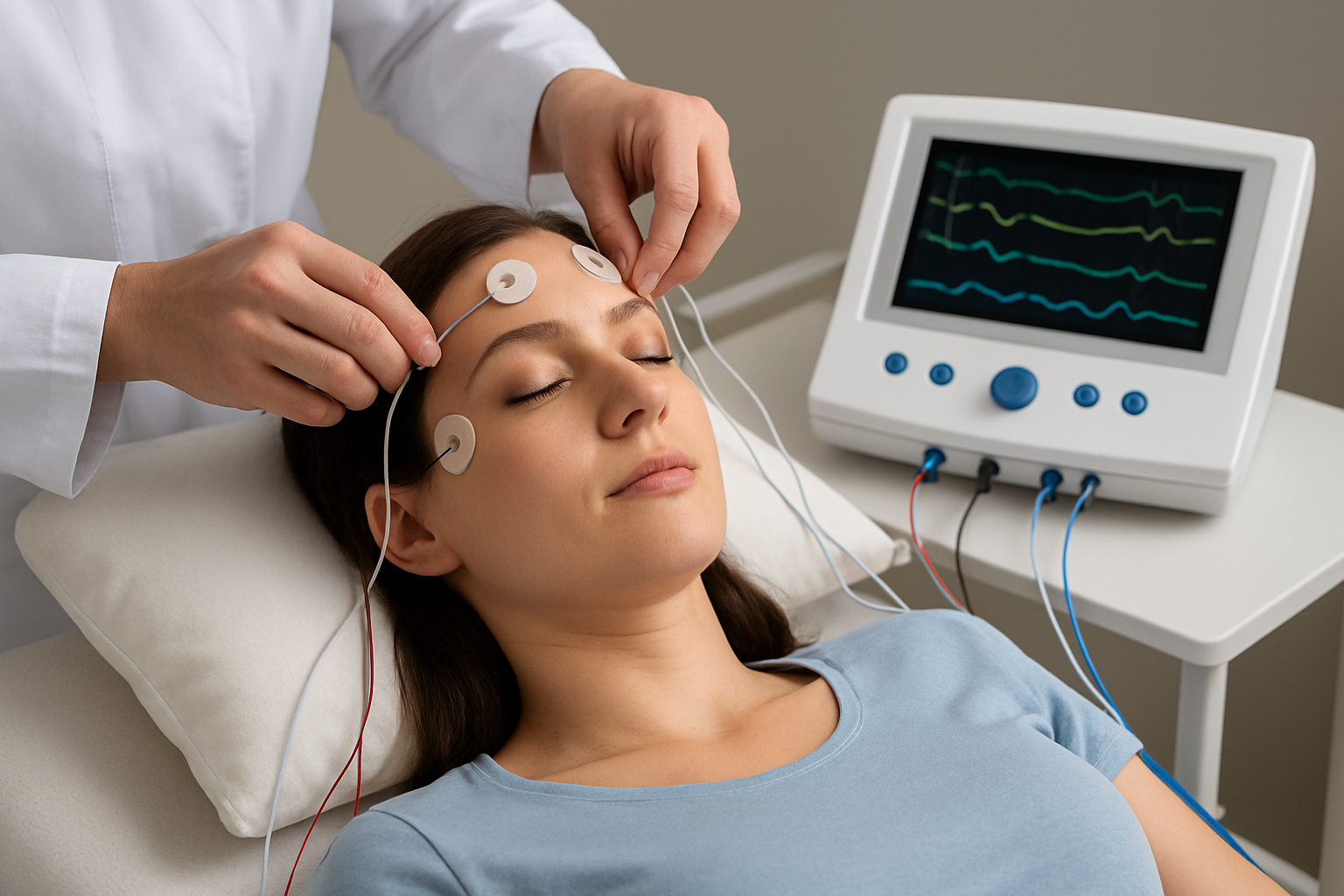
You can invest in a great device and still miss results if your routine fights your biology. The best outcomes come from pairing precise technology with consistent, easy habits. Start by clarifying your primary goal: is it stiffness after activity, midnight restlessness, or that 3 a.m. wake-up? Wear during the times that matter most. For recovery and mobility, daytime sessions near the area of focus can help you move better later. For sleep, begin 30 to 60 minutes before lights out so your ANS [autonomic nervous system] settles before your head hits the pillow. Track a simple baseline for one week using either a paper sleep-log or a phone-based journal, then compare your next two to four weeks of usage. This keeps the process honest and motivating. Finally, stack simple lifestyle anchors that complement biosignal therapy. Think morning daylight, gentle mobility, hydration, and caffeine timing that respects your sleep window. Little levers, big difference.
- Wear with purpose: schedule recovery sessions before activity and sleep sessions before bed.
- Be consistent: five to seven days per week for the first four weeks beats occasional bursts.
- Hydrate: well-hydrated tissues conduct signals more consistently, improving comfort.
- Calibrate expectations: look for gradual improvements in comfort, sleep latency, and energy.
- Track HRV [heart rate variability] trends if available; rising HRV often mirrors recovery.
- Pair with light movement: short walks or mobility work can amplify benefits.
- Dim evening light: support melatonin timing while the wearable cues relaxation.
- Check fit and placement: sensor contact should be snug but comfortable.
Common Mistakes
Most missteps fall into a few buckets, and they are easy to fix once you spot them. The first is treating wearables like a one-and-done switch rather than a daily guide. The second is wearing at the wrong time. If sleep is your priority, using your device only in the late afternoon will help less than a pre-bed routine. Another mistake is chasing intensity or constantly changing settings, which can confuse your system. People also forget basic physiology supports like hydration and breath pace. A final pitfall is skipping progress checks. Without a simple log, improvements blur together and motivation dips. Anywhere Healing designs for simplicity, yet habits still matter. Align your routine with your goals, give the process a few weeks, and you will be surprised how quickly momentum builds.
- Inconsistency: sporadic use disrupts the sensing-delivery-adaptation loop.
- Late caffeine: stimulants work against relaxation cues, especially after noon.
- Misplacement: poor sensor contact reduces accuracy and comfort.
- Over-tinkering: constant setting changes prevent the body from settling.
- Ignoring signals: push through fatigue, and your ANS [autonomic nervous system] stays upregulated.
- No baseline: without a sleep or recovery log, wins get lost and course correction gets harder.
Tools/Resources
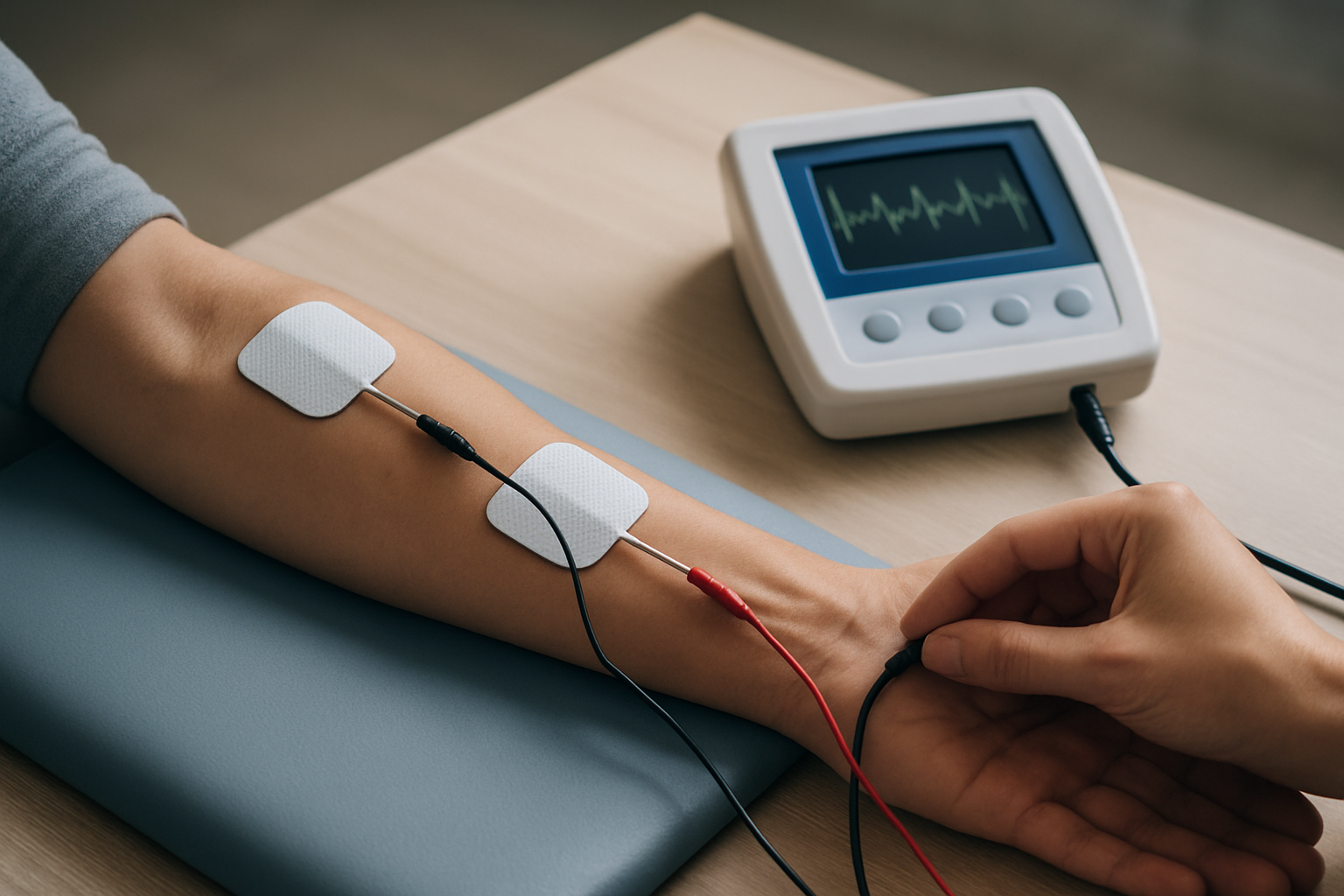
Anywhere Healing offers multiple wearable options so you can target what matters most today and adjust as your needs evolve. The lineup centers on advanced biosensors that read the body’s signals and frequency delivery that supports stress relief, deeper sleep, and daily resilience. If natural cellular frequencies drift because of stress or injury, these tools detect disruptions and provide tailored cues to support balance and recovery. Below is a quick snapshot to help you choose the right path forward based on your top goals. Think of it as your personal menu for comfort, sleep, and balance, without drugs or invasive procedures.
| Device | Primary Focus | Key Biosensors | Frequency Target | Typical Wear Times | Best For |
|---|---|---|---|---|---|
| Frequana | Whole-body balance, energy, and recovery | Triple biosensors: PPG (heart/HRV), SpO2 (blood oxygen), bio-temperature (infrared) | Energy, circulation, and recovery support | 20 to 40 minutes, 1 to 3 times daily | Post-activity recovery, stiffness, low energy |
| Alpha Wearable | Sleep and stress downshift | PPG/HRV, bio-temperature (infrared) | ANS [autonomic nervous system] balance and sleep onset | 30 to 60 minutes before bed | Restless nights, racing thoughts |
| Charisma Ring | Mood, vitality, and daytime focus | PPG (heart/HRV), activity trends | Calm alertness and daily resilience | Intermittent daytime sessions | Afternoon slumps, workday stress |
To personalize your path, it helps to match goals with wear strategies and simple metrics you can track at home. You do not need a lab-grade setup to notice meaningful change. A pen-and-paper sleep log, a one to ten discomfort or stiffness scale, or a basic HRV [heart rate variability] trend can reveal improvement. Here is a practical map.
| Goal | Suggested Device | When to Wear | What to Track | Expected Trend Over 2 to 4 Weeks |
|---|---|---|---|---|
| Support recovery and mobility | Frequana | Before activity and early evening | Comfort/stiffness scale, range of motion notes | Improved comfort and easier movement |
| Fall asleep faster | Alpha Wearable | Pre-bed routine | Sleep latency, wake-ups per night | Shorter time to sleep, fewer awakenings |
| Stay calm yet focused | Charisma Ring | Midday or pre-meeting | Mood notes, afternoon productivity | Steadier energy and improved focus |
- Helpful concepts: HRV [heart rate variability] as a recovery proxy, consistent bed and wake times, and breath cadence of 5 to 6 breaths per minute for calm.
- Safety note: if you are pregnant, have an implanted device like a pacemaker, or are under medical care, consult your clinician before starting any new wearable routine.
- Evidence snapshot: public reports suggest that chronic pain affects over 20 percent of adults and that sleep insufficiency impacts roughly one-third of adults, highlighting the need for accessible solutions.
Real-world stories make the data come alive. One active parent rotated Frequana over her knee and calf for 30 minutes before evening walks, noticing less stiffness and fewer post-walk aches after ten days. A new teacher used Alpha Wearable while dimming lights and journaling before bed; she reported quicker sleep onset and more refreshed mornings within two weeks. A consultant wore Charisma Ring during afternoon writing blocks; his notes showed steadier focus with fewer social-media detours. These are examples, not medical claims, yet they echo a common pattern. When natural cellular frequencies are guided back toward balance, perceived discomfort often eases, sleep deepens, and daily vitality returns. Anywhere Healing’s non-invasive, drug-free approach aims to make that pattern your new normal by helping your body do what it does best.
Conclusion
Wearable biosignal therapy turns your body’s own signals into a roadmap for improved sleep, emotional balance, and daily resilience.
Imagine the next 12 months with calmer evenings, easier mornings, and a nervous system that meets stress with steadiness rather than strain. What would it feel like to put biosignal therapy to work for you starting this week?
Elevate Your Biosignal Therapy Journey with Anywhere Healing
Advanced biosensors that read the body’s signals help Anywhere Healing wearables detect disruptions and provide tailored cues to support deeper sleep, stress reduction, and resilient well-being.
Explore Wearables


