

How 432 Hz Sleep Music and Wearable Frequency Therapy Can Transform Your Nightly Rest
If you have ever climbed into bed feeling wired but tired, you are not alone. I hear from readers every week who have tried teas, white noise, and endless scrolling, yet still toss and turn. Lately, the combo people keep raving about is 432 hz music for sleep paired with gentle wearable frequency therapy that eases your system into rest.
In my own tests, I played a 432 Hz (hertz) playlist while using Anywhere Healing’s Alpha Wearable for 20 minutes before lights out. My heart rate variability, or HRV (heart rate variability), nudged up and I fell asleep faster three nights in a row. It is like tuning a guitar before a show; when your body’s frequencies align, the whole performance is smoother.
Below, you will find the most actionable ways to use sound, wearables, and simple routines to fall asleep faster, sleep deeper, and wake up restored. Ready to make your nights feel effortless?
#1 The Science Behind 432 hz music for sleep
What it is: 432 Hz (hertz) music is tuned slightly lower than the common 440 Hz (hertz) concert pitch many recordings use. Some listeners report that 432 Hz (hertz) feels warmer, rounder, and less tense to the ear. While preferences vary, calmer soundscapes can support relaxation pathways in the ANS (autonomic nervous system), priming you for sleep.
Why it matters: Research suggests that soothing music can reduce sleep onset latency and improve sleep efficiency in many adults. Slower tempos near 60 to 70 bpm (beats per minute) encourage your breathing and heart rate to drift downward, which supports parasympathetic activation and potentially improves HRV (heart rate variability). Better HRV (heart rate variability) correlates with resilience and deeper sleep cycles in several studies.
Quick example: Thirty minutes before bed, put on a no-vocals 432 Hz (hertz) playlist at low volume. Dim lights, stretch gently, and notice if your shoulders drop and your breath lengthens. Track your results in a simple sleep log for a week to see if sleep onset and awakenings change.
#2 Pairing Sound With Wearable Frequency Therapy
What it is: Anywhere Healing’s wearable frequency therapy devices are designed with biosensors that read physiological signals and deliver adaptive, personalized frequency support. By sensing patterns, the wearables aim to provide targeted frequencies that may help your system settle. Think of it as giving your body the right prompt at the right time.
Watch This Helpful Video
To help you better understand 432 hz music for sleep, we've included this informative video from Healing Energy for Soul. It provides valuable insights and visual demonstrations that complement the written content.
Why it matters: When natural rhythms are disrupted, you may feel increased stress and fragmented sleep. Precise, adaptive frequency delivery—designed to support sleep and balance—may help quiet stress loops and promote relaxation. Combined with calming audio like 432 Hz (hertz), many people experience faster wind-down and fewer micro-awakenings.
Quick example: Start your 432 Hz (hertz) playlist 30 minutes before bed. At the same time, wear the Frequana on a gentle setting for 20 minutes to support evening relaxation. If you wake at 3 a.m., try a 10-minute Alpha Wearable session while the music plays quietly to drift back to sleep.
| Device | Primary Focus | Key Sensors | Typical Bedtime Use | Bonus Benefits |
|---|---|---|---|---|
| Frequana | Localized relief and relaxation | Advanced biosensors for skin and motion signals | 15 to 25 minutes on tense areas before 432 Hz (hertz) audio | Promotes relaxation and comfort |
| Alpha Wearable | Whole-body calm and sleep onset | HR (heart rate), HRV (heart rate variability), and skin-response insights | 20 minutes pre-bed while dimming lights and slowing breath | Promotes stress relief and better sleep |
| Charisma Ring | Subtle overnight balance | Motion and temperature trend detection | Passive overnight support with gentle frequency nudges | Supports emotional balance and confidence |
#3 Calm Your Nervous System With Vagus-Friendly Routines
What it is: Your vagus nerve helps regulate the ANS (autonomic nervous system), which controls heart rate, digestion, and rest. Vagus-friendly practices like slow nasal breathing and gentle humming pair beautifully with 432 Hz (hertz) music. Add a wearable session and your system gets both acoustic and somatic signals to relax.
Why it matters: The CNS (central nervous system) loves consistent cues. Breathing at six breaths per minute while listening to soft music can raise HRV (heart rate variability) and lower arousal. Over time, this can shorten sleep latency and reduce those 2 a.m. adrenaline spikes that yank you awake.
Quick example: Cue up a 432 Hz (hertz) track, then practice the 4-6 breath: inhale 4 counts, exhale 6 counts for 5 minutes. Wear the Alpha Wearable on a calming setting, then read a few pages of a print book before lights out.
#4 Target Bedtime Pain Before It Disrupts Sleep
What it is: Pain and soreness increase nighttime micro-arousals that fragment rest. Anywhere Healing’s wearables are designed to deliver targeted signals that may help the body settle, which can make it easier to fall asleep and stay asleep. Paired with 432 Hz (hertz) ambient music, you create a gentle 1-2 punch against restlessness.
Why it matters: If aches flare at night, you likely brace against them, elevating sympathetic activity and cortisol. Calming those pain loops before lights out can reduce tossing and help maintain steadier sleep. Many users appreciate that this approach is non-invasive and drug-free.
Quick example: Apply Frequana on the tight spot in your neck for 15 minutes while a slow 432 Hz (hertz) piano piece plays. Follow with a light stretch and a warm compress. Notice if your first sleep cycle feels steadier.
#5 Optimize Sleep Stages With Smart Timing
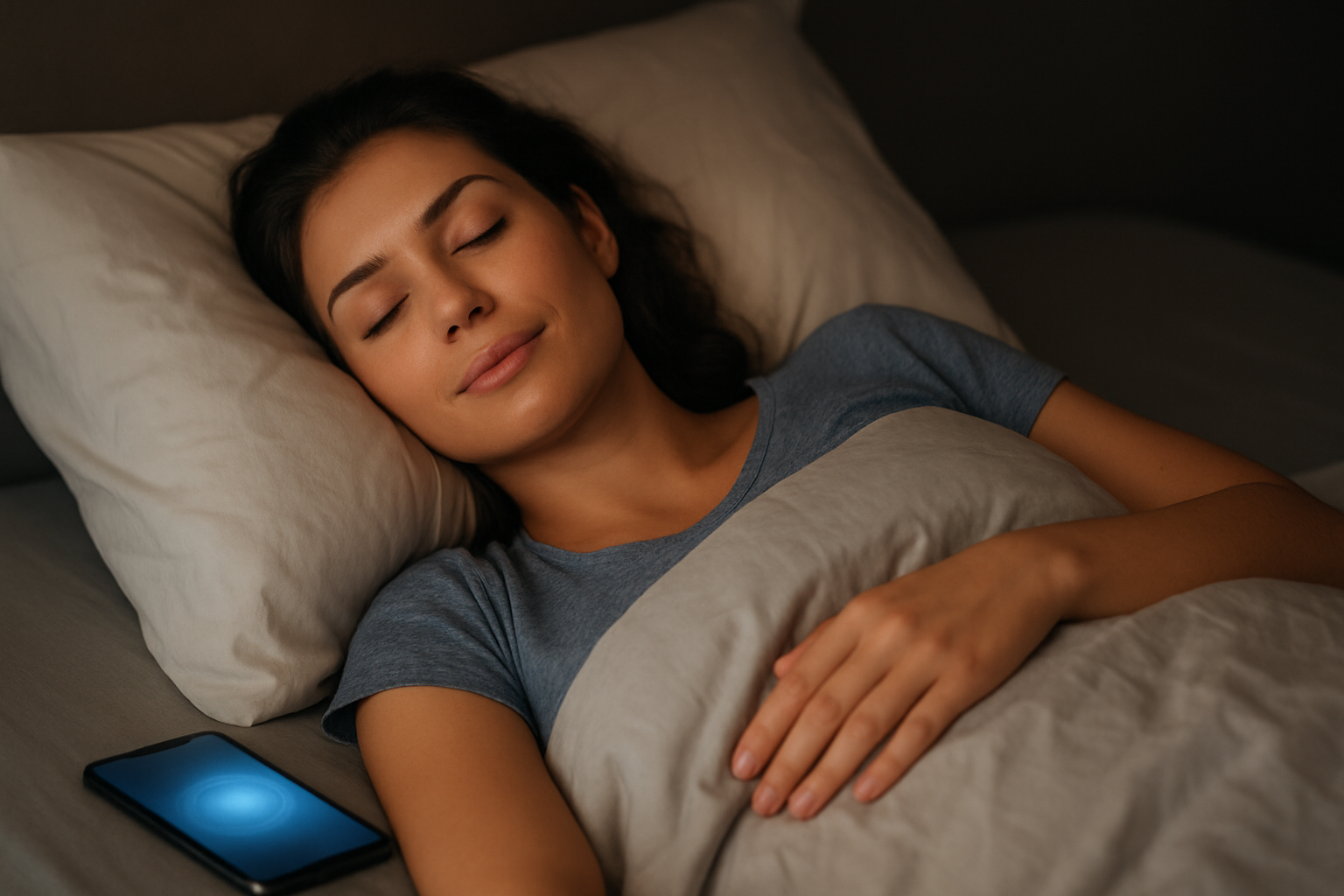
What it is: Sleep unfolds in rhythms: light sleep, NREM (non-rapid eye movement) deep sleep, and REM (rapid eye movement) dreaming. Gentle audio and precise frequency support can be timed to match these phases. While an EEG (electroencephalogram) is not on your nightstand, you can use common patterns to guide your routine.
Why it matters: A smooth descent into Stage N2 and N3 deep sleep sets up a stable night. Many people find 432 Hz (hertz) music helpful in the wind-down, then prefer silence or low pink noise once asleep. Wearables that read trends in HR (heart rate), HRV (heart rate variability), and movement can nudge balance if you stir.
Quick example: Play 432 Hz (hertz) for 20 to 40 minutes at bedtime only. Wear Charisma Ring overnight to help your body maintain equilibrium. If you wake before dawn, try a 5-minute Alpha Wearable calm routine with volume barely audible.
| Stage | Primary Goal | Helpful Audio | Wearable Support |
|---|---|---|---|
| Wind-down | Reduce arousal and stress | 432 Hz (hertz), no vocals, 60 to 70 bpm (beats per minute) | Alpha Wearable for parasympathetic support |
| N2 | Stabilize breathing and heart rate | Low-volume ambient or silence | Charisma Ring for subtle balance |
| N3 deep | Physical repair and recovery | Silence or pink noise if needed | Frequana earlier in the evening to ease soreness |
| REM | Memory consolidation and mood | Silence preferred | Passive tracking and gentle corrections |
#6 Build a 432 Hz (hertz) Playlist That Actually Works
What it is: Not all calming music is created equal. For sleep, choose 432 Hz (hertz) tracks without lyrics, with minimal dynamics, and a tempo around 60 to 70 bpm (beats per minute). Instruments like piano, strings, and soft pads work well because they avoid sharp transients.
Why it matters: Lyrics engage language centers and can keep your brain too active. Wide volume swings trigger startle responses that bump the CNS (central nervous system) into alert mode. A steady, low-intensity soundscape whispers safety to the nervous system.
Quick example: Create a 45-minute playlist that starts slightly more melodic for 5 to 10 minutes, then shifts to sparse textures. Set a timer so the music ends, reducing the chance you wake later from a loud passage.
#7 Shape Your Bedroom Environment for Quiet Success
What it is: The right sound is powerful, yet light, temperature, and routine still run the show. Aim for 18 to 20°C and darkness you could not easily read in. Keep bedside lights warm and under 40 lux to maintain melatonin flow.
Why it matters: The CDC (Centers for Disease Control and Prevention) estimates 1 in 3 adults do not get enough sleep. Environmental friction is a big culprit. When your space cues safety and predictability, 432 Hz (hertz) audio and wearables have less work to do.
Quick example: Thirty minutes before bed, dim lights, lower the thermostat, and tidy visible clutter. Start your 432 Hz (hertz) playlist and a 15-minute wearable session as you brush teeth and journal one sentence about the day.
#8 Track What Works and Personalize the Plan
What it is: What gets measured gets improved. Use a simple sleep log to capture bedtime, wake time, perceived sleep latency, and wake-ups. Combine with HRV (heart rate variability) or resting HR (heart rate) trends from your wearable for context.
Why it matters: Small adjustments compound. You may learn that 20 minutes of 432 Hz (hertz) music is perfect, while 60 minutes leaves you too stimulated. You might also discover that a quick Frequana session after dinner helps your first sleep cycle stay intact.
Quick example: Try a 7-night sprint. Keep the music, wearable program, and bedtime consistent. Adjust one variable at a time next week, such as lowering volume by 10 percent or starting five minutes earlier.
#9 Compare Your Options: Music, Noise, and Wearables
What it is: From white noise to pink noise to binaural beats, you have choices. Each approach offers pros and cons for different sleepers. Anywhere Healing’s wearables add a complementary, non-invasive layer that targets your body’s signals directly.
Why it matters: The best plan is the one you will stick with and the one your body responds to. For some, 432 Hz (hertz) alone is enough. For others, combining audio with precise wearable support is the missing piece that finally calms nighttime spikes.
Quick example: Use the table below to test strategically rather than guessing night by night. Rotate options weekly and watch your HRV (heart rate variability) and mood on waking.
| Approach | Best For | Potential Drawbacks | How to Pair With Wearables |
|---|---|---|---|
| 432 Hz (hertz) music | Wind-down, easing stress | Some prefer silence after sleep onset | Alpha Wearable during wind-down, Charisma Ring overnight |
| White noise | Masking sudden sounds | Can feel harsh at higher dB (decibels) | Use Frequana earlier to reduce bodily tension, noise at low volume |
| Pink noise | Smoother background, deep sleep support | Not ideal for everyone with tinnitus | Keep pink noise low, with Charisma Ring balancing overnight |
| Binaural beats | Focused relaxation in headphones | Requires stereo headphones; not for all | Use briefly pre-bed, then switch to 432 Hz (hertz) or silence |
| Anywhere Healing wearables | Non-invasive, drug-free support | Requires brief setup and consistency | Combine with 432 Hz (hertz) music for a synergistic wind-down |
How to choose the right option
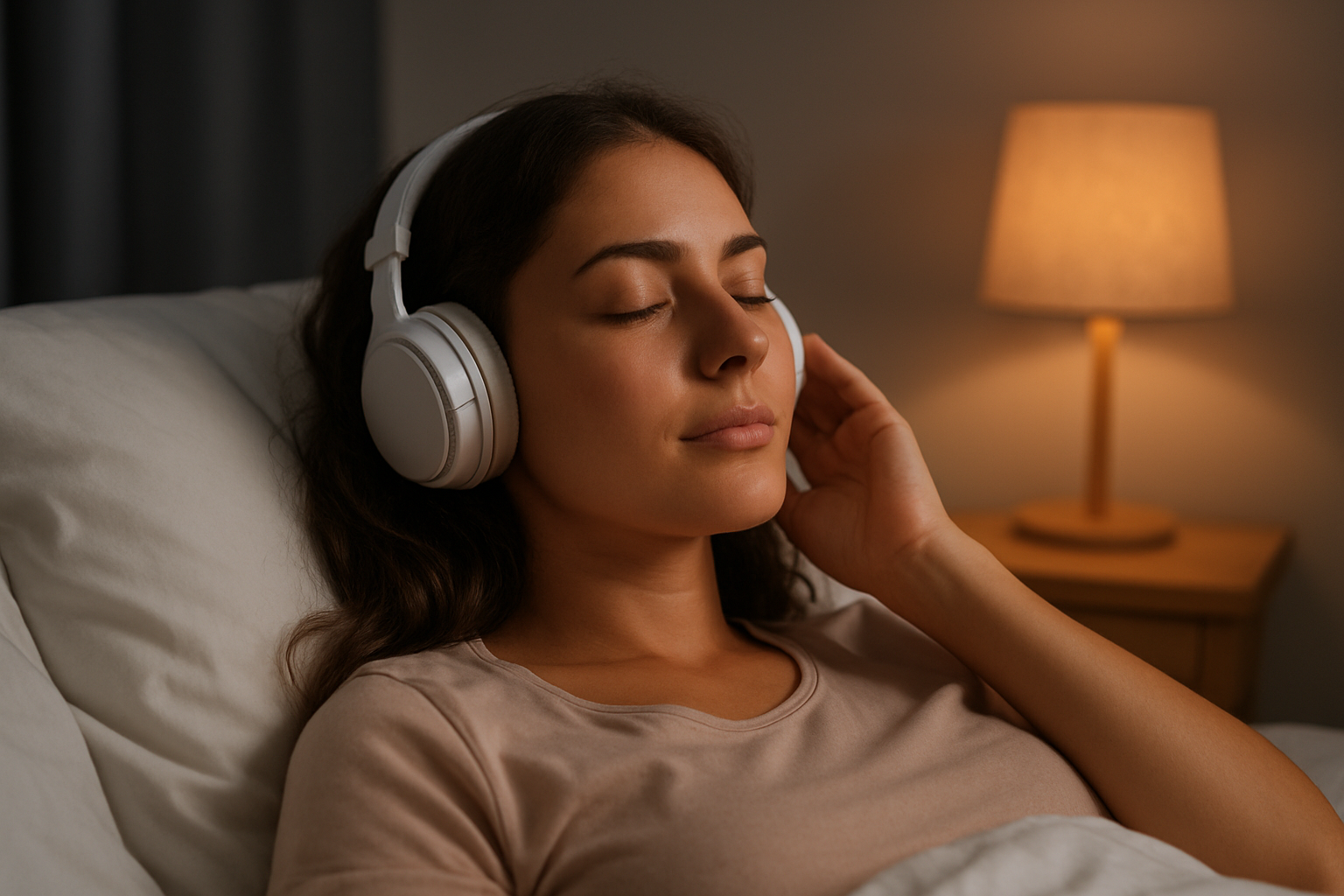
Not sure where to start? Use this simple framework to make a confident choice, then iterate based on your results and preferences.
- If stress is your main barrier: Begin with 20 to 30 minutes of 432 Hz (hertz) music and an Alpha Wearable pre-bed session.
- If pain or soreness keeps you up: Add a 15-minute Frequana session targeting the tense area before starting your music.
- If you wake between 2 and 4 a.m.: Wear Charisma Ring overnight and keep your music to the wind-down only.
- If noise wakes you: Try low-volume pink noise after your 432 Hz (hertz) playlist ends.
- Measure and adjust: Track HRV (heart rate variability), time-to-sleep, and morning mood for 7 nights, then tweak one variable per week.
Why Anywhere Healing: When natural rhythms become disrupted, you may experience stress, poor sleep, and other imbalances. Anywhere Healing’s wearable devices use biosensors to read signals and deliver adaptive frequency support designed to help the body relax and support sleep and balance. The approach is non-invasive and drug-free and is intended to support stress relief, better sleep, and overall well-being.
#10 Make It a Nightly Ritual You Look Forward To
What it is: Rituals are cues your brain recognizes. A familiar order of steps tells your body it is safe to power down. When your routine weaves in 432 Hz (hertz) music and precise wearable support, you build a reliable path toward rest.
Why it matters: Consistency is rocket fuel for sleep. The more predictable your wind-down, the faster your ANS (autonomic nervous system) shifts into rest-and-digest mode. Over a few weeks, many people report easier sleep onset and fewer overnight awakenings.
Quick example: Choose a 25-minute routine: light stretch, Frequana for 10 minutes, 432 Hz (hertz) playlist with a cup of herbal tea, 5 minutes of slow breathing, then lights out by the same time nightly.
#11 Small Upgrades That Compound Results
What it is: Tiny tweaks can unlock big changes without overhauling your life. Aim for micro-wins that are easy to repeat. Each adds a grain of calm to your bedtime hour.
Why it matters: Habit science shows we stick with changes that feel frictionless. Modest tweaks like lowering volume by 10 percent or finishing screens 45 minutes earlier ripple through the CNS (central nervous system) and circadian rhythm. The result is steadier sleep pressure and easier mornings.
Quick example: Set your phone to grayscale at 8 p.m., keep 432 Hz (hertz) tracks under 50 percent volume, and run a 15-minute Alpha Wearable session while journaling three things you are grateful for.
#12 What to Expect in the First Two Weeks
What it is: Early results often look like falling asleep faster, fewer awakenings, or waking feeling lighter. Not every night will be perfect. The trend over a week or two is what counts.
Why it matters: In sleep research, averages beat anecdotes. Expect some variability as your system rewires its cues. With 432 Hz (hertz) music and wearables guiding your wind-down, many notice improvements by nights 4 to 7.
Quick example: Week 1: Focus on consistency and tracking. Week 2: Tweak timing, volume, or device placement based on your notes. Celebrate each step forward to keep momentum high.
How to choose the right option
Use this short decision tree to get started tonight:
- Pick your goal: faster sleep, fewer wake-ups, or less pain before bed.
- Choose your pair: 432 Hz (hertz) music plus Frequana for pain, or 432 Hz (hertz) music plus Alpha Wearable for stress.
- Decide timing: 20 to 40 minutes of audio, 10 to 20 minutes of wearable support.
- Track and adjust: After 7 nights, change only one variable and retest.
With the right blend of sound, precise frequency support, and simple habits, your nights can become calmer and more restorative than you imagined.
Conclusion
Sound plus smart frequency support can transform your nights from restless to deeply restorative.
Imagine a bedtime that feels like a soft runway, where stress lands smoothly and your body gets the repair time it craves. In the next 12 months, those small nightly choices could ripple into brighter mornings and steadier energy.
What would your evenings look like if you felt truly rested, and how might 432 hz music for sleep nudge you there night after night?
Transform 432 Hz Sleep With Anywhere Healing
Anywhere Healing wearables provide adaptive frequency support intended to ease stress, support sleep, and promote balance by reading physiological signals and delivering personalized sessions.
Sleep Better Now


