

Precise Frequency Delivery Wearable: The Ultimate Guide to Choosing, Calibrating, and Measuring Real-World Recovery
At 3 a.m., your neck is still barking at you. You roll over, squint at the clock, and glance at the small band on your wrist, hoping the ache has faded just enough to let you drift off before the alarm hits at 6:30.
That moment is exactly why a precise frequency delivery wearable sounds so appealing. No pills. No ice pack sliding off the bed. No elaborate routine that asks you to become a different person overnight. Just something small, quiet, and easy enough to keep beside a lamp, a glass of water, and a notebook.
I've spent enough time testing recovery routines to know where people get tripped up. They buy a device on a rough week, use it three different ways across four nights, feel a little better once, and then have no idea whether the device helped, their stress dropped, or they simply avoided coffee after 4 p.m. This guide is about avoiding that mess. We'll treat these wearables like a repeatable self-test for recovery — useful when chosen carefully, calibrated consistently, and measured honestly.
What a precise frequency delivery wearable is
The core promise: drug-free, non-invasive support
Watch This Helpful Video
To help you better understand precise healing frequency delivery wearable, we've included this informative video from Mark Hyman, MD. It provides valuable insights and visual demonstrations that complement the written content.
This category sits in a very specific lane. It is not just a step counter, a meditation timer, or a vibrating reminder band. Wearable frequency therapy devices are commonly positioned as a gentle, non-invasive way to support relaxation, recovery, and better sleep habits. That's the pitch showing up in buyer guides and brand pages alike.
And to be fair, that pitch makes sense for the audience. If your back tightens after long desk days, or you keep waking up at 3 a.m. with a racing mind, you're probably not looking for drama. You want support that fits into normal life — while working, winding down, traveling, or reading in bed.
What people usually hope to improve
Most people don't buy one of these because they love gadgets. They buy because they want one of five things to get better: comfort, stress, sleep, balance, or overall well-being. Sometimes it's as narrow as “I want my jaw to unclench before bed.” Sometimes it's broader — more even energy, calmer evenings, fewer rough mornings.
That matters because your goal should shape your test. If you want better sleep habits, you should track sleep. If you want less shoulder tension after eight hours at a MacBook, you should track comfort and mobility. Sounds obvious, right? You'd be surprised how many people skip that step and settle for vague feelings.
What makes a device 'precise' instead of vague
Here is the dividing line: a device becomes “precise” when it claims a clear input-and-output process and gives you a way to repeat that process. According to Anywhere Healing, its wearables use skin-contact sensing to read body signals and deliver frequency-based wellness support. The same brand also describes the devices as lightweight, stylish, and easy to wear for everyday use.
That sounds good, but precision is not just a marketing adjective. Precision means skin contact that stays consistent, settings you can recreate tomorrow night, and results you can compare over a week instead of guessing from memory.
Precision without measurement is just branding.
How the technology is supposed to work
Skin contact and biosensors
The first step is boring. It is also the whole ballgame. These devices are supposed to work through skin contact, so fit matters more than flashy claims. If the band is loose at 9 p.m., shifted by midnight, and half-off by morning, your input is messy from the start.
Think of it like a heart-rate strap or even a glucose sensor — not because the tech is identical, but because contact quality changes signal quality. Clean, dry skin. Stable placement. Consistent pressure. Those basics matter more than the soothing words on the box.
If the input step is inconsistent, the output will be inconsistent too.
Signal reading and frequency delivery
In plain English, the claimed loop goes like this: the sensor touches your skin, reads signals, and the device responds by delivering a matching or corrective frequency pattern. One top-ranking buyer's guide describes that as reading your signals and nudging the system back into harmony.
I think of it like a thermostat, not a magic wand. The device is not supposed to bulldoze your body. It is supposed to sense something, apply a specific frequency response, and support your own recovery processes. That framing is more realistic, and honestly, more useful. It tells you what to watch: stable placement, repeatable settings, and a consistent session flow.
App pairing and session flow
Most of these wearables also live or die by the app experience. One brand site says setup starts by connecting and syncing the wearable with an app in seconds, then selecting a wellness session. That sounds simple — and it should be. If pairing takes 20 frustrating minutes every night, your protocol won't survive a busy Tuesday.
When I test any recovery device, I pay attention to the ugly little details: Does Bluetooth reconnect quickly? Can I find the same session without digging through five menus? Can I save the exact setting I used on Wednesday? Those questions matter because friction kills consistency long before bad technology does.
How to choose and calibrate the right wearable
Fit, comfort, and all-day wearability
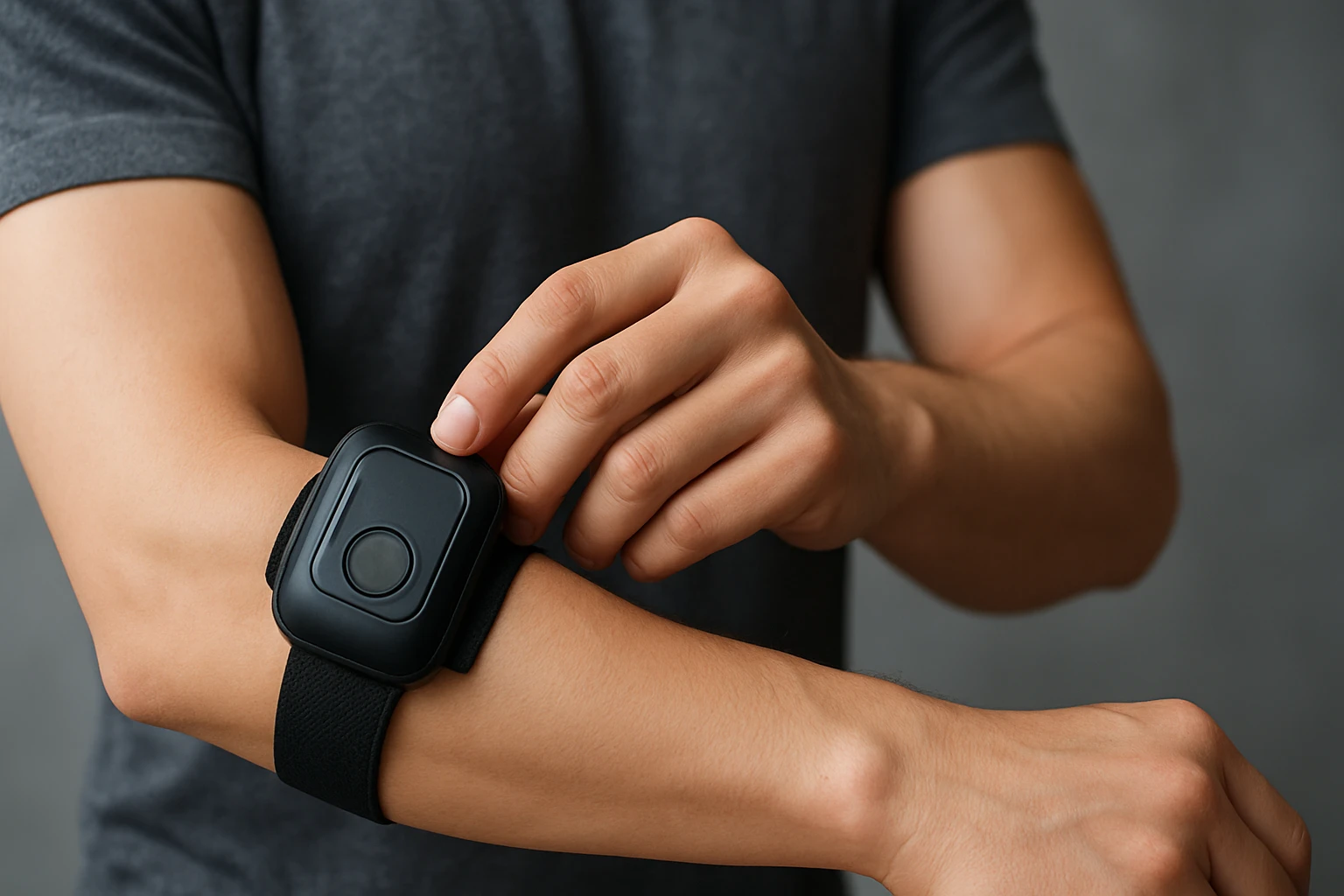
A device can be clever and still fail if it annoys you by lunch. If you plan to wear it daily, comfort is not a bonus feature. It is the feature. Lightweight design helps. A slim profile helps. A material that doesn't itch after two hours helps even more.
Try this simple rule: if you notice the device every five minutes, you probably won't stick with it for 14 days. And if you can't stick with it, you cannot run a fair test. I learned that the hard way years ago with a bulky recovery band that pressed into my wrist whenever I typed. Great concept. Terrible real life.
If you cannot wear it consistently, do not buy it for a daily protocol.
Controls, app setup, and repeatable settings
The best setup is the one you can repeat when you're tired. Look for clear controls, fast pairing, and saved presets. If the app can sync in seconds and bring you back to the same protocol without guesswork, you're already ahead.
I also like a device that makes it easy to document what happened. Screenshots of settings. Session history. Start and stop times. Anything that keeps you from saying, “I think I used the blue mode for 18 minutes... or maybe it was 25?” That kind of uncertainty wrecks comparisons.
Support, returns, and risk reduction
Trial terms matter more than people admit. Anywhere Healing advertises customer support and consultation through its contact channels, and those are exactly the kinds of terms I like to see in this category. Not because support proves effectiveness, but because it lowers the cost of a careful, low-pressure test.
Global customer reach sounds nice. Support hours sound nice. But here's the practical question: if pairing fails on a Sunday night, can you get help quickly enough to keep your test on track? That is the real value of support.
| Buying Checkpoint | What You Want | Why It Matters |
|---|---|---|
| Comfort | Lightweight, low-profile, easy on skin | You will only collect useful data if you keep wearing it |
| Setup | Fast app pairing, clear controls, saved settings | Repeatability beats novelty |
| Support | Responsive help, clear documentation | Troubleshooting should not derail your routine |
| Risk | Simple return window and refund terms | You need room to test without forcing a bad fit |
How to measure real-world recovery
Pick one primary goal per test period
This is where most people finally stop chasing vibes. Pick one primary goal for each test block. One. Not “sleep, pain, energy, mood, inflammation, and posture.” One. If your neck tension is wrecking your nights, make that the lead variable. If sleep onset is the real problem, make that the lead variable.
I usually recommend a 7-day test block for early use, because a week is long enough to spot patterns and short enough to stick with. You can still note secondary effects, of course. Just don't let them become the headline.
Record a baseline before first use
Before your first session, record a baseline. Three to seven days is usually enough to give you a decent starting point. You're not building a lab. You're building context.
A baseline turns “I think I'm sleeping better” into something you can actually compare. I still use a cheap Moleskine notebook for this sometimes, even though every app on earth wants to replace paper.
| Metric | How to Track It | Example Entry |
|---|---|---|
| Comfort | 0-10 score at bedtime and on waking | Neck 6/10 at 10:45 p.m.; 4/10 at 6:30 a.m. |
| Sleep onset | Estimated minutes to fall asleep | About 35 minutes |
| Night waking | Number of wake-ups and rough times | Awake at 3:07 and 4:50 |
| Stress or tension | Simple 1-5 scale | Shoulders tight: 4/5 |
| Confounders | Notes on caffeine, travel, alcohol, illness, workouts | Late espresso at 5:15 p.m. |
Compare week-over-week trends, not single nights
One peaceful night after pizza, wine, and a lucky breeze from the window does not tell you much. A rough Thursday after a red-eye flight does not tell you much either. Trends do.
Look at the week as a whole. Did sleep onset get shorter across several nights? Did your morning comfort score ease from a usual 6 to a usual 4? Did you wake fewer times? That's the kind of signal worth paying attention to.
Track trends, not single nights.
Best practices for getting consistent results
Start with one goal and one schedule
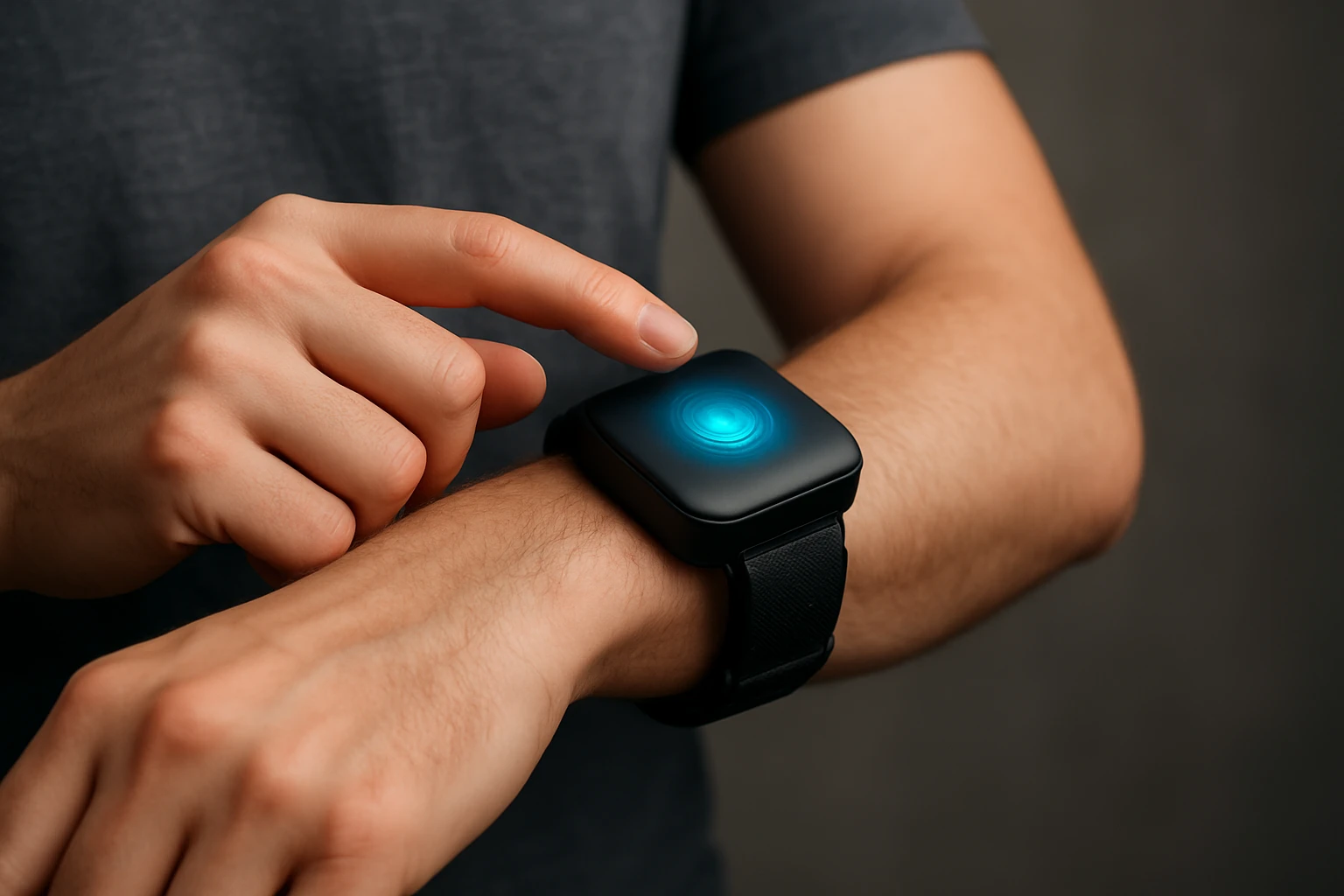
Once you've chosen a goal, lock in a schedule. Same time. Same general duration. Same part of your routine. If the app flow is connect, sync, then select a session, keep that order unchanged for the first week.
Consistency beats intensity here. You do not need a heroic wellness ritual with candles, breathwork, magnesium, binaural beats, and a cold plunge on top. You need something you can still do on a boring Wednesday.
Keep sessions identical before changing anything
This is the part people hate because it isn't exciting. Use the same placement, same chair or bed position, similar lighting, and the same pre-session routine whenever possible. If you change session length, timing, body placement, and bedtime all at once, you've created noise, not insight.
I've done this badly before. I moved a device from left wrist to right wrist, changed the session, skipped my nightly stretch, and then wondered why the week felt impossible to interpret. Lesson learned.
Change one variable at a time.
Pair the wearable with basic recovery habits
You don't need a total life overhaul. You do want a stable backdrop. Keep caffeine timing roughly the same. Aim for a regular bedtime. If comfort is your target, keep your pillow setup consistent and stop changing three other recovery tricks mid-test.
These wearables are usually marketed as easy to fold into everyday wellness routines, and that's exactly how they should be used. Quietly. Repeatedly. Without turning your nightstand into a science-fiction movie.
Common mistakes, tools, and when to get help
Common mistakes that make results noisy
The biggest mistake is expecting fast, dramatic results because the category is often marketed with big promises around comfort, stress, and sleep. Gentle, non-invasive support can still be meaningful. It just doesn't always announce itself with fireworks by Day 2.
Other common errors are painfully ordinary: poor skin contact, random session times, no baseline, no written log, daily setting changes, and mixing the test with new supplements or late-night doomscrolling. If your routine keeps shifting, your results will too.
Tools that make tracking easier
You do not need a clinic. You need a few dependable tools: a symptom log, saved device settings, a charger that stays in one place, and a short review sheet. That's it.
I tell people to build the smallest possible system that still works when they're tired. For most homes, that means a pen, a notebook, a phone, and a 10-second habit of writing down what happened right after the session.
| Tool | Use | Why It Helps |
|---|---|---|
| Notebook or notes app | Record comfort, sleep, stress, and confounders | Memory is unreliable after a few days |
| Saved settings or screenshots | Preserve exact session details | Makes troubleshooting possible |
| Dedicated charging spot | Keep battery ready | Dead devices create missing data |
| Weekly review sheet | Compare trends every 7 days | Helps you spot patterns instead of anecdotes |
When to pause, reassess, or ask a clinician
If the device irritates your skin, your symptoms worsen, or the protocol becomes so confusing that you cannot tell what you're doing anymore, pause. Reassess. If you're working around a diagnosed medical condition, severe sleep problems, or anything that feels outside normal self-care, ask a clinician how to proceed.
A good support team helps. A good return policy helps too. If you can ask questions during the trial and step back if the device is a poor fit, you're making a smarter decision.
A good return policy is part of the testing plan.
Tools, resources, and a simple starter workflow
What to keep beside the device
Keep your setup boring and ready. Device. Charger. Phone. Notebook. Pen. Water. Maybe a small timer if your app doesn't show session duration clearly. Put everything in one spot so the routine takes less than a minute to begin.
Some brands say their wearables can sync through the app in seconds and are built for everyday support, which is exactly the standard you should hold them to. If your first-week routine feels fussy, simplify it until it survives normal life.
How to review progress every 7 days
Pick the same review time every week — Sunday afternoon works well for a lot of people. Look at your baseline, then compare the last seven days. Not just whether you “felt better,” but whether your chosen metric moved in a useful direction.
Here's a simple first-week workflow that works well at home:
| Day | Action | What to Record |
|---|---|---|
| Days -3 to 0 | Collect baseline before first session | Comfort, sleep, stress, confounders |
| Day 1 | Pair device, choose one goal, run first session | Placement, timing, settings, immediate notes |
| Days 2-6 | Repeat the same protocol | Same metrics at the same times |
| Day 7 | Review the full week | Trend up, down, or unchanged |
When to stop experimenting and seek help
If you cannot run the same protocol twice, stop adjusting and simplify. If you can run it consistently for two to four weeks and see no useful signal, that tells you something too. Not every device fits every person, and not every symptom should be handled by self-experiment alone.
When discomfort escalates, sleep becomes more disrupted, or you notice red flags that go beyond normal recovery noise, step out of testing mode and get appropriate help. The smartest experiment is the one you know when to end.
If a protocol cannot be logged, it cannot be improved.
A precise frequency delivery wearable works best when you treat it like a repeatable recovery test, not a miracle.
Choose for comfort. Calibrate for consistency. Measure what changes over 7-day blocks so you can separate a helpful signal from wishful thinking and late-night guesswork.
When you check your wrist at 3 a.m. a month from now, what will your notes say actually improved?
Recover Smarter With Anywhere Healing
Precise biosignal-guided frequencies can support calm, sleep, focus, and recovery for people who want everyday wellness without pills.
Explore Relief


