

6-Week Protocol: Use a Frequency Wearable to Support Immune Resilience with Biosensor-Guided Frequency Therapy
On Monday morning, you check a six-week calendar taped beside the coffee maker, write “sleep 5/10, stress 7/10” in a notebook, and slide a slim band onto your wrist before breakfast. The house is quiet. The dog is staring at you. You’re half-awake, a little hopeful, and probably wondering whether this will be one of those things you forget by Thursday.
If you’re trying a frequency wearable to support overall wellness, don’t start with vibes. Start with a protocol. I’ve seen too many people try something “for a few weeks,” feel a little better on one good Tuesday, sleep badly after a red-eye on Friday, and then have no clue what actually changed. Top-ranking product pages love phrases like “non-invasive,” “drug-free,” and “fast acting.” Fine. Translate those words into dates, scores, replacement times, and weekly reviews — or you’re just guessing.
That’s really the whole game here. Not blind belief. Not reflexive cynicism either. Just a clean six-week experiment you can actually look back on.
Start the 6-week experiment with a scoreboard
Before you wear anything consistently, build a scoreboard. Six weeks is long enough to spot patterns, especially if the format you’re testing uses wear cycles that repeat every few days. For example, a wearable frequency device may use a repeated app-guided routine over set intervals. Over 42 days, that gives you multiple cycles to compare instead of one dramatic first impression.
Watch This Helpful Video
To help you better understand biofrequency wearable to improve immune resilience, we've included this informative video from Bioresonance. It provides valuable insights and visual demonstrations that complement the written content.
A protocol without a calendar is just a hope.
Define the three outcomes you want to improve
Pick three. Not ten. Three.
When people get excited, they try to improve sleep, stress, pain, focus, workouts, digestion, mood, recovery, and “overall wellness” all at once. I’ve done that. It felt thorough. It was useless.
- Choose one primary outcome, like better sleep continuity or less afternoon stress.
- Choose one secondary outcome, like lower pain after work or steadier energy before 3 p.m.
- Choose one resilience marker you can feel in daily life, such as how you bounce back after travel, poor sleep, or high-pressure days.
If a top page says a device is “fast acting,” define what that means for you. Does it mean you expect a change within one app-guided therapy cycle? By the end of week 2? Be specific.
Mark baseline days for sleep, stress, and pain
Give yourself a baseline before you start the first full cycle. Three to seven days is usually enough to show whether your current week is already strange. If your kid is sick, your allergies are flaring, or you’re flying to Denver on Thursday, that context matters.
| Metric | Simple Scale | What To Note |
|---|---|---|
| Sleep | 1-10 | Time to fall asleep, wake-ups, rested on waking |
| Stress | 1-10 | Irritability, calm under pressure, afternoon crash |
| Pain | 0-10 | Where it showed up, when it spiked, what you were doing |
| Energy | 1-10 | Morning lift, midday slump, evening stamina |
Keep it blunt. “Woke at 3:10 a.m.” is better than “Sleep was weird.” “Neck pain after laptop work” is better than “Body felt off.”
Schedule one weekly check-in before the first wear
Do this now, not later. Put a 15-minute review on your calendar every Sunday night for all six weeks. If you skip this step, you’ll remember the one dramatic day and forget the quiet trend underneath it.
- Review the week’s averages.
- Mark any missed wear days or missed app sessions.
- Note outside factors like travel, alcohol, pollen, illness, or late meals.
This matters even more because the top SERP pages frame these tools as non-invasive and fast acting. Great — then your review window should be tight enough to test that claim instead of just repeating it.
Pre-work checklist: clear the basics before you start with a frequency wearable
This is the unglamorous part. It’s also the part that saves you from six messy weeks of “maybe.” If you don’t clear obvious variables first, the wearable ends up competing with your caffeine swings, random bedtime, and whatever else you changed on a whim last Monday.
If you are already managing a health issue, do not let a wellness routine replace your existing care.
Review current health goals and any red flags
Write down why you’re doing this now. Maybe you want better recovery after flights. Maybe seasonal allergy weeks wipe you out. Maybe your stress and sleep have been in a tug-of-war since January.
- Name the goal in one sentence.
- List anything active or unusual: fever, worsening symptoms, major medication changes, persistent pain, ongoing treatment.
- Decide what would make you pause the experiment and check in with a clinician instead.
Some wellness pages describe their products as safe and drug-free, and some people may view them as travel support or help with general discomfort. That can make them appealing. It should not make you casual. If you’re already dealing with a meaningful health issue, keep your existing care in the picture.
Gather a simple symptom log for sleep, stress, pain, and energy
Do not build a fancy dashboard you won’t use. One page in Notes, Apple Notes, Google Keep, a paper notebook — any of that is fine.
- Log sleep each morning in under 30 seconds.
- Log stress, pain, and energy at the same time each evening.
- Add one line for context: travel, workout, alcohol, pollen, argument, deadlines, period, late dinner.
I like a tiny daily format: “Sleep 6, Stress 8, Pain 3, Energy 5, Notes: woke twice, presentation day.” That’s enough. No drama. No essay.
Confirm your wear cycle and replacement schedule
Device format changes the routine. Some wearables are designed to be used in repeated sessions or on a set schedule, while others rely on app-connected guidance and wearable frequency delivery. Those are not the same workflow.
| Format | Routine Question | What To Lock In Before Day 1 |
|---|---|---|
| Wearable frequency device | When will you run sessions? | Set exact start times and keep the routine repeatable |
| App-controlled wearable | When will you run sessions? | Pair Bluetooth, charge it, choose one repeatable time slot |
| Wearable bioscan setup | How much setup friction is there? | Test placement once before the real six-week run |
If setup feels annoying on day zero, it will feel impossible on day twelve. Fix that now.
Execution checklist: wear, log, and stay consistent
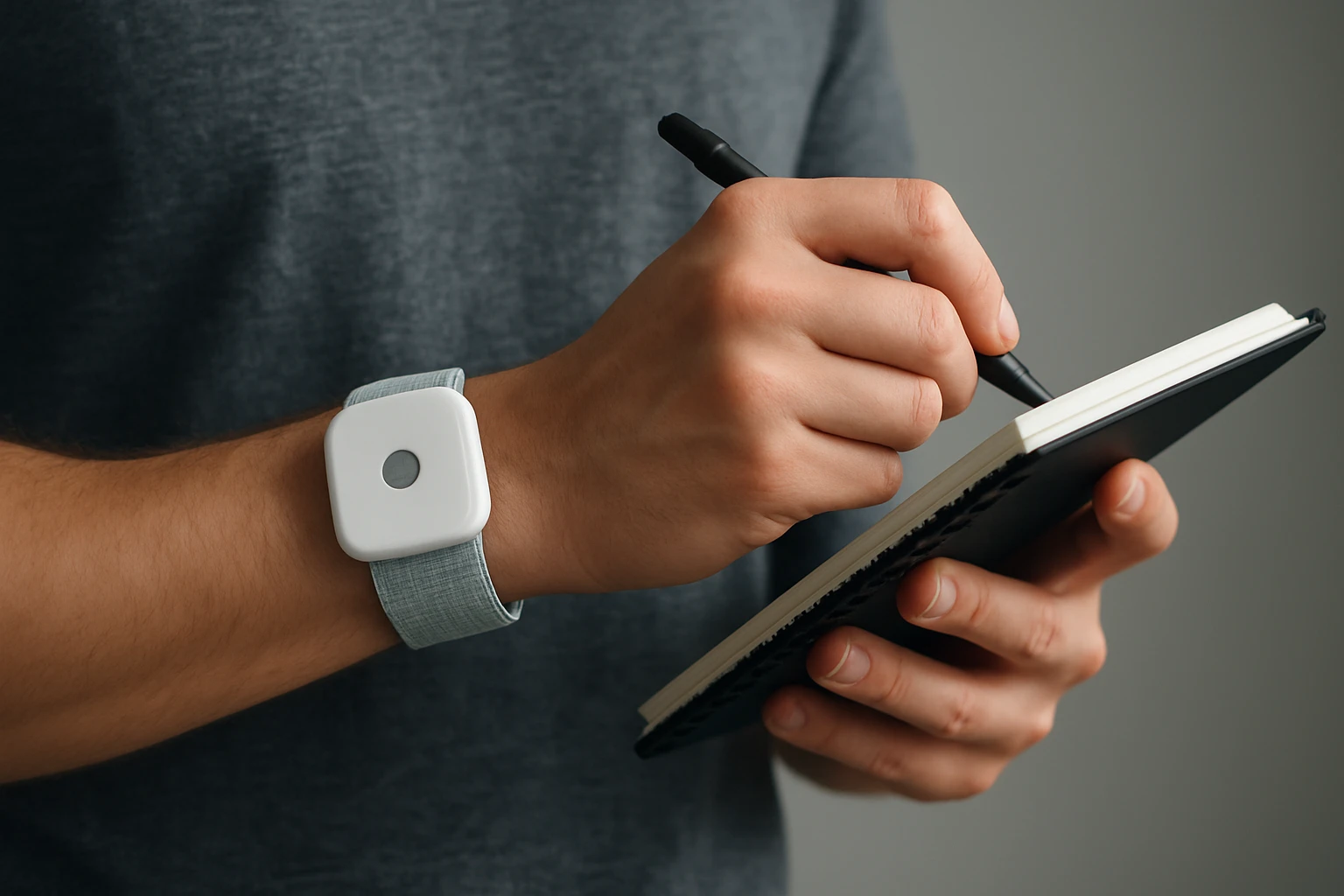
This is where good intentions usually go sideways. Consistency beats enthusiasm. A wearable you use the same way for six weeks teaches you something. A wearable you use whenever you remember teaches you almost nothing.
Change one variable per week or you will not know what actually helped.
Apply the wearable on the same schedule every cycle
Pick a schedule you can live with when life gets annoying. If the device works in repeated sessions, maybe that means Monday morning, Thursday morning, Sunday morning, and repeat. If your device is app-controlled through a phone, pick one time window — say 7:30 a.m. before email or 9:30 p.m. before bed — and stick to it.
- Use the same placement each cycle unless instructions say otherwise.
- Set recurring reminders for charging, replacement, or session start times.
- Record missed cycles immediately instead of pretending they didn’t happen.
Some wellness brands say their device is intended to support the immune system and improve overall health. Fair enough. But if you wear it for one day, forget it for two, then restart after a stressful weekend, you haven’t tested the routine — you’ve interrupted it.
Log sleep, stress, pain, and energy every day
Daily logging is where the signal lives. Not in a memory from two Thursdays ago. Not in a hopeful guess because the packaging sounded convincing.
| Time | What To Record | Why It Matters |
|---|---|---|
| Morning | Sleep score, wake-ups, rested/not rested | Sleep gets fuzzy fast if you wait until night |
| Evening | Stress, pain, energy scores | You’ll catch patterns tied to work, meals, and recovery |
| Anytime | Travel, allergy flare, bad night, unusual event | Context keeps you from blaming or praising the wrong thing |
One minute a day is enough. Two if you’re being fancy. If a device uses a smartphone app, routine consistency matters even more because app-controlled formats make it easy to skip a day while telling yourself you “mostly” stayed on track.
Change only one variable at a time
This rule is boring. It is also the rule that keeps your results honest.
Don’t start the wearable, magnesium, a new sleep tea, breathwork, an anti-inflammatory diet, blue-light glasses, and an earlier bedtime all in the same week. I made that mistake one spring while trying to fix travel fatigue and allergy misery. By week 3 I felt somewhat better. Wonderful. I had absolutely no idea why.
- Keep caffeine timing stable for the first two weeks.
- Keep workout intensity roughly stable if possible.
- Delay other new wellness tools unless you’re testing them later on purpose.
Validation checklist: look for trends, not hype
This section is where you earn the right to keep going — or the right to stop. And yes, stopping can be a win. A clean “no real change” is better than paying for another month because a testimonial sounded confident.
Star ratings are social proof; your log is the evidence that matters.
Compare week 1 to week 3 and week 6
Don’t compare Monday to Tuesday and call it insight. Compare phases.
- Use week 1 as your early adaptation window.
- Use week 3 to see whether any improvement repeats.
- Use week 6 to judge whether the pattern held up under normal life.
If you’re testing a wearable that repeats in cycles, week 6 lets you look across many wear cycles instead of obsessing over the first one. That’s the whole point of the six-week span — enough repetition to reveal whether a change sticks.
Use your notes before you use testimonials
Some product pages show ratings and testimonials that mention immune support, pain, clarity, and sleep in the same breath. That kind of feedback is common in this category. It can tell you what users notice. It cannot tell you what happened in your body.
And the SERP landscape is mixed. Some pages read like straightforward product marketing. Others take a much more skeptical tone and point to the long, controversial history around bioresonance claims. When the surrounding noise swings that hard, your own log becomes the referee.
Define what counts as a real win
Make the rule before you review the last week. Otherwise your brain will move the goalposts.
| Possible Result | What It Probably Means | Your Next Move |
|---|---|---|
| One or two better days | Could be normal variation | Do not call it success yet |
| Steady improvement across weeks 3-6 | Potential repeatable signal | Consider continuing with the same routine |
| Mixed results with obvious confounders | Protocol too noisy | Pause and rerun later with tighter controls |
| No change | Probably not useful for this goal right now | Stop or pivot goals |
A real win sounds plain, not mystical: “My sleep score rose from 5-6 most nights to 7-8 most nights by week 5, and the pattern survived a normal workweek.” That’s enough. You don’t need fireworks.
Common misses: fix the mistakes that muddy the results
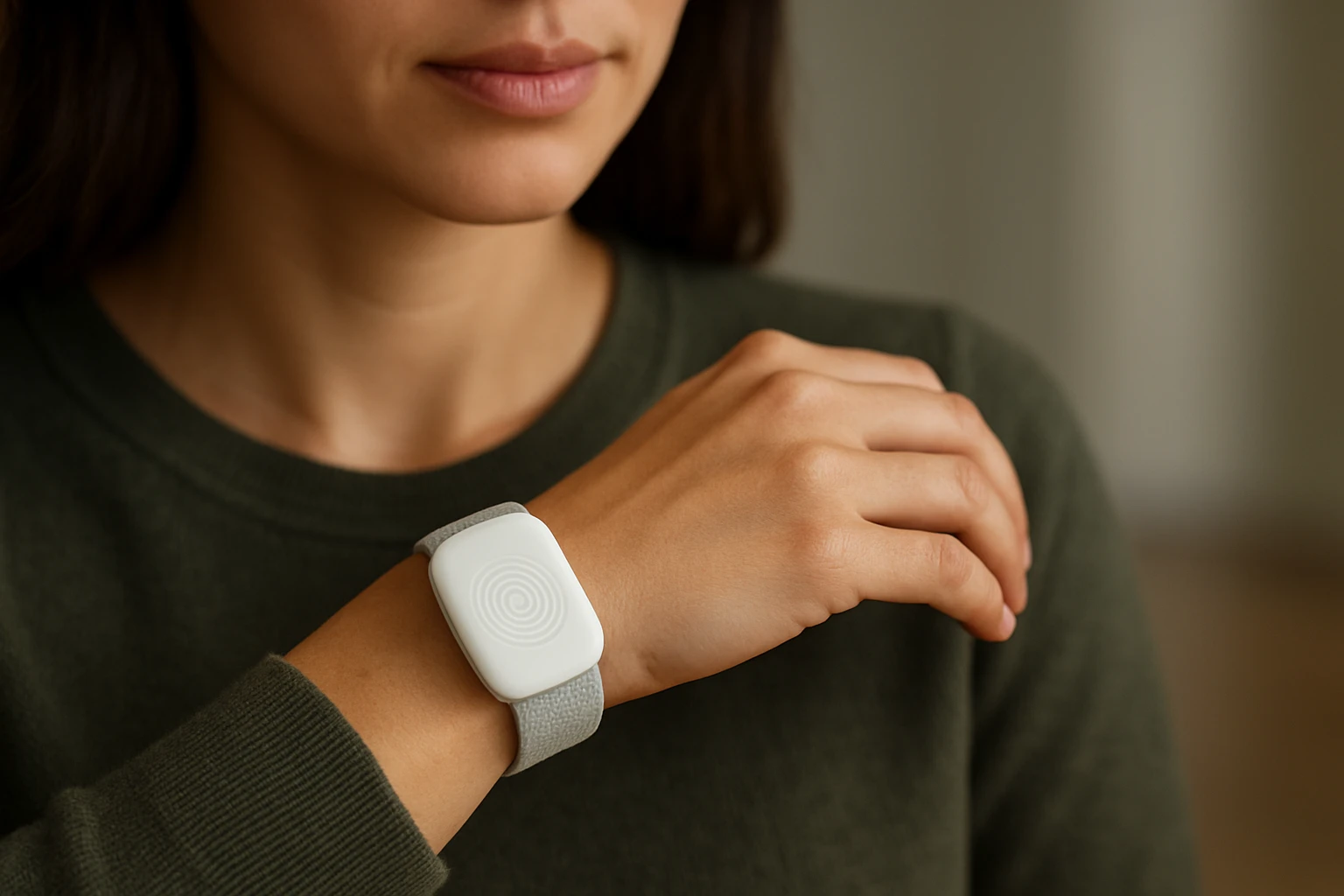
If you want a fair read on a wellness device, guard against false positives and false negatives. A bad protocol can make a weak tool look magical. It can also make a useful tool look useless.
A natural wellness product can still be poorly supported.
Do not stack devices, supplements, and routine changes at once
This is the classic self-sabotage move. You’re excited, so you stack the device, vitamin C, elderberry, extra electrolytes, no alcohol, a new pillow, and a 10 p.m. bedtime. Then three weeks later you tell your friend the wearable “kind of worked.” Maybe. Or maybe the earlier bedtime did the heavy lifting.
- Run the wearable first, with as few new additions as possible.
- Add a second variable only after you’ve logged a stable baseline with the first.
- If you must change something big, mark the date clearly.
Watch for travel, allergy, and sleep disruptions
Some wellness pages specifically market support for travel and even say their products can help with stress and recovery. That means travel and allergy weeks are not background noise — they are major confounders.
Log the stuff people forget to log:
- Flights, hotel stays, time zone shifts, long drives
- High-pollen days, dust exposure, spring cleaning, pet exposure
- Late meals, alcohol, poor sleep, screen-heavy evenings
A bad night in a dry hotel room in Phoenix can blow up your stress and sleep scores all by itself. Write it down.
Treat “natural” and “drug-free” as descriptors, not proof
Some wellness brands describe their products as non-invasive and/or drug-free. Those are meaningful descriptors. They tell you something about the delivery style. They do not, by themselves, prove effectiveness.
Some educational pages go further and discuss biofrequency theory, while also pointing to harsh historical criticism around frequency-based claims. That’s a loaded history. You don’t have to panic over it, but you should let it sharpen your standards. Be curious. Be measured. Keep your notes cleaner than the marketing.
Finish the 6 weeks and decide your next move
This last review should feel calm, almost boring. Not emotional. Not defensive. Just a yes, a no, or a not yet.
Do not extend the experiment by inertia; extend it only if the data give you a reason.
Keep it if the trend line is clear
If weeks 3 through 6 show repeatable improvement against your baseline, keep going. Not because you’re attached to the idea. Because the pattern earned another round.
- Write one sentence explaining the improvement in plain English.
- Keep the routine exactly the same for the next cycle.
- Resist “upgrading” the protocol the moment it starts working.
This is also the moment to avoid automatic subscriptions just because they’re available. Some wellness brands highlight free shipping and a money-back guarantee. Nice perks. Still not evidence.
Pause it if the results are flat or inconsistent
If your scores stayed noisy, flat, or obviously tied to outside factors, pause. A flat result is not failure. It’s an answer.
Look for reasons before you toss the whole idea:
- Were you inconsistent with wear or app sessions?
- Did travel, illness, or stress swamp the entire six weeks?
- Did you change too many things at once?
If the protocol was messy, rerun later with cleaner rules. If the protocol was clean and the results still did nothing, that tells you plenty.
Choose your next 6-week goal from the data
Use the results to choose the next target instead of chasing a new promise. Maybe your pain score barely moved, but sleep improved. Fine — make sleep durability your next six-week goal. Maybe travel weeks are your real weak spot. Then design the next round around travel recovery instead of “overall wellness.”
| If Your Data Show... | Decision | Next Goal |
|---|---|---|
| Clear improvement in one area | Continue | Strengthen that one area without adding noise |
| Mixed results tied to life events | Pause and tighten method | Retest during a calmer six-week window |
| Flat results across all tracked outcomes | Stop | Try a different wellness strategy or goal |
The practical rule is simple: continue only when you can point to repeatable improvement in your own log. That’s how you keep a six-week trial from turning into a permanent maybe.
A frequency wearable to support overall wellness earns its place only when your six weeks show a repeatable pattern, not just a persuasive story.
If your sleep, stress, pain, or energy moved in a clear direction, you have something to build on. If they didn’t, you still gained something valuable — a clean answer. What would your next six-week test look like if you trusted your notes more than the claims?
Find Better Balance With Anywhere Healing
Anywhere Healing pairs biosensors with precise frequency delivery to support sleep, ease discomfort, improve recovery, and promote non-invasive wellness.
Explore Devices


