

7 Evidence-Based Benefits of a Drug Free Sleep Aid Wearable Device and How to Use One Tonight
At 11:47 p.m., you slip on a soft headband, keep the lights low, and wait to see whether your racing mind will finally settle before the first yawn. The room is quiet except for the fan. Your phone is face down. You are not looking for a knockout punch. You are looking for a nudge.
If you have ever stared at the ceiling at 2:13 a.m. and done the math on how miserable tomorrow will feel, the appeal of a drug free sleep aid wearable device makes immediate sense. These devices promise something simple and very tempting: help your body move toward sleep without pills, sedation, or the fuzzy next-morning hangover some people get from medication.
But this category gets messy fast. Different sleep and wellness wearables show up in the current search results, and they are not all making the same kind of claim. Some are sold as wellness devices. One is presented as an FDA-cleared home-use treatment for chronic insomnia. Some cite company studies. Some lean hard on testimonials. I have tested enough bedtime gadgets over the years to know the marketing gets loud right where you feel most desperate.
So let’s make this practical. I’ll walk you through what these devices actually are, how they work in plain English, the seven benefits the current evidence suggests, how to try one tonight, and how to avoid the mistakes that make good tools look useless.
Fundamentals: What a Drug Free Sleep Aid Wearable Device Is
What counts as a sleep wearable versus a tracker
Watch This Helpful Video
To help you better understand drug free sleep aid wearable device, we've included this informative video from WGN News. It provides valuable insights and visual demonstrations that complement the written content.
A tracker watches. A sleep wearable tries to do something.
A smartwatch or ring mostly collects data: bedtime, wake time, heart rate, movement, maybe estimated sleep stages. That can be useful, but it is still observation. An active sleep wearable goes a step further and tries to influence your nervous system or brain activity with stimulation, vibration, or frequency-based signals.
Some products say they train the nervous system, use frequency-based signals for sleep and stress support, or offer non-invasive home-use treatment for insomnia. Those are very different levels of intervention, which is why lumping every “sleep gadget” into one bucket leads to bad buying decisions.
Drug-free should mean no pills and no sedation, not no evidence.
Who these devices are designed for
Usually, these products are built for one of three people.
- The person who cannot downshift at bedtime because stress, pain, or mental chatter keeps the system revved up.
- The person who falls asleep eventually but wakes at 2:00 or 3:00 a.m. and cannot get back there.
- The person who wants non-invasive support because medication side effects, next-day grogginess, or bedtime sedation just are not appealing.
That last group is bigger than you might think. A lot of people are not anti-medicine; they just do not want sleep help to feel like getting hit with a frying pan. That is why the “support, not sedation” angle matters so much.
Still, context matters. Someone with occasional stress-related sleep trouble is not the same as someone with long-running sleep problems, suspected sleep apnea, or severe pain. A general wellness wearable sits in a different lane from a device marketed for calm and better rest.
What to look for before you believe the claims
Here is the boring checklist that saves you money.
- Look for measured outcomes: time to fall asleep, number of wake-ups, total sleep gained, deep sleep, REM, or stress reduction.
- Check whether the evidence comes from an FDA-cleared indication, a clinical study, a white paper, or straight marketing copy.
- Find the protocol. Was the device used for 15 minutes before bed, 30 minutes daily, or during middle-of-the-night wake-ups?
- Check the trial window. Some products mention trial periods or return policies, which may help with cost. Trial periods matter even more.
- Separate “helped people in a study” from “will definitely work for you.” Those are not the same sentence.
I also like to ask one blunt question: if the claim sounds huge, is the proof equally solid? Some brands present concrete outcomes and trial windows. That is useful. It is not a free pass. The evidence still needs context.
How It Works
Neurostimulation and frequency-based signals
The short version: these devices try to nudge your brain or nervous system toward a sleep-friendly state instead of forcing sleep the way a sedative might.
Some products say they deliver gentle, personalized neurostimulation before bed, while others use frequency-based signals to support sleep, calm, and energy. Some frame their method as touch therapy or wearables that help the nervous system recover from stress. Different mechanism, same broad goal: less arousal, better transition into sleep.
Think dimmer switch, not off switch. That distinction matters because it shapes your expectations. If you are waiting for a dramatic “lights out” sensation like melatonin, antihistamines, or Ambien, you may miss what the device is actually trying to do.
The goal is to nudge sleep signals, not knock you out.
Why timing matters before bed
Most of these products are not meant to be slapped on whenever you remember them. Timing is part of the treatment.
Some products say 15 minutes before bed. Others use 30 minutes daily for several weeks. Some suggest a reset if you wake up in the middle of the night. This makes sense in real life. Your nervous system does not flip from “emails, dishes, and doomscrolling” to “deep sleep” in a single second. A bedtime session works best when it lands inside a real wind-down window — lights low, stimulation down, body no longer acting like it is 2:00 p.m.
What users may feel during a session
Usually? Not much drama.
Depending on the device, you may feel a mild physical sensation, subtle vibration, or almost nothing beyond wearing it. With neurostimulation products, “gentle” is the word that keeps showing up in the product language. That should reassure you. If a sleep device feels harsh, distracting, or weirdly energizing, something is off — the fit, the settings, the timing, or the device match.
I tell people to pay attention to the wrong kind of excitement. If you become hyper-aware of the gadget itself, that can sabotage the very state you are trying to create. Comfort counts more than marketers admit.
7 Evidence-Based Benefits You Can Realistically Expect
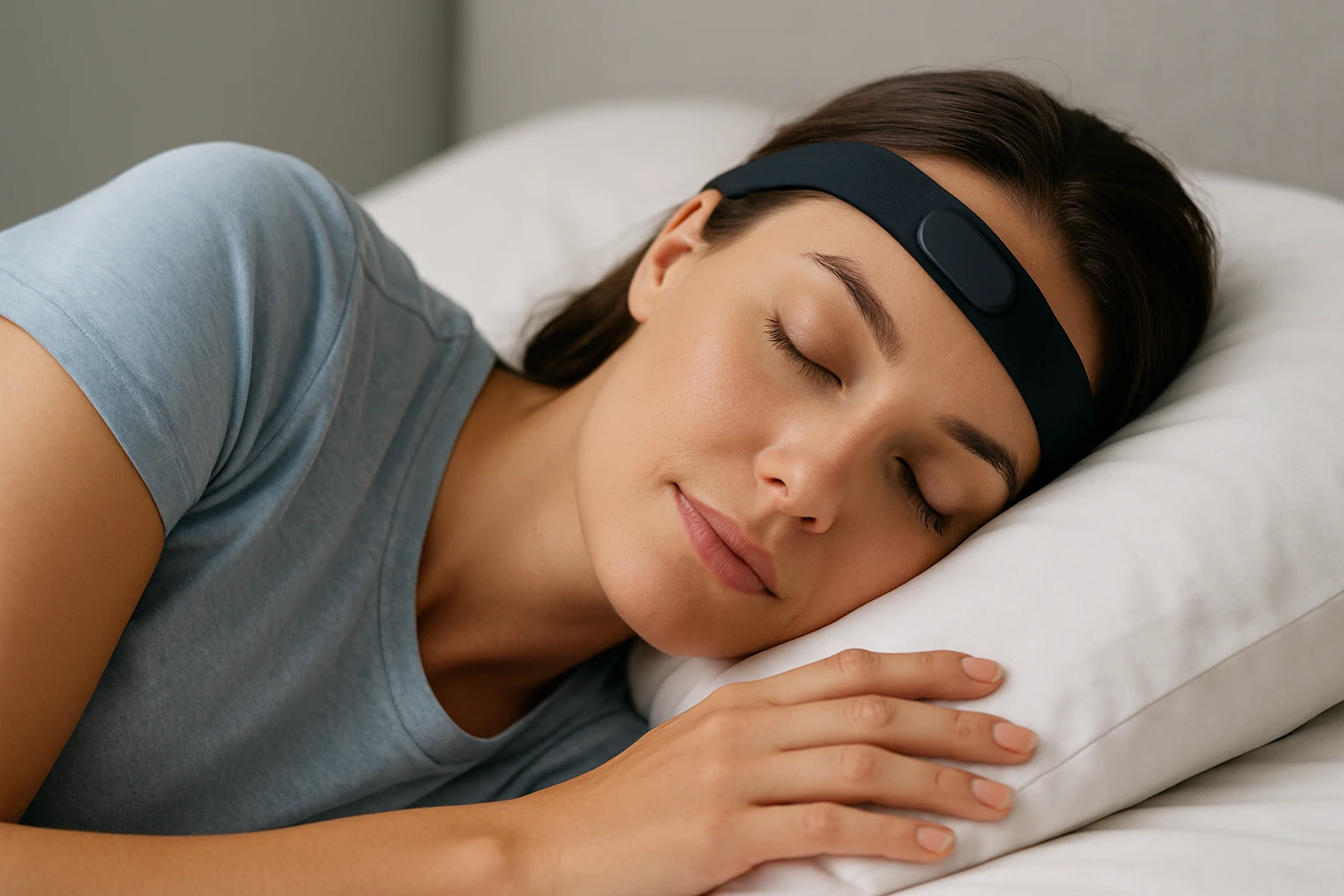
Before we get into the seven benefits, one honest caveat: the evidence in the current search results does not all sit on the same rung. Some claims come from company-reported studies or white papers. Others are wellness claims on product pages. So read the numbers as useful signals, not guaranteed outcomes.
| Outcome | Example claim from current top results | Why it matters |
|---|---|---|
| Faster sleep onset | Some products say participants fell asleep significantly faster; others report quicker sleep onset | Helpful if bedtime is your main battle |
| Fewer wake-ups | Some products say wake-ups were cut; others say they can help restart sleep | Useful if you wake at 2:00 or 3:00 a.m. |
| More total sleep | Some products report users gained more sleep | Even small gains add up over a week |
| Deeper sleep | Some products say they boost restorative deep sleep or REM sleep | Rest quality matters, not just total minutes |
| Lower stress | Some products report less stress or better recovery from stress | Less pre-bed arousal can improve sleep indirectly |
Benefit 1-3: faster sleep onset, fewer wake-ups, and better sleep efficiency
-
Faster sleep onset. This is the headline benefit for most shoppers, and it is the most obvious one to notice. Different products and studies report faster sleep onset. Different studies, different methods, different devices — but the theme is consistent.
-
Fewer wake-ups. If you fall asleep fine but keep surfacing at 1:40 a.m. and 4:05 a.m., this may matter more than sleep onset. For a lot of adults, that is the real pain point.
-
Better sleep efficiency in the everyday sense. I am using that term practically here — more of your time in bed turns into actual sleep. If wake time goes down and total sleep goes up, your night starts working harder for you.
I like these first three benefits because they are concrete. You do not need a PhD or a $3,000 lab setup to notice them. You need a clock, a rough estimate, and a little honesty.
Benefit 4-5: deeper rest and more REM or restorative sleep
-
More restorative deep sleep. Some products say their device boosts restorative deep sleep. That matters because “I slept eight hours” and “I woke restored” are not the same thing. A night can be long and still feel useless.
-
More REM sleep. Some products say users may see more REM sleep. That is interesting, especially for people focused on recovery, mood, and next-day mental sharpness, though sleep-stage estimates can vary depending on how they are measured.
Some materials go further, saying the device was more effective than other common sleep aids in certain comparisons. That is exactly the kind of big, shiny claim that should make you slow down and inspect the methods. It may point to promising results. It does not mean you should casually dismiss established care, especially CBT-I, which is still widely considered a first-line approach for chronic insomnia.
Benefit 6-7: lower stress and a non-drug alternative to bedtime routines
-
Lower stress before bed. Some products say they help the nervous system recover from stress or reduce stress levels. Even when the device is not “for sleep only,” stress regulation can be a direct path into better sleep.
-
A non-drug alternative to sedating bedtime routines. This may be the quiet benefit people appreciate most after a week or two. A wearable gives you a repeatable, non-invasive routine that does not rely on feeling chemically drowsy. That is especially attractive for people trying to avoid medication side effects or heavy bedtime sedation. Some products report that benefits may build with repeated use rather than show up as a one-night party trick.
Look for measured outcomes like minutes to sleep, wake-ups, and deep sleep — not just vague claims of feeling calmer.
How to Use One Tonight
Set up your sleep window and reduce friction
Your first night should be simple enough that you can repeat it tomorrow.
Pick a 30-minute sleep window — say 10:45 to 11:15 p.m. Charge the device. Put your phone on airplane mode or at least Do Not Disturb. Lower the lights. If you know caffeine after 3:00 p.m. wrecks your sleep, do not test a wearable on the same night you had an iced latte at 6:30. I have done the “late sushi, one glass of wine, two episodes of The Bear, then surprise sleep tech test” routine before. That is not an experiment. That is sabotage.
Make the room boring on purpose. Cool temperature. Curtains closed. Water nearby. No scavenger hunt for cables or app passwords at bedtime.
Run the first session the same way every night
Follow the device instructions, not your instincts. If the brand says 15 minutes before bed, do 15. If the study used 30 minutes daily, do that. Don’t freelance on night one.
- Start the session at the same time each night for at least several nights.
- Stay off stimulating screens while the session runs.
- Move straight into bed when it ends.
- If your device supports middle-of-the-night use, use it only if you wake naturally — not because you are checking whether it still works.
- Keep everything else boringly similar.
Some products frame their use as repeated sessions over multiple nights. That should tell you something important: these tools are designed for repeated use, not random one-offs when you are already exhausted.
Check tomorrow morning for the right signals
Do not ask, “Did I sleep perfectly?” That is too blunt.
Ask these instead:
- How long do I think it took me to fall asleep?
- How many times did I wake up?
- If I woke, how quickly did I get back to sleep?
- How groggy did I feel at 7:00 a.m.?
- Did bedtime feel less effortful?
A simple 1-to-5 rating in your notes app is enough. You are looking for trend lines, not a dramatic movie montage on night one.
Consistency beats intensity: use the same bedtime slot before judging whether it works.
Best Practices for Better Results
Pair it with basic sleep hygiene
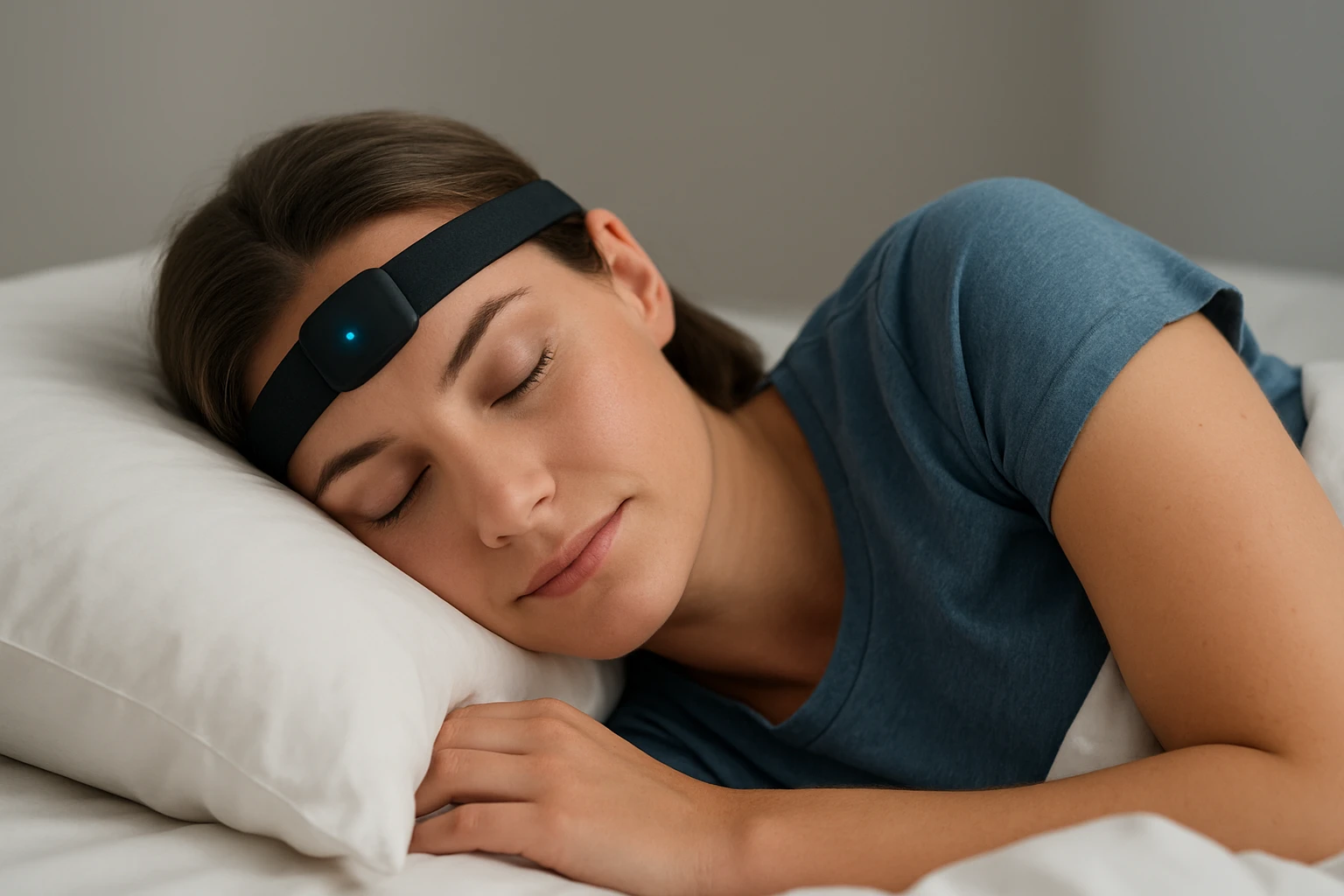
Sleep wearables work better when you stop asking them to fight your whole lifestyle alone.
- Keep wake time more consistent than bedtime.
- Dim the room 30 to 60 minutes before bed.
- Save alcohol for nights when you are not pretending to run a clean sleep test.
- Watch late caffeine, especially after 2:00 or 3:00 p.m.
- If pain is part of the problem, build comfort first — pillow, temperature, mattress, and position still matter.
No wearable can fully outwork bright light, stress, reflux, neck pain, and TikTok at midnight. That is just reality.
Use one variable at a time
This is where smart people wreck their own results.
If you change the wearable, your magnesium, your blackout curtains, your bedtime, and your evening coffee all in the same 48 hours, you will learn absolutely nothing. I have done this myself. It feels productive. It is not.
If you change the wearable, your caffeine, and your bedtime all at once, you will not know what helped.
Pick one main change. Let it breathe for a week or two. Then adjust if needed.
Track changes for at least a few weeks
The top results are pretty clear about repeated use. Some products frame the habit over several weeks. This is not “buy it Friday, judge it Saturday, return it Monday” territory.
That said, the return window still matters. Some brands advertise money-back guarantees or trial periods. Those windows are generous enough to run a real test if you actually use the device nightly.
HSA/FSA eligibility also shows up across multiple results. For some buyers, that lowers the friction from “too expensive” to “worth a serious look.”
Common Mistakes to Avoid
Expecting instant or permanent results
A good first night is nice. It is not proof. A bad first night is annoying. It is not failure.
Some products’ multi-night framing hints at the same truth: benefits may build over time. Other reports say improvements were maintained for weeks after repeated use, which is encouraging, but it still included the sensible reminder that individual results may vary.
That is how real sleep work behaves. It is rarely a fireworks show. It is more like a graph slowly bending in the right direction.
Using it inconsistently or at the wrong time
Night one at 10:30. Night two skipped. Night three at 12:40 after doomscrolling. Night four forgotten on the charger. Then you decide it “doesn’t work.” Come on.
With sleep tech, sloppy timing creates noisy results. If the instructions say pre-bed, do pre-bed. If your main issue is waking in the middle of the night, choose a device designed for that use case. Matching the device to the problem matters as much as the device itself.
Skipping medical guidance when sleep problems are persistent
This is the part I never like to soft-pedal. Ongoing sleep problems deserve real attention.
If sleep problems keep rolling for weeks or months, or you also have loud snoring, gasping, major mood symptoms, restless legs, chronic pain, reflux, medication changes, or extreme daytime sleepiness, get evaluated. A wearable can help support sleep. It cannot diagnose sleep apnea, iron deficiency, depression, or an underlying medical issue.
A sleep wearable is a support tool, not a substitute for diagnosis.
Tools and Resources to Compare Before Buying
Clinical evidence and regulatory status
Start here, because this is where the category separates.
Some products are presented as FDA-cleared home-use treatments, while others are mostly wellness devices making company-backed claims about outcomes like faster sleep onset, fewer wake-ups, or lower stress. Those claims may still be useful, but they do not all carry the same weight.
| Brand | What the current top result says | Trial or return window | Cost or access notes |
|---|---|---|---|
| Example sleep headband | Sleep headband; says participants fell asleep significantly faster; can help restart sleep after waking | 30-day money-back guarantee, less shipping and handling | HSA/FSA eligible |
| Example personalized wearable | 15 minutes before bed; personalized neurostimulation; faster sleep onset, fewer wake-ups, more sleep | 45-day risk-free trial | HSA/FSA eligible |
| Example frequency-based device | Safe, frequency-based signals for sleep, calm, and energy; more REM, faster sleep onset, less stress | 100-day money-back guarantee | Free U.S. shipping; HSA/FSA mentioned on page |
| Example wellness wearable | Wearable for stress, sleep, and performance; says it helps the nervous system bounce back naturally | 30-day money-back guarantee | Broader wellness positioning |
| Example home-use device | Presented as an FDA-cleared home-use treatment for chronic insomnia; reported improvement after several weeks | Check current policy on the official site | Medical-treatment positioning |
Trial length, warranty, and returns
A longer trial window is not just a nice safety net. It tells you whether the company expects the product to need routine use before judgment.
Some brands offer generous windows. Others are tighter. If you buy one of these and use it three times in two weeks, the return policy did not fail you — your test did.
I would rather buy a slightly less flashy device with a usable trial period than a hyped one with vague proof and no room for a fair experiment.
Comfort, app support, and day-to-day usability
The smartest sleep device is the one you can tolerate at 11:00 p.m. when you are already tired and slightly grumpy.
- Can you wear a headband comfortably for 15 to 30 minutes?
- If you wake at night, can you restart a session without fully waking yourself up?
- Will an app help you, or just create another bedtime chore?
- Does the routine feel realistic on a Tuesday, not just on a Sunday reset kick?
Some people love structured app-led routines. Some hate them by night three. Some do not mind a headband. Others will rip it off in six minutes. That is not you being difficult. That is product fit.
The smartest buy is usually the one with the best mix of proof, trial period, and nightly comfort.
A drug free sleep aid wearable device can give you a repeatable, measurable way to work with your body instead of trying to sedate it into submission.
Pick the option with real evidence, a clear nightly protocol, and enough time to test it honestly. If your evenings felt less like a fight and more like a trainable routine, what would change first for you?
Rest Better With Anywhere Healing
Biosensors and precise frequency delivery help ease pain, improve sleep, calm stress, and restore balance through non-invasive, drug-free wearable support.
Explore Relief


