

432 Hz Sound Decoded: 7 Evidence-Based Steps to Reduce Pain + a Wearable Frequency Protocol
What’s the buzz about 432 hz sound right now?
If you have ever typed 432 hz sound into your favorite music app, you have probably fallen into a rabbit hole of playlists, tone generators, and passionate debates. I remember queuing up a 432 Hz (Hertz) playlist after a gnarly leg day and thinking, “Is this really gentler on my nervous system, or am I just hoping it is?” The truth is more nuanced than a simple yes or no, but the conversation is worth having because sound shapes mood, stress, and how we experience pain. You do not need to be a musician to use sound intentionally; you just need a plan and a few practical check-ins.
Here is the plan: we will separate myth from what research actually supports, then pair calming audio with a simple, non-invasive, drug-free wearable frequency protocol from Anywhere Healing. The goal is not to chase miracle claims but to combine small, measurable wins that add up: steadier breathing, lower muscle tension, better sleep cues, and, for many people, less perceived pain. Think of this as your friendly field guide, with realistic expectations and tools you can start using today. Quick note for safety: this content is educational and does not replace care from your clinician; if pain is severe or persistent, please consult a healthcare professional.
What is 432 hz sound?
At its simplest, 432 Hz (Hertz) refers to a pitch reference. Musicians tune instruments so that the A above middle C vibrates at a specific rate per second. Today, most orchestras use A4 = 440 Hz (Hertz). Some artists prefer A4 = 432 Hz (Hertz), which sounds slightly lower in pitch. Advocates say 432 Hz (Hertz) feels warmer or more natural; skeptics say preferences are subjective and tied to context, arrangement, and expectation. Both can be true: people can prefer a tuning and still not have rock-solid clinical data that one tuning fixes pain across the board.
Watch This Helpful Video
To help you better understand 432 hz sound, we've included this informative video from PowerThoughts Meditation Club. It provides valuable insights and visual demonstrations that complement the written content.
To imagine the difference, picture two nearly identical tuning forks. One vibrates 432 Hz (Hertz), the other 440 Hz (Hertz). If you were looking at a simple waveform sketch, the ripples would line up almost perfectly, with the 432 Hz (Hertz) wave just a touch wider. That tiny shift changes how harmonics interact with your ears and nervous system, which can feel calmer to some listeners, especially at lower volumes and slower tempos. Preference, setting, and intention matter more than any single magical frequency.
| Aspect | 432 Hz (Hertz) | 440 Hz (Hertz) | Notes |
|---|---|---|---|
| Tuning reference | A4 = 432 Hz (Hertz) | A4 = 440 Hz (Hertz) | Both are valid references in modern use. |
| Perceived tone | Often described as slightly softer or warmer | Often perceived as brighter or more neutral | Perception varies by instrument, mix, and volume. |
| Listener reports | Many report relaxation and reduced tension | Many report clarity and familiar “standard” pitch | Expectations and context can shape experience. |
| Evidence for pain | Limited direct clinical data specific to tuning | Limited direct clinical data specific to tuning | Music therapy overall shows pain relief potential. |
| Best use | Calming playlists, meditation, wind-down | Everyday listening, performance standards | Either can serve relaxation if tempo and volume fit. |
Why does 432 hz sound matter for pain, stress, and sleep?
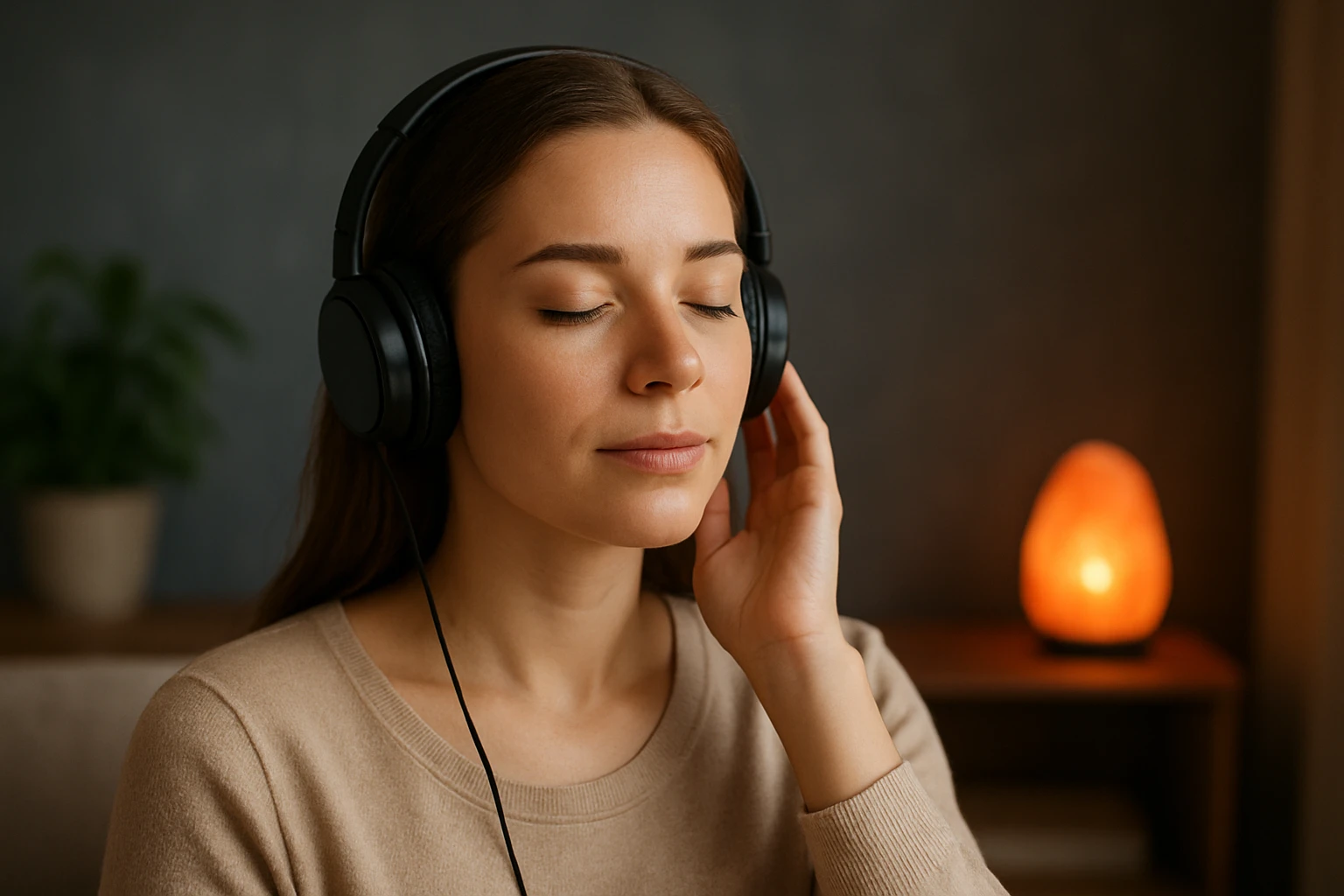
Pain is not just a signal from tissue; it is a whole-brain experience shaped by stress, sleep, mood, and expectations. That is why non-invasive approaches like calming music, breathwork, and gentle movement can nudge the nervous system toward safety and comfort. Large reviews of music therapy suggest small-to-moderate reductions in pain intensity and anxiety, especially when tracks are slow, predictable, and paired with slow breathing. When you combine a soothing soundtrack with a wearable that can read your body’s signals and deliver supportive frequencies, you stack the deck toward relief without adding side effects like drowsiness.
Anywhere Healing positions itself here: when natural cellular frequencies become disrupted, it can result in pain, stress, poor sleep, and other health imbalances. Their wearables use advanced biosensors that read the body’s signals and deliver precise frequency support intended to help the body initiate its natural recovery processes. While individual results vary, many users choose this approach because it is non-invasive, drug-free, and practical for daily life. And because sound is easy to layer in, 432 Hz (Hertz) playlists can become a simple, repeatable ritual that anchors a broader wellness routine.
- Chronic pain affects roughly 1 in 5 adults worldwide (World Health Organization, WHO (World Health Organization)).
- Slow breathing at 4 to 6 breaths per minute often improves HRV (heart rate variability) and lowers perceived stress in controlled studies.
- Music therapy meta-analyses report reductions in pain and anxiety across diverse settings, especially when listeners choose preferred, calming tracks.
How does it work in the body—plausibly and practically?
Three mechanisms explain why calming audio can help. First, autonomic regulation: slow, steady sound supports slower breathing and activates the vagus pathways, which can shift you from fight-or-flight toward rest-and-digest, often reflected as higher HRV (heart rate variability). Second, attention and meaning: predictable sound guides attention away from pain and reframes it through a safe, soothing context. Third, muscle and movement: relaxing audio pairs well with progressive muscle relaxation and gentle mobility, which reduce guarding and amplify comfort through the spinal “gate control” pathways.
What about the actual frequency? For many people, the win is not one frequency, but the combination of tempo, volume, predictability, and intention. That said, if 432 Hz (Hertz) feels good to you, it becomes a signal your brain associates with safety and recovery, and that conditioning is powerful. Anywhere Healing’s wearables add a precision layer: advanced biosensors watch for body signals moment by moment and help deliver supportive frequencies intended to restore balance. In practice, it is more like a feedback-guided lullaby for your nervous system than a single silver-bullet tone.
How do I actually use it? 7 evidence-based steps + a wearable frequency protocol
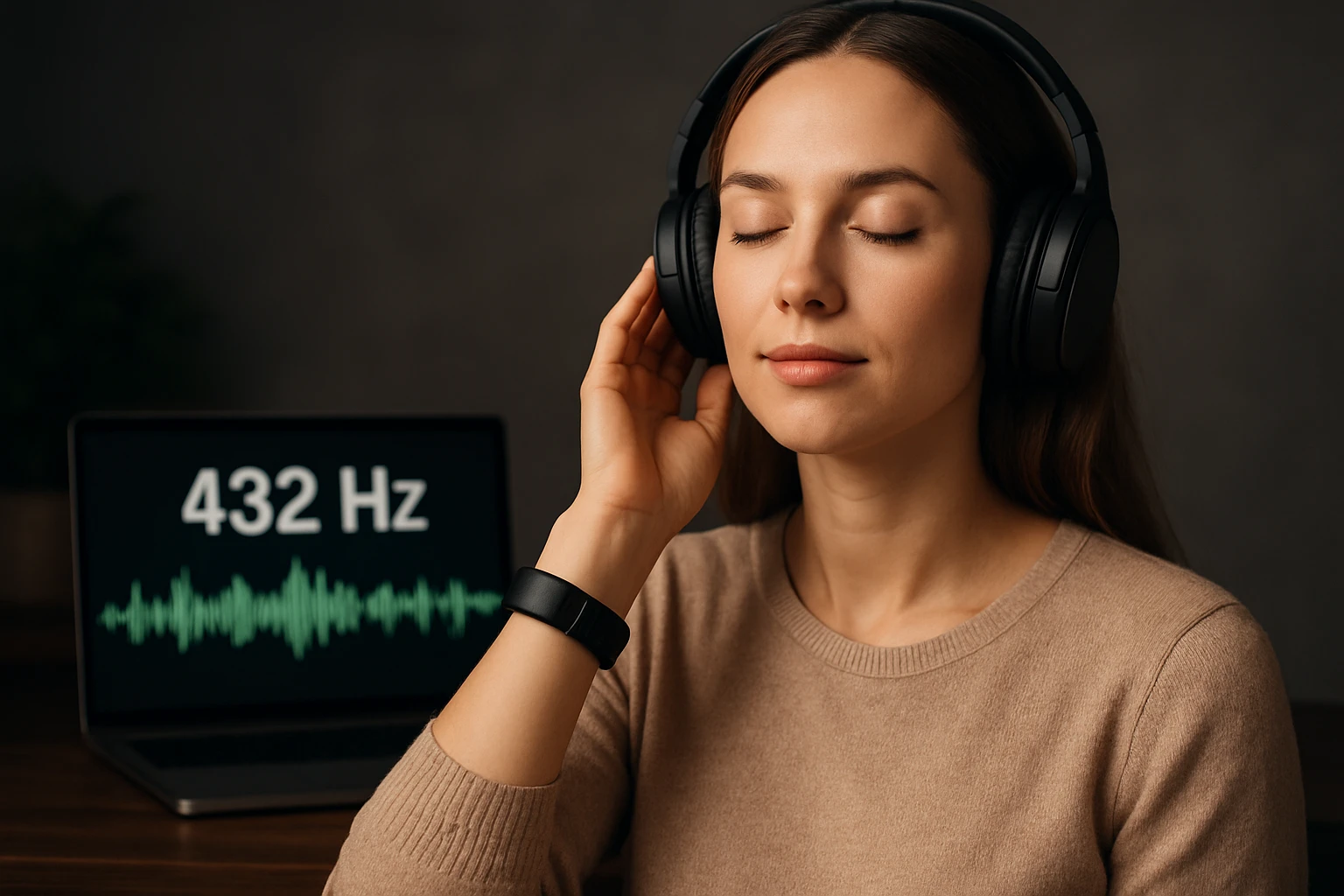
Below are seven steps that borrow from well-researched domains—breathwork, relaxation, sleep hygiene, and music therapy—then combine them with Anywhere Healing’s frequency wearables. They are simple, scalable, and designed to fit real life. I use a 0 to 10 pain rating to track change, along with a quick note about sleep quality and mood. Expect small, steady improvements rather than instant miracles; consistency beats intensity here.
-
Set intention and baseline (2 minutes).
Before you press play, choose a clear goal: “Soften back tension” or “Wind down for sleep.” Rate pain and tension 0 to 10. Research on the meaning response shows that intention can amplify benefit in both clinical and everyday settings. This is not about fooling yourself; it is about aligning attention with recovery, which calms threat detection circuits.
-
Choose the track and volume (20 minutes).
Pick a 432 Hz (Hertz) playlist or tone that you genuinely like. Favor tempos around 60 to 70 bpm (beats per minute) and a volume where you could still hold a conversation, roughly 50 to 60 dB (decibels). Lower volume reduces startle reflex and promotes vagal calm. If lyrics pull your mind into worry, choose instrumental first; you can experiment with vocals later.
-
Slow-breath anchor (five cycles every few minutes).
Inhale through the nose for 4 seconds and exhale for 6 seconds, repeating for a few minutes. Slow exhalations stimulate parasympathetic tone and can raise HRV (heart rate variability). Many people feel shoulders drop within 60 to 120 seconds. If 4-6 feels awkward, try 3-5 and work up—comfort is the metric, not heroics.
-
Progressive release scan (3 to 5 minutes).
Starting at the feet, gently tense for 3 seconds and then release. Move upward—calves, thighs, abdomen, chest, shoulders, hands, face. Progressive muscle relaxation has decades of evidence for reducing pain and anxiety by lowering guarding and improving interoception. Pair the release phase with your 432 Hz (Hertz) track’s exhalation.
-
Micro-mobility and circulation (3 to 5 minutes).
Do gentle joint circles or two yoga flows like cat-cow and child’s pose, synchronized to the music tempo. Light movement improves circulation and reduces stiffness without spiking threat signals. If you prefer stillness, do ankle pumps and fist open-close; small moves count. Hydrate with a few sips of water to support circulation and detoxification pathways.
-
Add the wearable frequency layer (10 to 30 minutes).
Anywhere Healing’s devices—Frequana, Alpha Wearable, and Charisma Ring—use advanced biosensors that read the body’s signals to help deliver precise frequency support. Choose placement near the area of concern (when appropriate) or on a neutral site like the wrist. Keep intensity comfortable. Many users report that pairing the wearable with 432 Hz (Hertz) audio deepens relaxation and reduces perceived pain more reliably than sound alone.
-
Close with a check-in and wind-down habit (2 minutes).
Re-rate pain and tension 0 to 10. Jot one sentence: “What helped most?” Consistency thrives on frictionless routines, so staple this to something you already do—your afternoon tea, pre-bed reading, or a post-walk stretch. For bedtime, dim lights, keep screens out, and let a 432 Hz (Hertz) playlist run at ultra-low volume for 15 minutes to cue sleepiness.
Anywhere Healing wearable frequency protocol (simple daily template)
Use the table below to customize sessions to your goal. You can repeat up to three times daily on tougher days. This is non-invasive and drug-free, designed to support healthy circulation, stress relief, and sleep quality. If you have a medical device implanted or specific health concerns, check with your clinician first.
| Time | Goal | Audio | Wearable | Placement | Duration | Notes |
|---|---|---|---|---|---|---|
| Morning | Set calm tone | 432 Hz (Hertz) instrumental, 60 to 70 bpm (beats per minute) | Alpha Wearable | Wrist or forearm | 10 to 15 min | Slow breathing 4-6; light mobility after. |
| Afternoon | Reduce tension | 432 Hz (Hertz) ambient, low volume | Frequana | Near area of discomfort when suitable | 10 to 15 min | Progressive muscle release scan. |
| Evening | Sleep cues | 432 Hz (Hertz) lull or nature blend | Charisma Ring | Ring finger (left or right) | 10 min | Lights dim, screens away, cool room. |
Choosing among the wearables
| Device | Best for | Unique feature | Example use with 432 Hz (Hertz) |
|---|---|---|---|
| Frequana | Targeted areas of discomfort | Focused output with advanced biosensors that read the body’s signals | Place near the tense muscle while a 20-minute playlist runs |
| Alpha Wearable | All-day balance and stress relief | Adaptive support to promote autonomic balance | Morning calm session to set the day’s tone |
| Charisma Ring | Subtle, portable ease and social calm | Discrete, always-with-you format | Evening wind-down with low-volume audio |
Each device is non-invasive and drug-free. Users often report benefits that include reduced muscle tension, improved sleep quality, a sense of restored balance, healthier circulation support, and a calmer mood. Anywhere Healing positions these tools to help enhance cellular communication and immune resilience by supporting the body’s natural rhythms and helping correct disrupted frequencies. As always, experiences vary, and these tools are not medical devices for diagnosis or treatment of disease.
Common questions about 432 hz sound and wearables
Does 432 Hz (Hertz) cure pain? No single frequency cures pain. However, gentle sound can support stress reduction and better sleep, which often reduces pain intensity. 432 Hz (Hertz) may be a helpful part of a broader routine many people find soothing.
Is there strong clinical proof that 432 Hz (Hertz) outperforms 440 Hz (Hertz)? Direct head-to-head clinical data are limited. Most benefits come from the broader music therapy package: slower tempo, lower volume, listener preference, and relaxing context. If you prefer 432 Hz (Hertz), use it.
How loud should I listen? Aim for a conversational level, about 50 to 60 dB (decibels). Louder is not better for relaxation. If you feel your jaw clench or shoulders rise, turn it down.
Headphones or speakers? Whatever helps you relax. Open speakers reduce isolation and can feel softer; headphones may be better for focus. If using headphones, keep volume modest and choose comfortable pads.
How often should I practice? Start with 1 to 2 sessions daily for 10 to 20 minutes each. On tougher days, add a mid-day session. Consistency across 2 to 4 weeks is a better test than one mega-session.
Any risks or side effects? Generally, calming audio and non-invasive wearables are well-tolerated. If you have implanted devices or a health condition, talk with your clinician. If you notice dizziness or unusual symptoms, pause and reassess settings.
What if I do not like 432 Hz (Hertz) tracks? No problem. Keep the principles: slow tempo, low volume, predictable patterns, and an intention to relax. Preference is a feature, not a bug; choose what makes your body exhale.
Where does Anywhere Healing fit with medical care? It is a wellness approach designed to complement, not replace, professional care. When natural cellular frequencies become disrupted, it can result in pain, stress, poor sleep, and other health imbalances; Anywhere Healing’s wearables use biosensors to detect and correct these disrupted frequencies, helping the body initiate its natural recovery processes for improved well-being.
What’s the smart next step?
Use sound to nudge your nervous system, then let biosensor-guided frequency support make those gains stick. Start simple, track what helps, and build the routine you will actually keep. In the next 12 months, small daily sessions can compound into steadier sleep, calmer days, and fewer pain spikes.
Imagine your living room turning into a low-tech recovery studio: soft lights, gentle breathing, a 432 Hz (Hertz) playlist, and a wearable quietly syncing to your needs. What experiment will you run this week with 432 hz sound to learn what your body loves most?
Elevate 432 Hz Results with Anywhere Healing
Advanced biosensors that read the body’s signals detect and correct disrupted frequencies, helping your body begin natural recovery for less pain, deeper sleep, and balanced energy.
Start Relief Now


