

7 Lab-Backed Checks to Confirm Your Targeted Therapy Wearable Actually Reduces Pain and Improves Sleep
If you invested in a targeted therapy wearable because pain keeps hijacking your days and restless nights keep ambushing your energy, you deserve objective proof it works for you. That is where a simple, science-fluent checklist earns its keep. Instead of guessing based on a couple of good nights, you will gather clean, comparable data that shows whether relief is real, sustained, and meaningful. And yes, you can do this without a lab coat, using tools you already have at home and a few smart habits. The upside is huge, because dialed-in devices often produce faster comfort and more predictable sleep when the routine is right.
Personally, I learned this the hard way. The first time I tried a frequency-based device, my first two nights felt promising, then life happened, and my results got muddy. Only when I set baselines, locked in a schedule, and measured changes week by week did the pattern click. In this guide, you will follow the same playbook, plus a few Anywhere Healing insights on biosensors, precise frequency delivery, and choosing between Frequana, Alpha Wearable, and the Charisma Ring. Ready to put your relief on evidence-based rails?
Pre-work checklist
-
Define your top outcome in plain language.
Pick one primary goal so your results are focused. For example, reduce evening low back pain by two points on a 0 to 10 scale, or fall asleep within 20 minutes on five nights per week. Clear targets prevent cherry-picking wins and help you choose the right device placement and session timing. If you have a secondary goal, like fewer 3 a.m. wake ups, write it down too so you can track it without diluting your main outcome.
-
Capture seven clean baseline days.
Before you start, record pain twice daily using the Numeric Pain Rating Scale [Numeric Pain Rating Scale], plus a short sleep diary each morning. Note bedtime, time to fall asleep, wake ups, and total sleep time. If you already wear a tracker, export heart rate variability [heart rate variability] and sleep efficiency, but keep routines steady. These baselines are your control condition that tell you what your normal looks like, noise and all.
-
Choose the right Anywhere Healing device for your target.
Anywhere Healing devices use advanced biosensors that read your body’s signals, then deliver precise frequencies designed to reduce pain, improve sleep, and restore balance. With multiple wearable options, you can match the job to the tool. Frequana excels for broad, body wide balance, Alpha Wearable targets localized discomfort and stress response, and the Charisma Ring supports gentle, all day regulation and sleep readiness. The table below simplifies selection.
Device Best For Typical Placement Key Strength Everyday Example Frequana Whole body balance, recovery, sleep preparation Worn on the wrist (watch form factor) Broad frequency sets; designed for whole-body balance, recovery, and sleep Evening routine to ease into deeper, steadier sleep Alpha Wearable Localized musculoskeletal pain, stress spikes Near the pain site or vagal region when guided Targeted intensity, precise frequency delivery for fast relief Short sessions before and after activity to calm flare ups Charisma Ring Day long regulation, sleep onset, gentle support Ring finger Subtle, sustained signaling that enhances cellular communication and immune resilience Wear daily to smooth stress, then shift to sleep modes at night All three are non invasive and drug free, and they are designed to support your body’s own recovery processes by correcting disrupted cellular frequencies.
-
Map your first four week plan.
Plan a simple A then B approach. Week 1 is baseline only, Weeks 2 and 3 are on device, and Week 4 is optional off device to confirm effects revert. Keep nutrition, caffeine, and bedtime consistent. If you work shifts, anchor sessions to wake and wind down windows. Consistency will do more for your results than any single hack, because it reduces the background static that can hide real change.
-
Assemble your toolkit.
You will need a notes app or paper log, a simple pain scale, and a timer. If you can, add a low cost algometer for pressure pain threshold, plus a wearable that tracks heart rate variability [heart rate variability] and sleep stages. Optional add ons include a saliva test kit for morning cortisol awakening response [cortisol awakening response] and a 30 second sit to stand counter. None of these are mandatory, but each adds a layer of confidence.
-
Set guardrails and get clearance if needed.
Do not change prescription medications without your clinician. If you are pregnant, have an implanted device, or manage a significant condition, talk with your healthcare provider first. Anywhere Healing devices are non invasive and designed for wellness, but your context matters and a quick check in avoids surprises.
Execution checklist
-
Run consistent sessions at the same times daily.
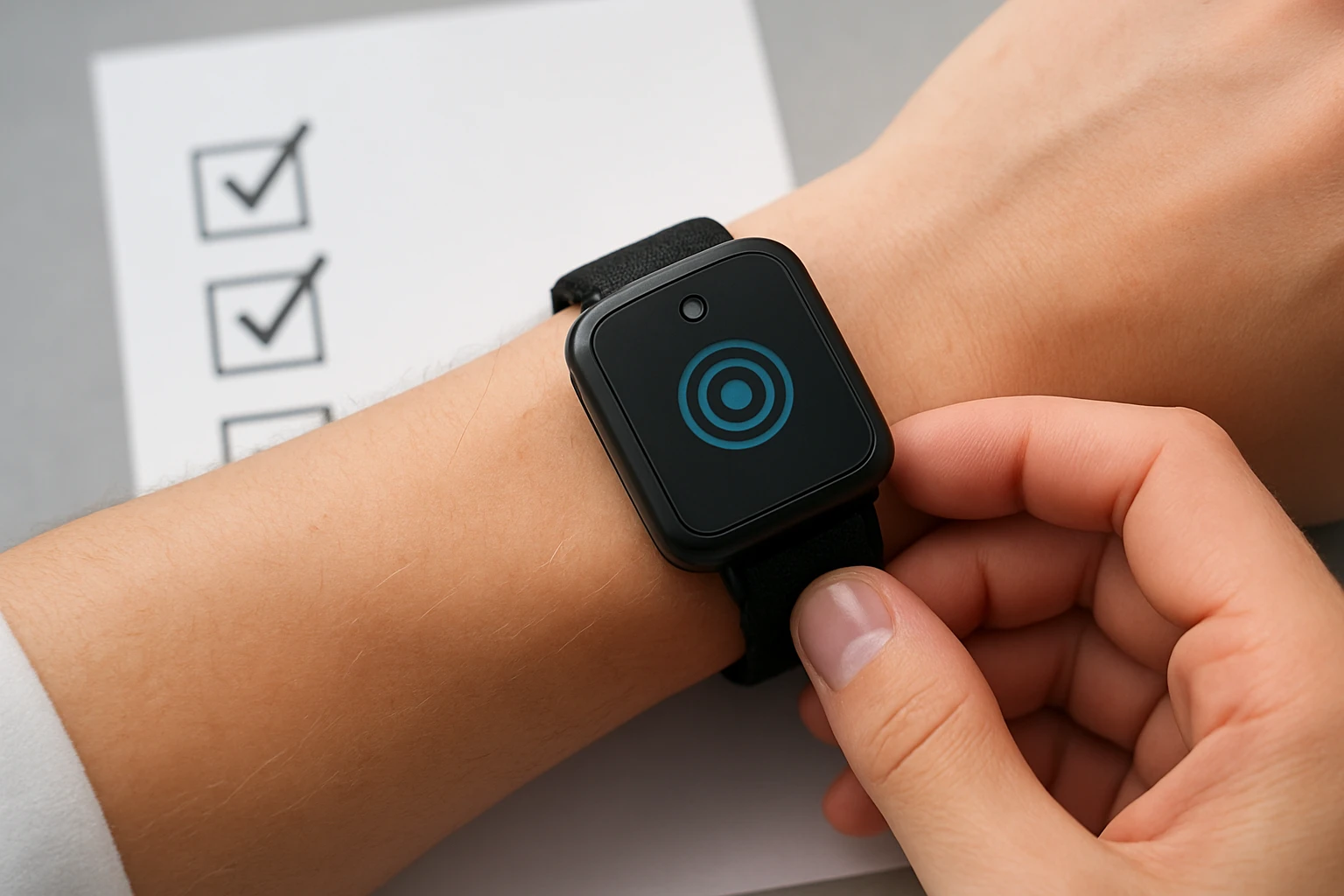
Pick two anchor points that match your aims. For pain, use a morning session to set the tone and an afternoon or pre activity session before typical flares. For sleep, run a 20 to 30 minute wind down session 60 to 90 minutes before bed and, if you wake at night, a 10 minute mid night reset. Consistent timing lets you compare like with like, which is the essence of solid data.
-
Place the device with intention.
For localized pain, position Alpha Wearable adjacent to the sore region so frequencies reach irritated tissues, but do not place it directly over open skin. For stress heavy pain or insomnia, try Frequana or Charisma Ring during breathwork, wearing Frequana on the wrist to nudge parasympathetic tone. Small tweaks in placement can double your return, and Anywhere Healing’s advanced biosensors will adapt to your signals once contact is stable.
-
Use a gentle to effective intensity ramp.
Start low for two or three sessions, then increase to a comfortable, effective level without provoking sensitivity. Your goal is a calm, melting sensation or a clear easing of tightness within 10 to 15 minutes. If you feel wired or achy afterward, back off the duration by 5 minutes next time. Precision frequency delivery works best when the nervous system reads it as help, not a challenge.
-
Pair sessions with proven sleep and pain habits.
Stack your wearable with basics that magnify the signal. Keep a steady bedtime, dim lights in the last hour, and use a short breath practice such as 4, 6 breathing for five minutes. For pain, add light mobility, heat or a gentle walk. These context cues enhance cellular communication, help healthy circulation, and may increase your heart rate variability [heart rate variability] response overnight.
-
Log pain, sleep, and confounders in 60 seconds.
Each evening, record pain now and worst pain today. Each morning, record time to fall asleep, wake ups, and total sleep time. Add quick notes like late coffee, heavy workout, alcohol, or stressors. A short log beats a perfect but abandoned journal. You will thank yourself when it is time to validate the results.
-
Use an AB design to isolate effects.
After your seven day baseline, try two weeks on device. Optionally, take a five day off period to confirm the effect disappears or shrinks. This simple pattern separates real change from good luck. The tiny table below offers a blueprint.
Phase Days What You Do What You Track Baseline 7 No device, normal routine Pain twice daily, sleep diary, optional heart rate variability [heart rate variability] On Device 14 Daily sessions, fixed times and placement Same as baseline, plus rescue medication use Off Device 5 Pause sessions to see if effects fade Look for reversal toward baseline -
Stay hydrated and mineral supported.
Frequency based interventions rely on clean signaling, and that depends on fluid and electrolyte status. Aim for steady hydration through the day and include mineral rich foods. Many users notice better sleep depth and less next day soreness with this tiny habit. It also supports healthy detoxification, a pillar of Anywhere Healing’s non invasive approach.
Validation checklist: Prove your targeted therapy wearable works
Now comes the fun part, confirming changes with lab backed checks that clinicians and researchers use. You do not need a clinic to run these, just a repeatable method and simple math. The seven checks below blend patient reported outcomes [patient reported outcomes] with objective measures so your verdict is comprehensive. For benchmarks, I included widely cited thresholds like minimal clinically important differences [minimal clinically important differences]. Studies suggest a two point Numeric Pain Rating Scale [Numeric Pain Rating Scale] improvement or a 30 percent drop from baseline reflects meaningful relief, while sleep research often uses 85 percent sleep efficiency as a healthy threshold and a 10 to 20 percent gain in heart rate variability [heart rate variability] over two weeks as a true change beyond normal day to day noise.
-
Track Numeric Pain Rating Scale [Numeric Pain Rating Scale] twice daily.
Measure pain now in the evening and worst pain in the past 24 hours on a 0 to 10 scale. Look for at least a two point drop or 30 percent reduction compared with baseline. This threshold is the minimal clinically important difference [minimal clinically important difference] reported across many musculoskeletal trials. If your pain varies by activity, also rate pain within 30 minutes after the trigger, for example after a walk, so you capture event specific effects.
-
Measure sleep efficiency and latency from a diary or tracker.
Calculate sleep efficiency as total sleep time divided by time in bed. Aim to raise efficiency by 3 to 5 percentage points and cut sleep latency by 10 minutes or more. Many sleep studies consider 85 percent efficiency a healthy target. If you wake at night, record wake after sleep onset [wake after sleep onset]. A 15 minute reduction in wake after sleep onset [wake after sleep onset] is a practical and meaningful win for many people.
-
Monitor nightly heart rate variability [heart rate variability] using RMSSD [root mean square of successive differences].
Heart rate variability [heart rate variability] reflects autonomic balance and is tightly linked to pain sensitivity and sleep restoration in the literature. Track your nightly RMSSD [root mean square of successive differences] and look for a sustained 10 to 20 percent increase over your seven day baseline median. Also watch resting heart rate in the morning. A two to three beat per minute drop often accompanies improved recovery and less perceived stress.
-
Test pressure pain threshold with a handheld algometer.
Pick two tender points near your usual discomfort and take three readings each, averaging the results. Perform this once per week at the same time of day. A 15 percent rise in pressure pain threshold is commonly used as a meaningful change in pain research, reflecting desensitization of peripheral and central pathways. If you do not have an algometer, use a consistent fingertip pressure method, but know it is less precise.
-
Check function with the six minute walk test [six minute walk test] or the 30 second sit to stand test [30 second sit to stand test].
For the six minute walk test [six minute walk test], walk as far as you can for six minutes on a flat path and record meters covered. Improvements of 30 meters are often considered clinically meaningful in chronic pain and pulmonary studies. For the 30 second sit to stand test [30 second sit to stand test], count how many full stands you complete from a chair. Gains of 2 to 3 reps suggest better lower body endurance and pain tolerance.
-
Log rescue medication use and total doses per week.
Write down each time you use over the counter pain relief and the total weekly amount. In trials, a 25 percent reduction in rescue medication is meaningful and aligns with real world function. This metric is especially helpful when pain ratings are variable, because behavior change in medication use signals confidence and comfort, not just numbers.
-
Add one validated sleep or fatigue questionnaire.
Use the PROMIS Sleep Disturbance short form 8a from the Patient Reported Outcomes Measurement Information System [Patient Reported Outcomes Measurement Information System] or the Epworth Sleepiness Scale [Epworth Sleepiness Scale]. A two to three point drop on the Epworth Sleepiness Scale [Epworth Sleepiness Scale] or a modest reduction in PROMIS [Patient Reported Outcomes Measurement Information System] T score supports your objective data. Short forms are quick, free to use, and sensitive to change over 2 to 4 weeks.
To make it easy to scan, here is a compact summary you can keep near your log.
| Check | What to Measure | How Often | Meaningful Change | Why It Matters |
|---|---|---|---|---|
| Numeric Pain Rating Scale [Numeric Pain Rating Scale] | Pain now, worst pain 24 hours | Twice daily | 2 points or 30 percent reduction | Widely accepted minimal clinically important difference [minimal clinically important difference] |
| Sleep Efficiency and Latency | Efficiency percent, minutes to fall asleep | Nightly diary | 3 to 5 points up, 10 minutes down | Predicts next day energy and pain sensitivity |
| Heart Rate Variability [heart rate variability] RMSSD [root mean square of successive differences] | Nightly median RMSSD [root mean square of successive differences] | Nightly | 10 to 20 percent increase | Reflects parasympathetic recovery and resilience |
| Pressure Pain Threshold | kPa or kg measured with algometer | Weekly | 15 percent increase | Objective desensitization of tender points |
| Six Minute Walk Test [six minute walk test] or 30 Second Sit to Stand [30 second sit to stand test] | Distance in meters or reps in 30 seconds | Weekly | 30 meters or 2 to 3 reps | Functional capacity that ties to daily life |
| Rescue Medication | Total weekly doses | Weekly tally | 25 percent fewer doses | Behavioral confirmation of comfort |
| Validated Questionnaire | PROMIS [Patient Reported Outcomes Measurement Information System] or Epworth Sleepiness Scale [Epworth Sleepiness Scale] | Every 2 weeks | Small, consistent score drop | Patient reported outcomes [patient reported outcomes] sensitive to change |
Where do these thresholds come from? Pain MCIDs [minimal clinically important differences] cluster around two points or 30 percent in meta analyses, sleep research treats 85 percent efficiency as healthy and reductions in wake after sleep onset [wake after sleep onset] as meaningful, heart rate variability [heart rate variability] studies show within person day to day variation of roughly 5 to 10 percent so bigger shifts are likely real, and functional tests like the six minute walk test [six minute walk test] typically set 20 to 50 meter gains as clinically important depending on the population. These are general anchors, not rigid rules, but they pull your verdict out of the realm of wishful thinking and into evidence.
Common misses
-
Expecting overnight miracles instead of steady gains.
Some users feel relief in the first session, others need 10 to 14 days as signaling patterns normalize. Anywhere Healing’s devices enhance cellular communication and support healthy circulation and detoxification, which can take time to smooth out stress related kinks. Trust the process, measure weekly trends, and look for compounding benefits like less morning stiffness and easier wind downs.
-
Inconsistent placement and contact pressure.
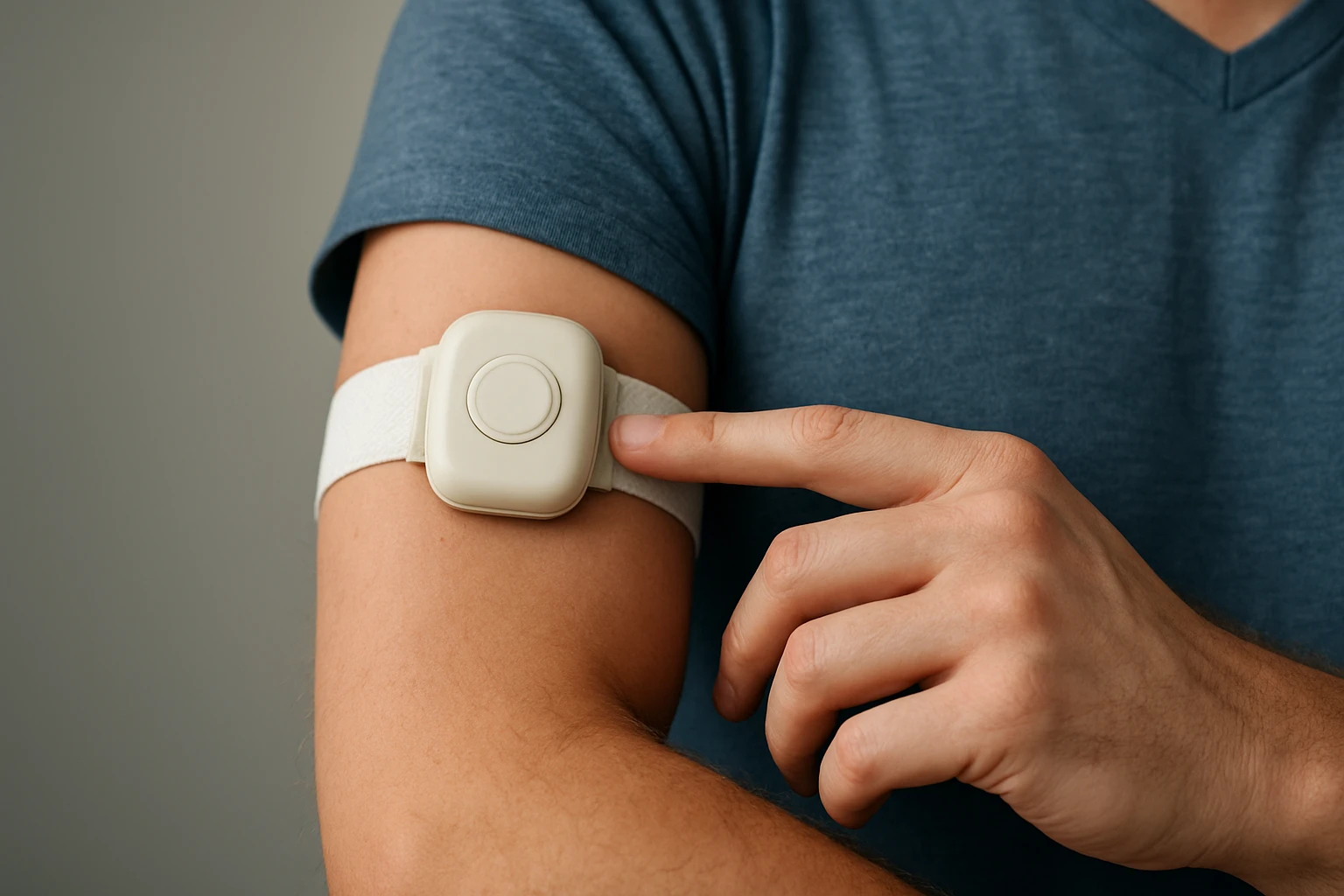
Shifting the device a couple of centimeters every day introduces noise. Mark preferred spots or snap a quick phone photo so you can replicate placement. Keep skin clean and dry, and ensure gentle but stable contact so the biosensors can read accurately and deliver frequencies precisely. Micro consistency equals macro clarity when you analyze your results.
-
Stacking too many changes at once.
Starting new supplements, switching workouts, and overhauling bedtime in the same week makes it impossible to isolate the device effect. Lock your routine for two weeks, then layer new habits. Think of your plan like a soundboard. Adjust one slider at a time so you actually hear what changed.
-
Ignoring hydration, light, and breath.
Hydration supports clean signaling, morning light sets your circadian clock, and slow nasal breathing boosts parasympathetic tone. These three free habits magnify results from Frequana, Alpha Wearable, and the Charisma Ring. When in doubt, fix the fundamentals and your advanced tech will sing.
-
Not measuring on bad days.
It is tempting to skip logs when pain flares or sleep goes sideways. Those are the most valuable data points, because they show how resilient your system is becoming. Many people find that even when a flare hits, recovery is faster after two weeks on a consistent program, and that is a win you would miss without the notes.
-
Choosing the wrong device for the job.
Use Multiple wearable options (Frequana, Alpha Wearable, Charisma Ring) for targeted benefits so you are not asking a screwdriver to do a hammer’s job. For example, keep Charisma Ring on all day for gentle regulation and swap in Alpha Wearable for a focused 20 minute session at your sore shoulder before you lift groceries. If sleep is the priority, lean on Frequana in the wind down window to prime deep non rapid eye movement sleep [non rapid eye movement sleep].
-
Quitting just before the trend emerges.
Many heart rate variability [heart rate variability] and sleep efficiency trends take 10 to 14 days to separate from baseline noise. If your pain ratings are drifting downward but not yet at your target, give it another week and recheck the table benchmarks. Progress rarely looks like a straight line, but the averages tell the truth.
Here is the bigger picture. Anywhere Healing positions itself around one simple insight, when natural cellular frequencies become disrupted, the result can be pain, stress, poor sleep, and broader imbalances. By reading your body’s signals and delivering precise frequencies non invasively, these wearables help correct the disruption so your own recovery machinery, circulation, detoxification, and immune resilience can re engage. The checklist keeps that promise honest by separating what you feel from what you can measure.
Conclusion + CTA
When you combine a smart plan with seven lab backed checks, you turn your wellness experiment into a confident decision about what truly eases pain and deepens sleep.
Imagine the next 12 months with fewer pain spikes, calmer evenings, and a reliable wind down routine anchored by a biosensor guided device that fits your life rather than the other way around. Put the numbers in your corner, then follow what works.
What will your data say in three weeks when you test your targeted therapy wearable with intention, consistency, and these clear thresholds?
Advance Relief with Anywhere Healing Wearables
Choose Frequana, Alpha Wearable, or Charisma Ring to detect and correct disrupted frequencies with biosensor wearables that trigger natural recovery for better pain relief and sleep.
Explore Devices


