

Wearable Frequency Therapy: Clinic-Grade Safety Checklist & How It Compares to Handheld Skin Devices
You’re standing at the bathroom mirror with a clean face, a five-minute timer glowing on your phone, and a small device nearby. The room is quiet. You haven’t even started yet, and the real question is already here: are you about to use the right tool for the result you actually want?
That’s where people get tangled with wearable frequency therapy searches. They buy a hands-free wellness device, then quietly hope it will behave like something made for a completely different routine. I’ve watched this happen more than once — and, honestly, I’ve made versions of this mistake myself with home tech that looked impressive on a product page and turned muddy the moment real-life routines got involved.
So start with one rule: match format to outcome. Wearable frequency therapy is generally a passive, hands-free format. That means it’s best judged by how well it fits your routine for comfort, sleep, focus, recovery, or calm support. Mix that up, and you’ll end up measuring the wrong thing.
If you want passive, all-day convenience, a wearable usually fits better than a short, stop-and-start routine.
Pre-work checklist for wearable frequency therapy
Decide what you need before you switch it on. Do that first, and the rest gets simpler. Skip it, and every buzz, pulse, and tingle starts to feel like “maybe it’s working” — which is not the same thing as progress.
Watch This Helpful Video
To help you better understand nuderma clinical portable 6 fusion and argon, we've included this informative video from Beauty Beyond 40. It provides valuable insights and visual demonstrations that complement the written content.
Separate short-session goals from hands-free therapy goals
Write down the job in one sentence. Not three. One.
If your goal sounds like “I want passive support during the day,” “I care about calm after work,” or “I need something I can wear while reading or falling asleep,” you’re in wearable territory. Anywhere Healing offers wearable frequency therapy aimed at sleep, calm, focus, recovery, pain relief, and energy support. That’s a wellness-language fit. Very clearly wellness language.
If your goal sounds more like “I want a hands-off routine,” “I need support while moving around,” or “I want a device I can use without stopping my day,” that’s the same lane. A wearable frequency device is generally chosen for hands-free use, while a more hands-on routine asks you to stop and shift your attention. Different format. Different habit. Different expectation.
| Primary goal | Format that usually fits better | How you use it | What you can measure |
|---|---|---|---|
| Sleep or bedtime support | Wearable frequency therapy | Passive, hands-free use | Sleep notes, wake-ups, evening routine consistency |
| Calm, focus, or energy support | Wearable frequency therapy | Use while moving around | Daily log, routine adherence, self-ratings |
| Recovery or pain relief support | Wearable frequency therapy | Wear during routine activities | Comfort notes, timing, and consistency |
| General day-to-day wellness support | Wearable frequency therapy | Use as part of a routine | Adherence and symptom journal |
Match the device to the outcome you can actually measure
Pick an outcome that survives contact with reality. That means you can see it, count it, or log it without talking yourself in circles.
For wellness, it could be how long it takes you to settle at night, how often you wake up, whether your focus feels steadier, or whether that 3 p.m. tension between your shoulders eases. If you already wear an Apple Watch or keep notes in Notion, great — use the data source you’ll actually stick with.
When I test any home device, I force myself to write one target, one area, one timeframe. It feels almost annoyingly simple. That’s the point. I once watched a friend change a cleanser, start a new retinol from Sephora, and test a device in the same week. By Friday, she had a stronger opinion than she had usable information.
Treat the product claims as marketing, not proof
Read the product page with your eyebrows up. A polished description can help you understand the intended use, but it still isn’t a substitute for your own routine and notes.
Anywhere Healing’s wearables are positioned around frequency-based wellness support for sleep, calm, focus, recovery, pain relief, and energy support. Useful? Yes. Proof for your exact routine? That still depends on your own baseline, your schedule, and whether the device fits the way you live.
Use the claims to understand intended use. Use your own notes to judge fit. Those are two separate jobs, and they should stay separate.
Read sales pages for positioning. Judge results with your own baseline, notes, and routine tracking.
Do the boring setup work before every session. This is the part nobody brags about on TikTok, and it’s the part that keeps things clean, controlled, and repeatable.
| Support term or spec on the product page | What it helps with | What it does not prove |
|---|---|---|
| One-time purchase pricing | Makes budgeting simple | Does not prove performance |
| App-based session selection | Helps organize goals and routines | Does not prove it suits your goal |
| Selectable goals such as sleep, calm, focus, and recovery | Guides use by need | Does not tell you anything about outcomes by itself |
| Wearable frequency format | Supports hands-free use | Does not mean every goal will feel the same |
- Confirm the return window, warranty, and purchase terms. Verify them before you start so you know your options if the device arrives damaged or simply isn’t the right fit.
- Start with a clean, dry workspace. Lay out one device, a towel, your mirror, and your timer. Leave the rest put away. A crowded counter invites rushed decisions.
- Plan the session length before you begin. Because the system is designed for selectable goals and app-based control, set your goal, your stop time, and your purpose before the first use. Wandering mid-session is where sloppiness creeps in.
Do not treat checkout perks like proof of performance; treat them as support terms you verify before use.
Execution checklist
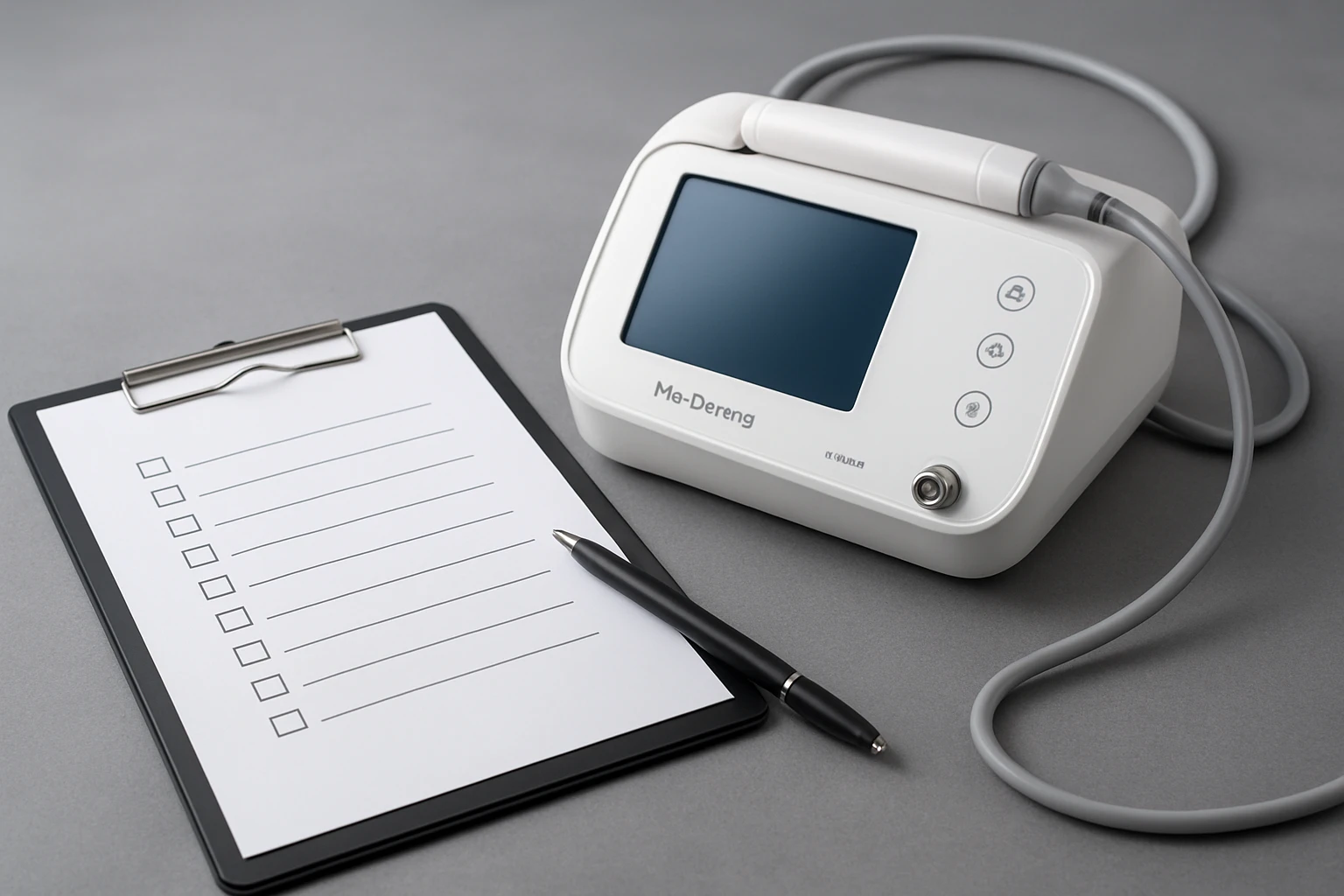
Run each session with a controlled sequence. Same order. Same goal. Same notes. That’s how you make a short wellness tool worth comparing week to week.
- Pick one area or wellness goal.
- Choose the matching mode or session in the app.
- Set a timer or routine before the first use.
- Start conservatively and keep the routine steady.
- Stop when the session ends and write down what you did.
Choose the right mode or session for the goal
Do not improvise just because two options look similar in the app. Use the one the system assigns to that goal or routine. A targeted wellness device only makes sense when the setup matches the outcome you’re trying to support.
The product experience leans hard on wearable frequency support and app-based selection. Fine. But neither phrase replaces goal-specific use. Sleep, focus, recovery, calm, and energy are not the same thing, and one session should not turn into a free-for-all just because the device is positioned as multi-purpose.
Move steadily instead of changing settings too often
This is where “more options” language gets people in trouble. They see multiple settings and assume more switching must mean a better outcome. Usually, it just means a less controlled session.
Keep the routine steady in a slow, deliberate pattern. Think kitchen timer, not adrenaline. If you’re changing settings every few minutes because you want faster results, you’re drifting out of controlled use and into wishful overuse. I’d rather see you do a calm, repeatable routine three times a week than one dramatic session you don’t want to repeat.
Consistency matters more than intensity; keep the routine controlled and repeatable.
Keep the session focused on one goal at a time
Resist the urge to turn one session into a full life experiment. Don’t do a sleep routine, then a focus routine, then a recovery routine, then decide “it seems promising.” Promising compared with what?
Use the 4-week window as a testing point, not a promise. If you want to judge a month-long run fairly, keep the goal narrow and the rest of your routine as stable as you can. If you introduce a new supplement, change your bedtime, and travel all in the same 28 days, you won’t know what actually moved the needle.
One goal. One area. One routine. Boring? A little. Useful? Absolutely.
Validation checklist
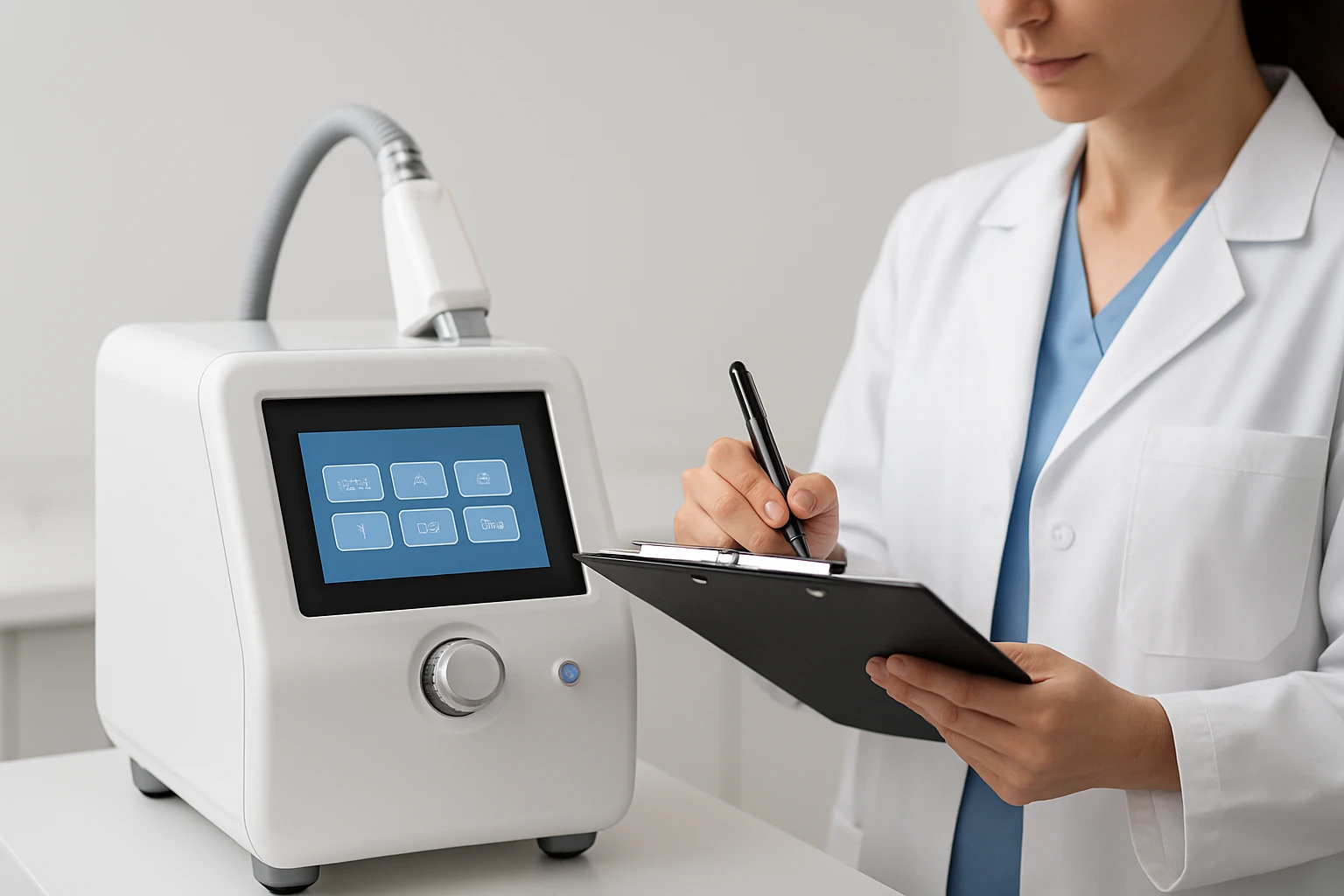
Now check whether the tool is matching your goal. Not whether it felt technical. Not whether it made a cool sound. Whether it solved the problem you started with.
Compare your baseline to week-by-week notes
Start with day-zero notes. Use the same time of day if you can. Then compare weekly, not hourly. Home-device users love to evaluate right after a session, when everything feels dramatic. Real patterns show up over time.
A 4-week review point gives you a practical checkpoint. So use week 1, week 2, week 3, and week 4 as checkpoints. Note the session choice, duration, and anything that changed around it — bedtime, exercise, travel, hydration, all of it.
Look for wellness changes if the goal is supportive
If your goal is wellness support, judge wellness signals. Look for changes in sleep routine consistency, calm, focus, recovery comfort, pain relief support, or energy stability in your notes. Don’t let a dramatic sensation stand in for a visible shift in your routine.
| If your goal is... | Track this weekly | Do not rely on this alone |
|---|---|---|
| Sleep support | Bedtime notes, wake-ups, sleep quality ratings | How “intense” the session felt |
| Calm or focus | Routine consistency, stress notes, concentration ratings | A temporary feeling right after use |
| Recovery or pain relief support | Comfort notes, timing, daily function | One-day changes you can’t reproduce |
| Energy support | Afternoon slump notes, routine adherence, self-ratings | Whether the device looked advanced |
Reassess if your real need is sleep, calm, focus, recovery, pain relief, or energy support
Be honest here. If your journal keeps saying things like “works for comfort, but what I really want is better sleep,” you probably have a format mismatch. A wearable frequency device is easiest to evaluate for passive wellness goals because the whole routine is built around hands-free, daily use.
That’s where wearable frequency therapy often makes more sense. Not because it sounds fancier, but because the format matches the job: hands-free use, less friction, easier habit-building around sleep, calm, focus, recovery, pain relief, or energy routines.
A good device match should make the target problem easier to track, not harder to explain.
Common misses
This is where smart buyers still slip. The wording sounds polished. The device looks “clinical.” The routine feels serious. None of that protects you from choosing the wrong format.
Do not expect one wearable to solve every wellness issue
Keep the marketing lane in view. The product is positioned for wellness support, including sleep, calm, focus, recovery, pain relief, and energy. That is a support-focused pitch. It is not the same thing as a guarantee or a cure-all.
If your top priorities are sleep, calm, focus, recovery, pain relief, or energy support, start your comparison with wearables that are built for those routines. A wearable session can be useful for daily wellness support. It is just the wrong place to begin if you expect a one-time fix.
Do not choose based on hype words like “clinical” alone
“Clinical” can mean many things in marketing copy, and often it mostly means “this sounds serious.” A serious-sounding name is not a decision framework.
Ask blunt questions instead. What goal am I supporting? How long will each session take? Can I repeat this three or four times a week for a month? What will I measure? If you can’t answer those in plain language, the label on the box is doing more work than your plan.
I’m a little contrarian on this one: sometimes the less glamorous device is the better buy simply because you’ll use it consistently. Routine beats romance.
Do not skip maintenance, storage, or replacement checks
Wearables and app-connected tools are not “toss it in a drawer and hope” products. Check the device, store it safely, keep everything dry, and inspect it before each session. If something looks off, stop. Don’t negotiate with damaged equipment.
The e-commerce experience still implies that support, order fulfillment, and customer service are part of ownership. That’s your clue that upkeep is part of the routine. Plan for it. A device you can’t maintain sensibly is not a clever purchase, no matter how nice the product page looks on a Tuesday night.
If your priority is sleep, calm, focus, recovery, pain relief, or energy support, compare wearable routines first.
Match format to outcome, keep the routine safety-first, and judge success by the problem you were actually trying to solve.
If wearable frequency therapy lines up with your wellness goal, use it like a targeted support tool, not a magic wand. If what you really want is passive support for sleep, calm, focus, recovery, pain relief, or energy, which format will you still be using 30 days from now?
Explore Better Options With Anywhere Healing
Its wearables read biosignals and deliver precise frequencies to support sleep, calm, focus, recovery, pain relief, and energy in a non-invasive routine.
See Wearables


