

Biosensor-Guided Relief: A Clinician's Guide to the Holistic Wellness Wearable to Reduce Pain and Tension
At 10 p.m., a patient lies in bed with a tight jaw and a throbbing neck, quietly checking a wrist-worn sensor while the room stays dark and still. One hand presses into the trapezius muscle. The other hovers over the screen. She is not being dramatic. She is exhausted, sore, and trying not to wake her partner.
I’ve seen this exact scene, in one form or another, for years. Sometimes it’s a teacher with tension headaches after parent conferences. Sometimes it’s a runner with post-workday neck pain and rotten sleep. Sometimes it’s a new parent who says, “I don’t want another pill. I just want my body to calm down.” That’s where a holistic wellness wearable to reduce pain and tension starts to make sense — not as a miracle, but as a measured, low-risk experiment for people stuck in the loop of stress, poor sleep, and body-wide bracing.
And yes, we need to stay skeptical. A wearable can be helpful. It can also be oversold. So let’s strip away the marketing gloss and look at this category the way a careful clinician would: what it is, how it may work, who it fits, how to use it, and when to stop pretending tech is enough.
What a Biosensor-Guided Wearable Is — and Why People Reach for It
The Symptom Cluster: Pain, Tension, Poor Sleep, and Stress
Watch This Helpful Video
To help you better understand holistic wellness wearable to reduce pain and tension, we've included this informative video from PCWorld. It provides valuable insights and visual demonstrations that complement the written content.
These symptoms love to travel together. Tight jaw. Restless sleep. Afternoon headache. Shoulder blades that feel like concrete. A nervous system that never really clocks out. You can call it “stress,” but your body experiences it as muscle guarding, shallow breathing, irritability, and broken recovery.
That overlap shows up in real-world integrative care. People often look for approaches that address back and neck tension, stress, and relaxation support in one place. That pairing makes sense. People rarely show up with one neat complaint. They come in with clusters.
What Makes a Wearable “Biosensor-Guided”
In plain language, this type of device doesn’t just sit on your wrist looking pretty. It uses wearable sensing and app-guided routines to help deliver frequency-based support in a way that can be adjusted to the moment. Sometimes the guidance is adaptive and app-based. Sometimes it’s built around symptom timing — bedtime, post-exercise, or a stressful work block at 2 p.m.
The common thread is this: the wearable aims to respond to your body state rather than blasting the same intervention all day. That’s the practical difference between a generic gadget and something meant to fit into a symptom pattern you can actually track.
What These Devices Can and Cannot Promise
Wearable wellness devices are often described as supporting sleep, focus, calm, and energy with frequency-based signals. Those are useful descriptions of intent. They are not guarantees that your neck pain, insomnia, and work stress will all vanish by Thursday.
Here’s the mindset I want you to keep: these wearables may support nervous-system regulation, sleep routines, and symptom relief. They do not diagnose structural injury, replace medical evaluation, or erase the effects of overwork, grief, caffeine overload, or a terrible pillow from Target you should have thrown out six months ago.
If a wearable claims to solve every symptom at once, treat that as marketing, not a care plan.
How These Wearables May Work on the Nervous System
Signals, Frequencies, and Touch-Based Stimulation
Different devices use different methods. Some lean on frequency-based signaling. Some use touch-based stimulation or vibration patterns. Some combine guided sessions with time-of-day prompts. However the delivery changes, the working idea is similar: the device sends a signal, your body responds, and you adjust use based on what you notice.
Anywhere Healing describes wearable frequency therapy devices as technology that can read the body’s signals and reply with precise frequencies. You don’t need to buy every word of the marketing copy to understand the clinical logic: input, response, repeat.
Why Calming the Alarm State Can Affect Pain and Sleep
When your system stays in alarm mode, everything gets louder. Pain feels sharper. Muscles hold tension longer. Sleep gets lighter. Recovery slows down. I explain this to patients as a smoke alarm that keeps chirping after the toast has already burned. The body never gets the message that the immediate threat is over.
That matters because pain and sleep are not separate departments. If your jaw is clenched all night, your neck will complain in the morning. If your sleep is fragmented, your pain threshold usually drops the next day. So when a device helps reduce that “always on” state — even a little — people often notice a double benefit: less tension and better rest.
The goal is not to numb sensation; it is to reduce the body’s alarm response so normal recovery can happen.
What “Real-Time” or Adaptive Guidance Means in Practice
“Adaptive” sounds fancy, but in practice it often means the device or app helps you match the session to the moment. The app can help guide routines for different parts of the day, including morning focus and restorative sleep routines. That day-part framing is useful because your 7 a.m. needs are not your 10 p.m. needs.
In clinic terms, real-time guidance is less about science-fiction responsiveness and more about fit. If you notice your tension spikes before bed, you use the calming routine there. If stress hits after meetings, you place the session there. Feedback loops work because you observe, adjust, and repeat — not because the gadget reads your soul.
Who Is a Good Candidate — and Who Should Be Cautious
Best-Fit Use Cases: Stress-Linked Tension, Sleep Trouble, and Mild-to-Moderate Discomfort
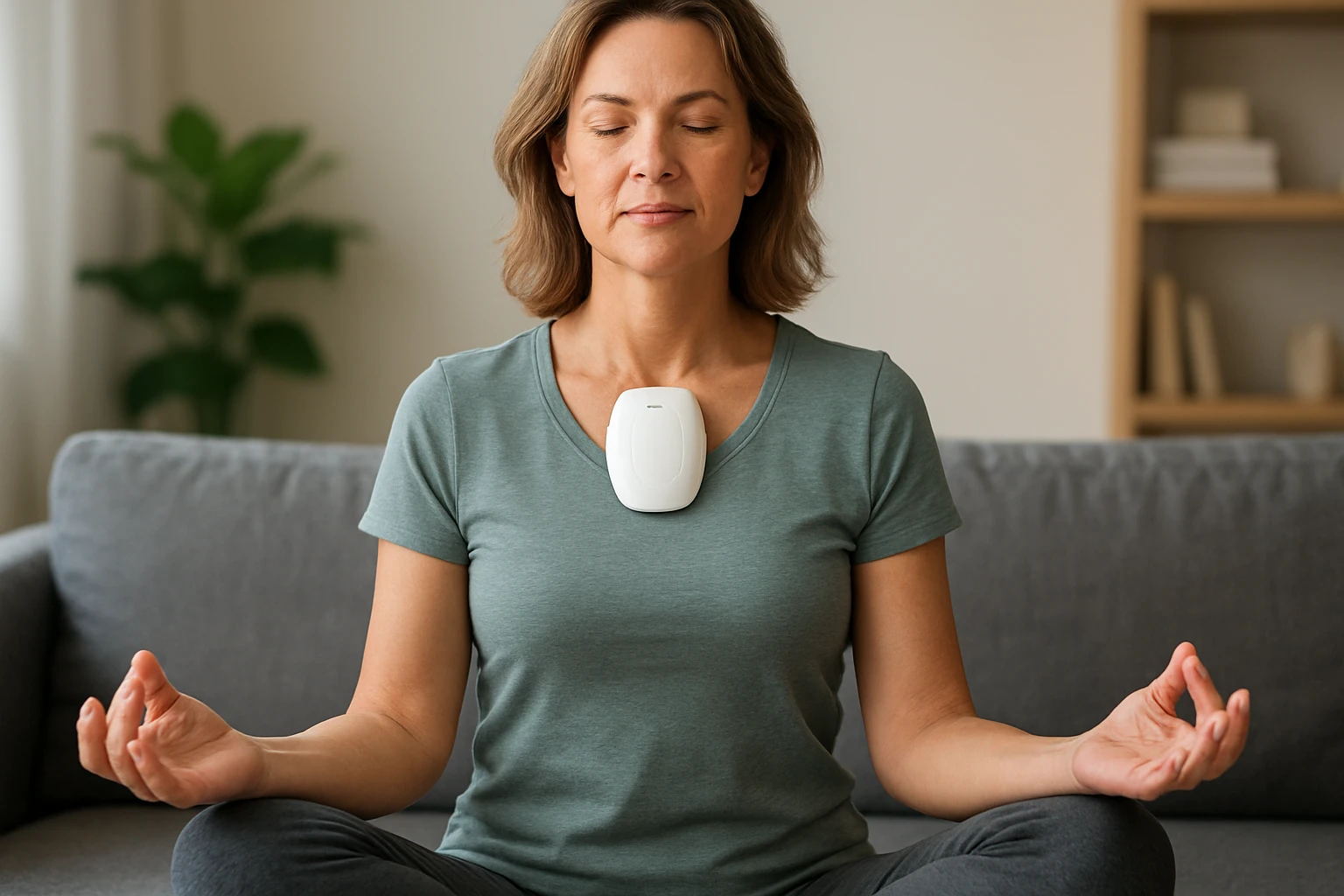
The best candidates usually have a pattern they can describe in one sentence. “My shoulders lock up after laptop work.” “I’m wired at night and wake with a headache.” “My pain worsens when stress spikes.” Those are trackable complaints. They’re not vague, and they’re not emergencies.
That’s also why wellness device articles often emphasize outcomes such as improved sleep, better recovery, and more consistent daily functioning. Those are function-based goals. Better movement. Better sleep. Less reliance on rescue habits. That’s the right lens.
When a Clinician Should Rule Out a Bigger Problem First
You should not use a wearable as your first and only plan when symptoms point to something more serious. New severe pain, numbness, weakness, chest pain, fever, injury-related symptoms, or sudden neurologic changes need medical evaluation first. Same goes for pain that is rapidly worsening or waking you from sleep in a new, intense way.
I’ll be blunt here because people need bluntness sometimes: if your hand is going numb, your grip is failing, or you crashed your bike yesterday, stop shopping and get assessed. A wearable is for symptom support. It is not a substitute for a diagnosis.
How Wearables Can Fit Alongside Other Care
Where these devices often shine is alongside other sensible steps. The broader category of frequency-based wellness support is often used as a complement to physical therapy, stress counseling, sleep hygiene changes, gentle mobility work, or an ergonomic fix at your desk.
That integrative mindset also matches what many wellness clinics suggest by grouping stress support, sleep support, and restorative therapies under one roof. Symptoms overlap. Good care does too.
| Symptom Pattern | Reasonable Wearable Trial? | Better First Step |
|---|---|---|
| Tight jaw and neck after stressful days, poor sleep, no red flags | Yes | Track symptoms for 2 weeks and pair with sleep/mobility changes |
| Mild recurring tension headaches linked to posture or stress | Often yes | Also review workstation setup and hydration |
| New numbness, weakness, severe pain, chest pain, fever, or recent injury | No | Medical evaluation first |
| Chronic discomfort already managed by a clinician, looking for drug-free support | Often yes | Use as an adjunct and monitor function, sleep, and comfort |
Wearables are best used as an adjunct when the symptom pattern is clear, trackable, and not an emergency.
Best Practices for Using a Holistic Wellness Wearable to Reduce Pain and Tension
Start With One Goal and One Time Window
This is where most people go wrong. They buy the device, feel hopeful, and then throw it at every problem in their life. Morning brain fog. Midday anxiety. Neck tension. Sleep. Recovery. Focus. That’s too messy. Start with one target.
Pick a single goal and a single use window. For example: “I want less jaw and neck tension between 9 p.m. and bedtime.” Or: “I want to wake with less shoulder tightness three mornings a week.” Specific routines are helpful here because they suggest a clear session at a clear time. That specificity is exactly what makes a trial readable.
Track Symptoms Before and After for at Least a Couple of Weeks
You do not need a research lab. You need a pen, a note app, or a cheap paper notebook. Track four things: pain, sleep, stress, and function. I like a 0–10 scale for pain and stress because people actually use it. For sleep, note how long it took to fall asleep and whether you woke up overnight. For function, ask one grounded question: “Could I do my normal day with less effort?”
Give it at least a couple of weeks if the device is comfortable and symptoms are stable. Fourteen days is often long enough to spot a direction, even if it’s not long enough for perfection. You are looking for trend lines, not magic. Less morning stiffness. Fewer wake-ups. Lower rescue caffeine. One less ibuprofen day.
Pair the Wearable With Sleep, Movement, and Stress-Reduction Habits
A wearable works better when your routine stops fighting it. Wellness devices are often positioned around support for sleep, focus, calm, and energy. Coverage of wearable wellness tools often includes use during activities and at night. That tells you something practical: context matters. Use the device where the symptom shows up, and support that window with a few boring, effective habits.
- Keep the bedtime routine boring and repeatable — dim lights, fewer screens, consistent timing.
- Add gentle movement where you usually brace, such as neck range-of-motion work after long desk hours.
- Use the wearable at the same point in your day for at least several sessions before judging it.
- Cut one obvious trigger if you can: late caffeine, marathon scrolling, or the 11 p.m. email sweep.
I know that sounds almost annoyingly basic. But basic wins. Every time.
Small, repeatable sessions beat random all-day use. Consistency matters more than intensity.
Common Mistakes That Make Results Worse
Expecting Instant Pain Elimination
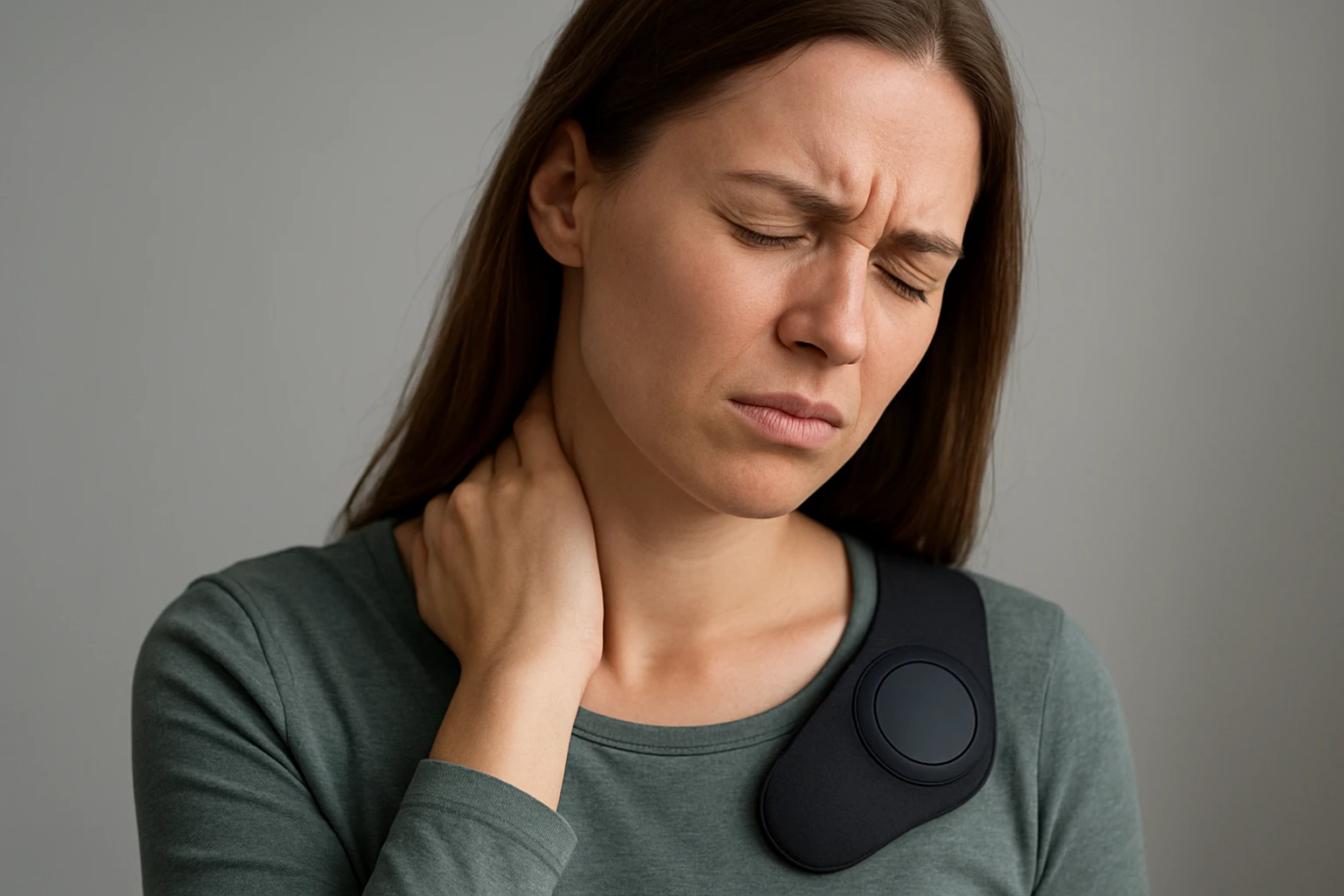
Some people expect the first session to feel like flipping off a light switch. Then they get disappointed, fast. That reaction is understandable, especially when the discomfort has been chewing on them for months. But most of the worthwhile changes from this category are subtler at first: softer muscle guarding, easier sleep onset, less evening agitation, a slightly better morning.
Even brands know fit takes time. A device trial should have a beginning, middle, and decision point. Not one dramatic Tuesday night.
Using the Device Without Changing the Underlying Stress Load
You can’t ask a wearable to outwork chronic overload. If you are sleeping five hours, hunched over a laptop for ten, skipping meals, doom-scrolling until midnight, and clenching through every commute, the device may help at the margins — but the margins are still margins.
This is the part people hate hearing, but it’s true. A wearable will not fix sleep deprivation, poor posture, overuse injury, or unrelenting stress if those triggers never change. Drug-free support is appealing, yet “drug free” does not mean “effort free.”
Ignoring Comfort, Side Effects, or Fit
Even low-risk devices can be a bad match if they irritate your skin, distract you, feel too intense, or become one more thing to manage. Minimal side effects and ways to manage them are still worth paying attention to. Comfort matters. Dose matters. Placement matters.
If the band rubs, adjust it. If the session timing ramps you up instead of settling you, move it earlier. If you dread using it, that’s data. Plenty of people keep pushing because they think not tolerating a protocol means they “failed.” No. It means the protocol needs revision.
If the device becomes another source of stress, the protocol—not the person—needs adjusting.
Tools and Resources for a Clinician-Guided Trial
The Simplest Tracking Kit: Pain, Sleep, Stress, and Function
If you only build one tool, build this one. Not a dashboard. Not a spreadsheet with fourteen tabs. A simple tracker you can fill out in under two minutes.
| What to Track | Daily Measure | Why It Matters |
|---|---|---|
| Pain or tension | 0–10 rating morning and evening | Shows whether symptoms shift across the day |
| Sleep | Time to fall asleep, wake-ups, rested or not | Sleep often changes before pain fully does |
| Stress load | 0–10 rating plus one trigger note | Helps separate bad days from bad protocols |
| Function | One task: work, exercise, childcare, or concentration | Function is usually the most honest outcome |
That last row matters most. Function tells the truth. If your pain score drops from 6 to 5 but you still can’t sit through a meeting or sleep past 3 a.m., that’s not the win you hoped for.
Questions to Ask Before Buying or Recommending a Device
Ask boring questions. They save money.
- What symptom am I targeting first — sleep onset, neck tension, stress spikes, or mild chronic discomfort?
- How is the signal delivered: frequency-based, touch-based, vibration-based, or session-guided?
- Where do you wear it, and will that location bother you during work, workouts, or sleep?
- Is there a clear trial period or money-back window?
- Can I use HSA/FSA funds?
- What do shipping, returns, and customer reviews actually look like?
That is not glamorous, but it is how you avoid ending up with an expensive drawer ornament.
How to Compare Features, Guarantees, and Coverage Options
When people compare devices, they often get hypnotized by the flashiest claim. Don’t do that. Compare the boring parts side by side. Those are usually what determine whether the thing becomes part of your life or disappears into a nightstand after nine days.
| Comparison Point | Why You Should Care | Examples From Current Market Messaging |
|---|---|---|
| Primary use case | Match the device to your actual problem | Sleep, focus, calm, energy, and restorative support are common themes |
| Adaptability | Helps place sessions into real routines | App-guided routines can align to day and night use |
| Trial window | You need time to judge fit | A clear return or trial period can help with decision-making |
| Payment options | Affects affordability | HSA/FSA compatibility may be available |
| Manufacturing or sourcing claims | May matter to some buyers | Some brands highlight where devices are made |
| Social proof and reviews | Useful, but never the whole story | Customer ratings and testimonials can help, but they are not the same as clinical evidence |
One final note from practice: a popular device is not automatically the right one for your symptom pattern. A return policy matters. Good instructions matter. Comfort matters. If your life is chaotic, the best device is often the one you will actually wear three times a week, not the one with the most cinematic landing page.
Choose the device that fits the symptom pattern and routine, not the one with the loudest promise.
A holistic wellness wearable to reduce pain and tension works best when you treat it like a careful experiment, not a rescue fantasy.
Match the tool to the pattern, watch function as closely as pain, and stop if you are not seeing a real-life payoff in sleep, movement, or daily ease.
If you gave yourself a two-week trial with one goal and one metric, what would you want to notice first — a quieter neck, deeper sleep, or a body that finally feels less on edge?
Find Your Next Step With Anywhere Healing
Anywhere Healing reads biosignals and delivers precise frequencies to support pain relief, improve sleep, and restore balance with non-invasive, drug-free support.
Explore Relief


