

Wearable Biofeedback for Wellness: An Evidence-Backed Roadmap to Less Pain, Better Sleep, and Restored Cellular Balance
At 2 a.m., you’re lying awake, watching a wrist display bounce with every racing heartbeat while a tight back reminds you exactly how rough the day felt. The room is dark. Your shoulders are up near your ears. You try to “relax,” but your body clearly didn’t get the memo.
That miserable little scene is where wearable biofeedback for wellness starts to make sense. Not as magic. Not as a cure-all. As a feedback loop. A device reads a body signal in real time, shows you what’s happening, and gives you a chance to respond while it’s still happening — slower breathing, less muscle guarding, a calmer ramp-down before sleep.
I’ve seen this go two very different ways. One person spends five minutes a day with a simple breathing cue and finally stops white-knuckling bedtime. Another buys three gadgets, collects charts for a week, then gives up because nothing in daily life changed. Same category. Very different outcome. The difference usually comes down to knowing what signal you’re training, why it matters, and whether you’ll actually practice.
What wearable biofeedback for wellness is—and what it is not
Biofeedback in plain English
Cleveland Clinic describes biofeedback as an alternative therapy that helps people take control of involuntary bodily functions like heart rate and breathing. That’s the plain-English version too. Your body does something automatically. A device measures it. You see or hear the result. You make a conscious change. The signal shifts. You learn from that shift.
Mendi’s guide makes another useful point: biofeedback is non-invasive and works through real-time feedback after a device collects data about physiological responses. “Real-time” is the part people miss. A report that tells you at 9 p.m. that you were stressed at 11 a.m. may be interesting. It doesn’t teach much in the moment.
If a device only measures your body but never helps you change what happens next, it’s not really biofeedback.
Wearable biofeedback vs. clinic-based biofeedback
Clinic-based biofeedback is usually more guided and more precise. Cleveland Clinic says providers use noninvasive monitoring equipment to measure things like heart rate, breathing, and muscle tension, then suggest conscious changes based on what the instruments show. That provider piece matters. A trained clinician can spot patterns you might miss, especially with chronic pain, pelvic floor dysfunction, or more complex symptoms.
Wearables bring a slice of that process into everyday life. That’s their superpower. You can use them in your bedroom, at your desk, before a meeting, or during a five-minute reset in the car. But let’s keep our feet on the ground: a consumer wearable is not the same thing as a structured clinical session.
| Question | Wearable Biofeedback | Clinic-Based Biofeedback |
|---|---|---|
| Where you use it | Home, office, travel, daily routines | Clinical or therapeutic setting |
| Guidance | Usually app-led or self-directed | Led by a provider |
| Common signals | Breathing, heart rate, posture, pressure, stress trends | Heart rate, breathing, muscle tension, other monitored functions |
| Best use | Daily practice and habit-building | Targeted care and structured training |
| What it is not | A diagnosis or instant fix | Usually not a standalone treatment either |
Who this guide is for
If you want a non-invasive, drug-free way to work on stress, sleep, muscle tension, or pain patterns, you’re in the right place. Cleveland Clinic says biofeedback can help manage chronic pain, anxiety, and incontinence. I’d add one more qualifier from experience: this works best for people who are willing to practice, not just purchase.
The category is also crowded enough to confuse anybody. Amazon’s search results showed 1–48 of 78 results for “biofeedback devices,” including pressure biofeedback devices, EEG neurofeedback headbands, and posture-focused tools. No wonder people mix up meditation gadgets, posture trainers, and true feedback devices. They don’t all solve the same problem.
Fundamentals: the signals worth tracking in wearable biofeedback for wellness
Heart rate and breathing
If you’re starting from scratch, heart rate and breathing are usually the most practical signals to begin with. Cleveland Clinic says biofeedback monitoring can measure heart rate and breathing, and those two are deeply tied to how “amped” or “settled” you feel. When your breath gets short and jumpy, your whole system often follows. When your breathing slows and smooths out, your body gets a clearer path back down.
This is why so many people start with a simple breathing trainer or a wearable that gives live pacing cues. You do one thing — slow the breath, soften the exhale, stop chest-breathing — and you can often see the signal respond right away. That quick loop is motivating. It’s also teachable.
Start with one signal and one goal; trying to fix everything at once usually blunts results.
Muscle tension and posture
Muscle tension is another big one, especially if your stress lands in your jaw, neck, or low back. Cleveland Clinic includes muscle tension among the functions biofeedback can measure. In clinic settings that may involve more specialized monitoring. In consumer gear, you’ll more often see posture trainers, pressure biofeedback devices, and stabilizers that cue you to move or hold a better position.
I’ve worked with plenty of desk-bound people who swear their “back pain came out of nowhere.” Then you watch them at 3:15 p.m. — shoulders rounded, ribs flared, glutes asleep, laptop too low — and the mystery disappears. A pressure biofeedback tool or posture cue can make that pattern visible fast. Not glamorous. Very useful.
Stress and sleep as the practical targets
For most people, stress and sleep are the outcomes that matter most. A 2018 Frontiers in Physiology review specifically examined consumer wearables, mobile applications, and equipment for providing biofeedback and monitoring stress and sleep in physically active populations. That doesn’t mean every tracker is equally solid. It does mean these two goals are squarely in the conversation.
And honestly, that lines up with real life. You rarely wake up thinking, “I hope my biometrics look elegant today.” You want fewer 2 a.m. wakeups, less afternoon overload, and a body that doesn’t stay braced for hours after the stressful moment is over. That’s where signal tracking becomes useful: not as trivia, but as a bridge to better behavior.
| Signal | What It Helps You Notice | Good First Goal |
|---|---|---|
| Breathing | How quickly stress changes your rhythm | Wind down before bed |
| Heart rate | Whether your body is ramping up or settling | Recover faster after stress |
| Muscle tension or pressure | Where you brace, grip, or slump | Reduce neck or low-back strain |
| Stress and sleep trends | Patterns around routines and recovery | Build a calmer evening routine |
How wearable biofeedback works
Sensors collect a body signal
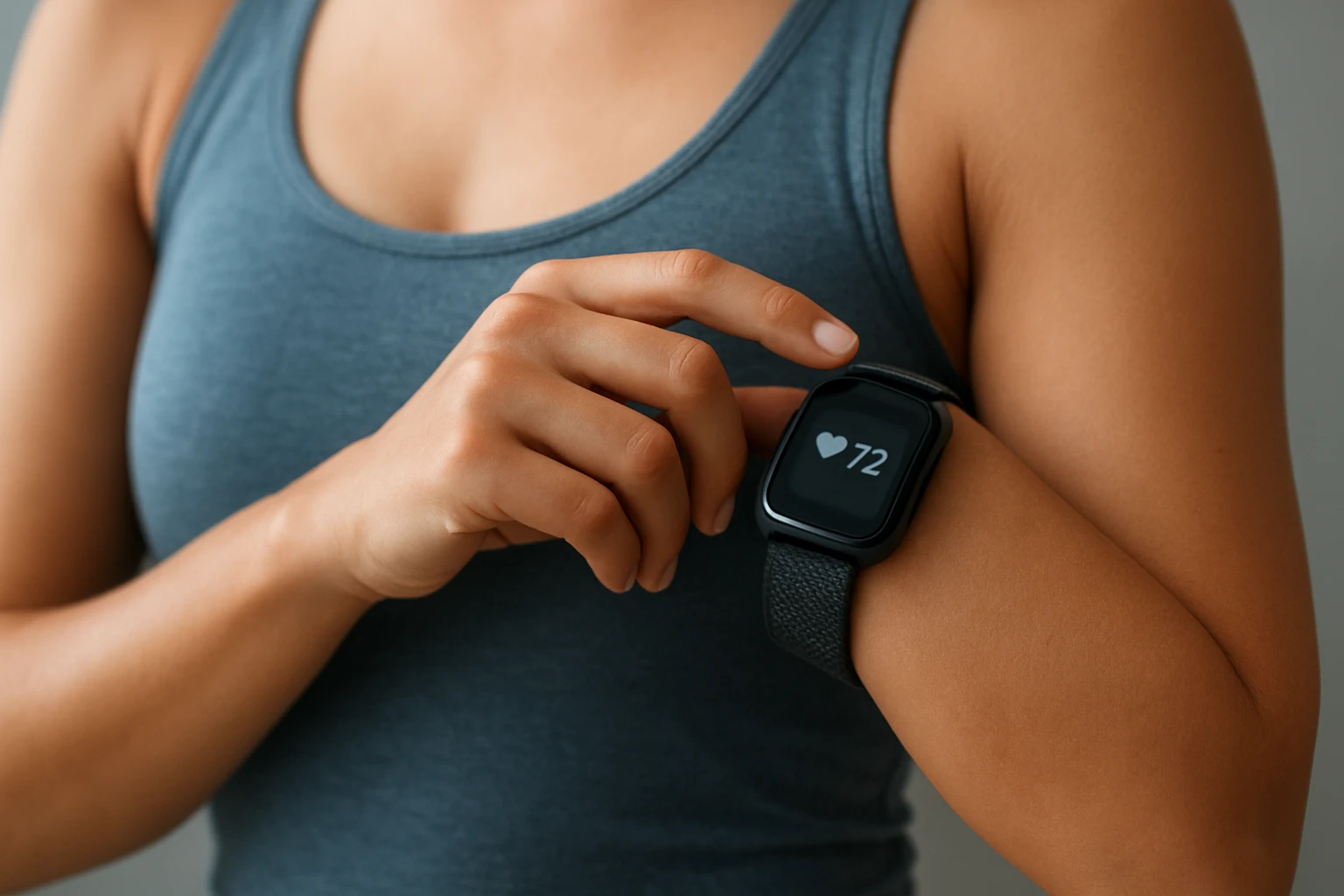
The loop starts with a sensor. Cleveland Clinic says providers use noninvasive monitoring equipment and instruments to measure involuntary functions during biofeedback sessions. Consumer wearables do a lighter version of the same job. Depending on the device, that sensor may sit on your wrist, head, waist, chest, or another contact point.
That’s why the product types look so different. Amazon’s results include pressure biofeedback devices for home use, joint and posture stabilizers, and EEG neurofeedback headbands. Different body signals require different hardware. A low-back pressure tool is built for movement control. An EEG-style headband is built for brainwave-related feedback. A breathing trainer is built to guide respiratory rhythm.
Feedback turns data into action
Here’s where raw data becomes training. Mendi describes biofeedback as working through real-time feedback after a device collects physiological data. The software or device turns your signal into something actionable: a moving breathing pacer, a tone, a vibration, a color shift, a live score that changes as you calm down or tense up.
This matters more than flashy charts. You don’t learn much from a complicated dashboard if you can’t connect it to a specific action. Good feedback answers one question fast: “What should I do right now?” Slow the breath. Relax the shoulders. Adjust your pelvis. Ease the grip in your jaw. Hold steadier pressure. Now the signal changes, and your brain connects cause and effect.
The device is the mirror; the skill is yours.
Why practice matters
Cleveland Clinic makes the part I care about most very clear: with education and practice, people can learn to make bodily changes without equipment. That’s the real win. The wearable is not supposed to become your permanent life support. It’s supposed to teach you what your body feels like before, during, and after a shift.
I’ve watched this click for people in ordinary moments, not dramatic ones. A person notices their breathing go shallow before a hard phone call and resets it without opening an app. Another feels their low back stiffen in the car and adjusts posture before the ache turns into an evening problem. That’s practice paying rent.
Best practices for getting results
Match the tool to the goal
This is where a lot of people save themselves money. Mendi’s 2025 guide says biofeedback devices can be designed for different objectives, including reducing stress, enhancing focus, and promoting relaxation. It also lists devices such as the Mendi headband, Muse headband, and RESPaRATE device. Those examples are useful because they show how targeted this category really is.
If your issue is bedtime stress, a breathing-focused tool may fit better than a posture device. If your problem is desk-triggered low-back tension, a pressure stabilizer makes more sense than an EEG headband. Match the signal to the problem first. Brand names come second.
| Your Goal | Signal to Train | Better-Fit Device Type | Poor Match |
|---|---|---|---|
| Calm down before sleep | Breathing, heart rate | Breathing trainer or live pacing wearable | Low-back pressure tool |
| Reduce desk-related back strain | Posture, pressure, muscle control | Pressure biofeedback or posture cue | Meditation-only headband |
| Practice focus or meditation | Neurofeedback-related signal | EEG-style headband | Posture stabilizer |
| Spot recovery patterns | Stress and sleep trends | Wearable with clear daily guidance | Device with no feedback loop |
Build a short daily routine
The best routine is the one you’ll still do on a Wednesday when work is annoying and your phone won’t stop buzzing. Keep it small. Five minutes in the morning. Three minutes before bed. Two posture resets before lunch. That’s enough to start. I’d rather see you do four consistent minutes than chase a perfect 30-minute ritual twice a month.
- Pick one symptom that bugs you most.
- Choose one signal that matches it.
- Practice one response at the same time each day.
- Track one real-world result: pain flare, sleep onset, jaw tension, or stress rebound.
If you’re not changing behavior from the data, you’re just collecting numbers.
Use it alongside other care
Cleveland Clinic says healthcare providers don’t use biofeedback as a standalone approach. That’s worth repeating because it keeps expectations sane. Biofeedback can be part of the plan — alongside physical therapy, a sleep routine, counseling, movement, pain care, or medical treatment — without pretending to replace all of it.
If you have chest pain, severe insomnia, fainting, new neurological symptoms, or pain that keeps escalating, get medical guidance. If you’re recovering from an injury, bring the device into that bigger plan. The wearable should support good care, not distract you from it.
Common mistakes that make wearable biofeedback feel useless
Chasing too many outcomes at once
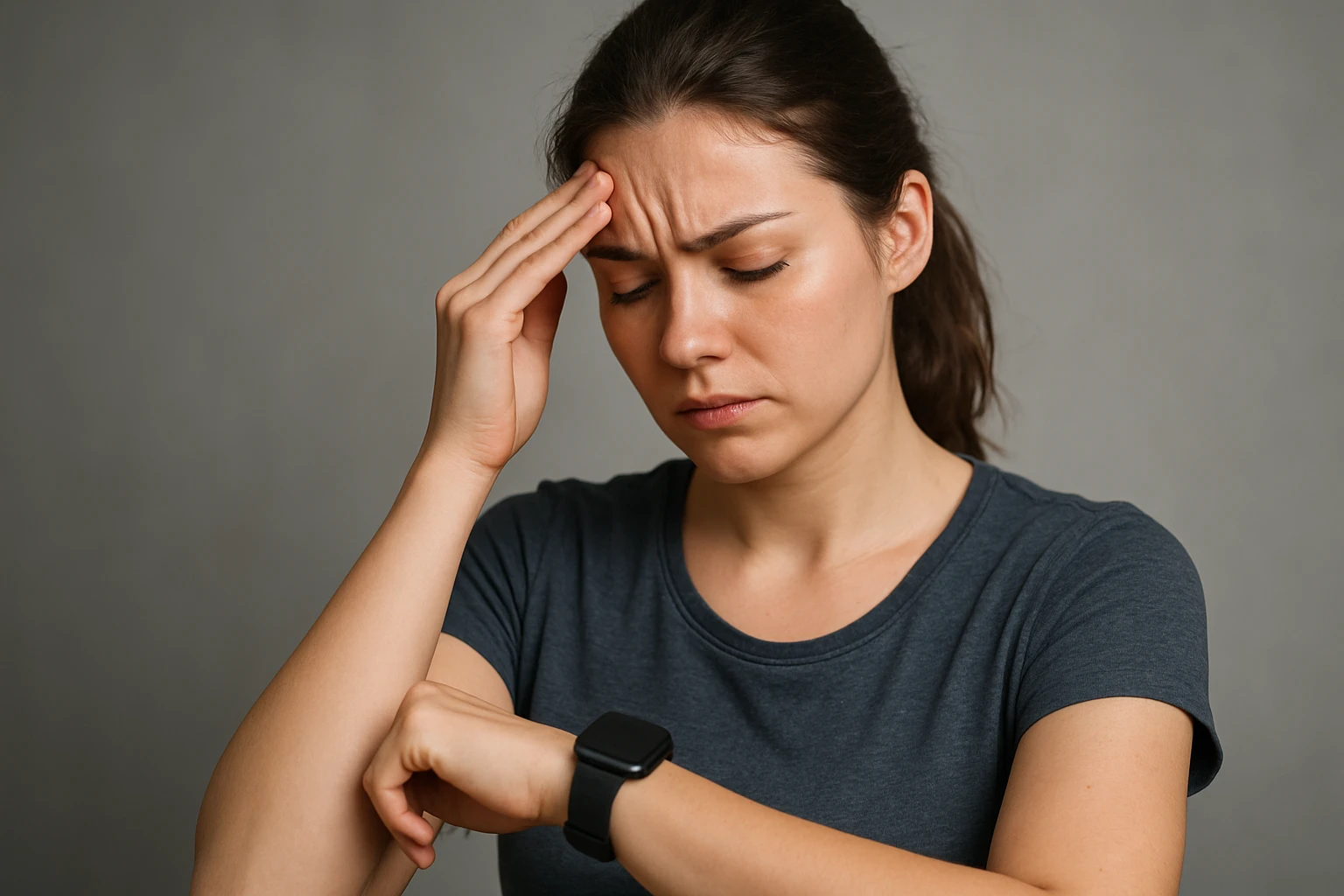
This is the classic trap. You want less stress, better sleep, better focus, less pain, better posture, and maybe transcendent inner peace by Friday. So you buy the device that seems to promise all of it. Then nothing sticks because your practice is scattered.
Amazon’s product mix tells the story: pressure biofeedback devices, EEG neurofeedback headbands, posture-focused stabilizers, and breathing trainers all sit under the same broad label. But they target different mechanisms. One tool can absolutely help more than one outcome. Still, if you don’t name the main target first, you’ll spend your time bouncing between features instead of training a skill.
Different signals solve different problems; a breathing tool won’t replace a posture tool, and neither replaces sleep habits.
Confusing comfort with accuracy
Comfort matters. If a device feels awful, you won’t wear it. But comfort alone doesn’t make a device effective. I’ve seen people fall in love with a sleek band that produced such vague feedback they couldn’t tell what changed or why. Nice hardware. Weak learning loop.
The 2018 Frontiers in Physiology review took a critical look at consumer wearables and apps for biofeedback, stress, and sleep monitoring. “Critical” is the right word. Consumer devices vary wildly. Ask whether the signal is stable, the feedback is immediate, and the app actually teaches you something useful. If it just hands you a mysterious score, you may end up guessing.
Expecting instant relief
Cleveland Clinic says learning to change bodily functions takes education and practice. Mendi frames biofeedback as training your body to respond differently to stimuli. Both points matter because they push back on the fantasy of one session fixing everything. You might feel better after the first try. Great. But lasting change usually comes from repetition.
Look for early signs that are humble but real: your shoulders drop faster, your breath steadies sooner, your mind stops chasing every spike on the screen, or you wake at 2 a.m. and settle back down instead of spiraling. Those are training effects. They build.
Tools and resources: how to evaluate a device before you buy
Signal type and intended use
Start with the simplest question: what signal does this device actually measure, and what problem is it meant to help? Amazon’s categories show how mixed this market is — pressure biofeedback devices, EEG neurofeedback headbands, breathing-focused tools, and more. Mendi’s own roundup also includes different types of devices, from headbands to breathing devices like RESPaRATE. That variety is a clue, not a problem.
If you’re comparing everyday wearables with newer systems that read biosignals and trigger a therapeutic response, hold them all to the same standard. What is being sensed? What does the feedback ask you to do? How would you know it’s helping in daily life? If you can’t answer those three questions, keep shopping.
App quality and feedback clarity
A great device with a clumsy app is like a good car with a broken steering wheel. You need clear, timely feedback. Not six menus. Not an avalanche of charts. Real-time cues beat passive summaries when you’re trying to learn a response.
Before you buy, ask yourself whether you’d actually use the interface at 6:30 a.m. or 10:45 p.m. when you’re tired. Can you see live changes? Can you log what you felt? Does it make the next action obvious? If the software creates friction, consistency usually dies first.
Evidence and expert guidance
I like a simple evidence-first filter. The 2018 Frontiers in Physiology review tells us consumer wearables for biofeedback, stress, and sleep are worth taking seriously — but also worth examining carefully. Cleveland Clinic reminds us that biofeedback is taught and practiced, often with guidance. Put those together and you get a practical buyer mindset: respect the field, and question the gadget.
| Question to Ask | Why It Matters | Good Sign |
|---|---|---|
| What body signal is measured? | You can’t train what isn’t clearly defined. | The signal is named and tied to a specific use. |
| Is the feedback real time? | Biofeedback depends on immediate learning. | The app or device responds while you practice. |
| What outcome is it built for? | Stress, posture, pain, sleep, and focus need different tools. | The device has a narrow, believable purpose. |
| Can I practice without it later? | Skill transfer is the whole point. | The company talks about training, not dependency. |
| Is there any research or expert input? | Quality varies across consumer wearables. | Claims are specific and not drenched in hype. |
| Will I actually use it? | Consistency beats novelty every time. | The setup is short, clear, and realistic. |
Choose the smallest device that measures the signal you actually need.
If you want one final gut-check, borrow a trick I use before buying any health tech: finish this sentence in plain language. “I want this device because it will help me notice this signal and practice this response so I can improve this one problem.” If you can finish that sentence, you’re close. If you can’t, you’re probably still browsing, not deciding.
Wearable biofeedback for wellness works best when you treat it like skill-building, not wishful shopping.
Pick one issue, track one signal, practice one response, and judge progress by real-world change: less pain at your desk, a steadier wind-down at night, fewer moments where stress hijacks the whole evening.
If you started this week, which signal would you want to understand first — breath, heart rate, muscle tension, or sleep?
Find Your Next Step With Anywhere Healing
Frequana, Alpha Wearable, and Charisma Ring pair biosensors with precise frequencies to help ease pain, calm stress, improve sleep, and support natural recovery without drugs.
See Options


