

How 432 Hz Music for Sleep and Wearable Frequency Devices Can Transform Your Nightly Rest
Let’s be real: great sleep feels like a superpower you forgot you had. If you’ve been hunting for a simple, natural way to quiet your mind and relax your body, 432 hz music for sleep plus smart wearable frequency support might be the most effortless combo you try this year. Picture an evening where the noise of the day fades and your nervous system finally exhales. Sounds nice, right?
I first gave 432 Hz (hertz) a fair shot during a season of frequent 3 a.m. wakeups. I paired a mellow 432 Hz (hertz) playlist with a wearable frequency device that could read my biosignals and deliver gentle, targeted support. Within a week, I wasn’t clock-watching in the dark anymore. Was it magic? No. But it felt like my whole system found a calmer rhythm that made drifting off and staying asleep far easier.
According to national sleep surveys, roughly 1 in 3 adults report not getting enough sleep, and stress remains a top culprit. When natural cellular frequencies get out of tune, the body can slide toward pain, anxious loops, and restless nights. That’s exactly the problem Anywhere Healing focuses on solving with precise, non-invasive tools designed to help your body remember how good balance feels.
#1 What 432 Hz (hertz) Actually Is, and Why Tuning Matters
Think of 432 Hz (hertz) as a tuning choice for music, much like choosing your bike gear for a specific hill. Most modern music is tuned to 440 Hz (hertz). The 432 Hz (hertz) tuning slightly shifts pitch across instruments, which some listeners describe as warmer, rounder, and more grounded. Whether that response is biological, psychological, or both, the felt difference during wind-down time can be meaningful for many people.
Why it matters at bedtime: the sound environment can nudge your nervous system toward calm just as a dim lamp signals your eyes to soften. The gentler character of 432 Hz (hertz) can reduce perceived sharpness or tension in sound, which may help you release the day faster. For sensitive sleepers, subtle details like tuning and tempo can change the whole feel of a room.
Quick example: play a 432 Hz (hertz) piano piece at low volume for 15 minutes while breathing slowly. Notice how your shoulders, jaw, and breath respond. If you sense more ease, you’ve just found an entry ramp to better sleep.
| Tuning | Typical Use | Listener Reports | Good For |
|---|---|---|---|
| 432 Hz (hertz) | Ambient, piano, acoustic | Warm, natural, less edgy | Wind-down, pre-sleep calm |
| 440 Hz (hertz) | Most modern music | Bright, precise, familiar | Daytime focus, driving |
| 528 Hz (hertz) | Meditation tracks | Lifting mood, centering | Late afternoon reset |
#2 Why “432 hz music for sleep” Feels Naturally Calming
What it is: a sleep-specific use of 432 Hz (hertz) tracks, often instrumental and slow, to support your relaxation response. Many of these tracks hover around 60 to 80 BPM (beats per minute), a tempo range that can mirror a resting pulse and gently entrain your breath. Add soft dynamics and long decays, and you get sound that practically asks your body to soften.
Watch This Helpful Video
To help you better understand 432 hz music for sleep, we've included this informative video from PowerThoughts Meditation Club. It provides valuable insights and visual demonstrations that complement the written content.
Why it matters: calm auditory input can reduce arousal in the CNS (central nervous system), helping you transition from alert beta brain states toward calmer alpha and theta patterns. Studies on music and sleep quality show consistent benefits for sleep onset latency and subjective sleep quality, especially when people listen 20 to 45 minutes before bed. Even better, when you repeat the same cues nightly, your brain learns to associate those sounds with shutdown mode.
Quick example: make a three-song queue at 432 Hz (hertz) that always plays in the same order. Sit or lie down, lengthen your exhales, and keep volume low enough that conversation would be difficult. Consistency is the secret sauce.
#3 Pair Sound with Smart Wearables for a One-Two Sleep Boost
What it is: a synergy play. Anywhere Healing’s wearable frequency therapy devices combine advanced biosensors that read your body’s signals with precise frequency delivery. When your cellular communication gets noisy or out of sync, the wearables can nudge it back toward balance while your 432 Hz (hertz) playlist invites your mind to relax.
Why it matters: sound alone is great, but adding a device that adapts to you creates a feedback loop. If your HRV (heart rate variability) or tension suggests stress, the wearable can deliver frequency support that promotes healthy circulation, detoxification, and a calmer autonomic tone. While the device assists the body’s internal harmony, the music makes the external environment conducive to letting go.
Quick example: start your 432 Hz (hertz) mix, then wear your device during a 15-minute legs-up-the-wall pose or gentle stretch session. Many people report quicker relaxation, fewer aches, and a smoother glide into sleep after the lights go out.
#4 Build a Wind-Down Ritual That Actually Sticks
What it is: a short, repeatable sequence that shifts your brain from task mode to sleep mode. Rituals prime expectation, and expectation shapes physiology. The combo of consistent timing, calming sound, and precise wearable support creates a reliable runway to bed, even on chaotic days.
Why it matters: the average adult spends hours exposed to bright screens, alerts, and EMF (electromagnetic field) noise. A ritual counters that stimulation by narrowing focus and dialing down inputs. The Anywhere Healing approach is non-invasive and drug-free, making it easy to use every single night without side effects getting in the way of your consistency.
Quick example routine, 20 minutes total:
- Minutes 0-5: Dim lights, put phone on Do Not Disturb, start 432 Hz (hertz) playlist.
- Minutes 5-10: Wear your device and breathe 4 seconds in, 6 seconds out.
- Minutes 10-15: Gentle neck and hip stretches; sip warm herbal tea.
- Minutes 15-20: Journal three wins, then lights off, keep music barely audible.
#5 Ease Discomfort to Fall Asleep Faster
What it is: targeted frequency support to reduce pain signals and muscular guarding that often flare at night. When natural cellular frequencies are disrupted, pain can amplify and linger. The right frequencies aim to re-establish smoother signaling and promote healthy local circulation so tissues can settle.
Why it matters: a knot in your back or a throbbing calf routinely delays sleep onset. Anywhere Healing’s wearables are designed to support the body’s own recovery processes by enhancing cellular communication and immune resilience. At the same time, a low, steady 432 Hz (hertz) background can mask minor environmental noises and keep your breath calmly paced.
Quick example: place the wearable near the area of discomfort for 15 to 30 minutes before bed, then switch to a general relaxation setting. As you lie down, let a slow 432 Hz (hertz) piano loop play for two or three tracks.
#6 Meet the Devices: Frequana, Alpha Wearable, and Charisma Ring
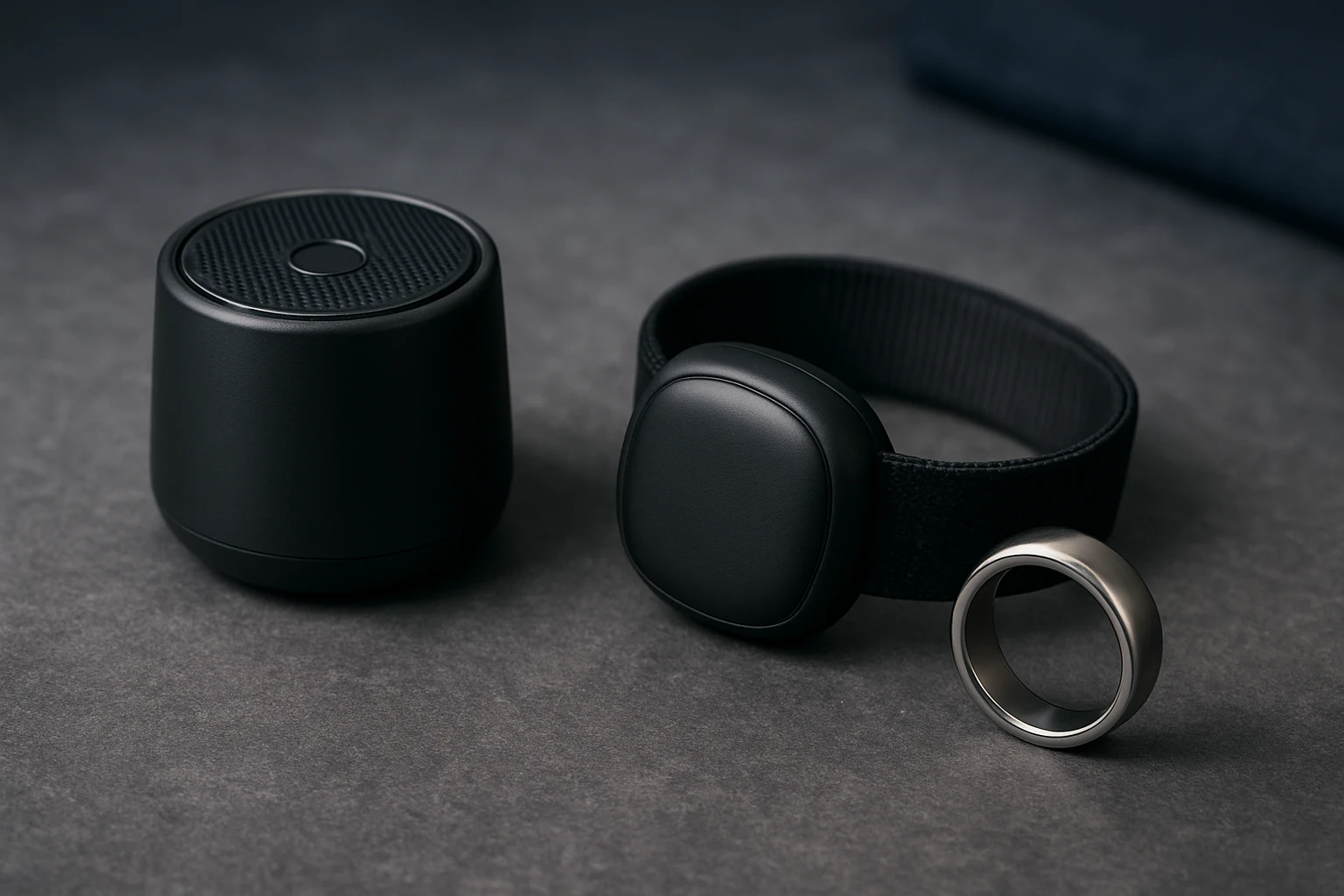
What it is: three Anywhere Healing options that approach nighttime balance from slightly different angles. All are non-invasive and drug-free, and all use advanced biosensors to read your signals and deliver precise frequency support. Pick based on where you want the biggest boost: general sleep, stress relief, or targeted body areas.
Why it matters: personalization increases follow-through. A ring might be perfect for all-night ease, while a band you place near your shoulder could help with evening muscle tension. By matching the device to your sleep bottleneck, you shave minutes off bedtime and improve sleep continuity.
| Device | Best For | Key Features | Night Use Tip |
|---|---|---|---|
| Frequana | Whole-body balance and sleep onset | Advanced biosensors, adaptive frequency delivery, supports healthy circulation | Run 20 minutes pre-bed with 432 Hz (hertz) music to prime relaxation |
| Alpha Wearable | Stress relief and nervous system downshift | Focuses on calming autonomic tone, non-invasive and drug-free | Pair with slow breathing to ease rumination and mental chatter |
| Charisma Ring | All-night gentle support and sleep continuity | Comfortable overnight wear, enhances cellular communication | Wear through the night with low-volume 432 Hz (hertz) tracks for the first 30 minutes |
Quick example: if your challenge is stress at lights-out, choose Alpha Wearable, run a calming sequence, and play 432 Hz (hertz) ambient guitar for 15 minutes. If pain flares after workouts, try Frequana near the sore area pre-bed, then slip on Charisma Ring overnight for seamless support.
#7 Make Your Bedroom Soundscape Work For You
What it is: a deliberate mix of quiet, low-frequency sound and just enough masking to keep small noises from waking you up. 432 Hz (hertz) tracks layered under a soft fan or a low white-noise bed can be surprisingly effective, especially for light sleepers or city dwellers.
Why it matters: brief awakenings are normal, but full arousals that kick your brain into alert mode are costly. A stable sound bed reduces salience of random noises like a car door or a neighbor’s footsteps. When you add music that gently guides breath and pace, you increase the chance that micro-wakes stay micro.
Quick example: set your smart speaker to play a 432 Hz (hertz) mix at volume 2 of 10, with a brown-noise bed at volume 1. Keep the playlist under an hour and let the noise scene run through the night.
#8 Track What Changes So You Can Tweak Intelligently
What it is: a feedback loop using sleep diaries and simple metrics like time-to-sleep, number of awakenings, and morning energy. If you wear a sleep tracker, watch trends in HRV (heart rate variability), deep sleep estimates, and resting heart rate. Look for two-week patterns more than single nights.
Why it matters: progress loves data. When you can see that your time-to-sleep dropped by five minutes or your HRV (heart rate variability) trended up, your motivation to keep the ritual grows. Anywhere Healing devices provide a second layer of real-time adaptation by reading biosignals and adjusting frequency delivery to support your target outcomes.
Quick example: log three data points nightly for two weeks: bedtime routine start time, estimated minutes to fall asleep, and wake-ups. Adjust music length or wearable placement based on your notes, then check for improvements in week two.
#9 Calm Stress and Rumination Before They Hijack the Night
What it is: proactive downshifting of the stress response with soothing audio and supportive frequencies that promote a parasympathetic tilt. Gentle 432 Hz (hertz) sound and targeted wearable support can encourage vagal tone, slow breathing, and a quieter mind at lights-out.
Why it matters: stress is the number one saboteur of sleep for many working adults. According to public health data, chronic stress affects both sleep duration and sleep quality across age groups. By addressing the stress load directly with non-invasive tools, you avoid chasing symptoms and instead guide the system back toward balance.
Quick example: if your mind spins at bedtime, set a 10-minute audio timer. Breathe 4 in, 6 out while wearing your device on a relaxation setting. Tell yourself, This is my practice time, not thinking time, and let the music carry your focus.
#10 Travel, Jet Lag, and Sleeping Well Anywhere
What it is: a portable system that makes unfamiliar rooms feel familiar fast. Your 432 Hz (hertz) playlist plus a compact wearable creates continuity even when your schedule or time zone is off. Repetition tells your brain, We know this routine, we can rest now.
Why it matters: travel sleep problems often come from novelty and timing mismatches. A stable wind-down sequence and frequency support help regulate your circadian cues and reduce discomfort from long sitting, which can stiffen muscles and disrupt circulation. With simple tweaks, you can shorten the adjustment window by a day or more.
Quick example: on a red-eye, use your wearable for a pre-sleep sequence 30 minutes before you plan to doze. In the hotel, dim lights, start the familiar 432 Hz (hertz) queue, and keep the same breathing pattern you use at home.
How to Choose the Right Option
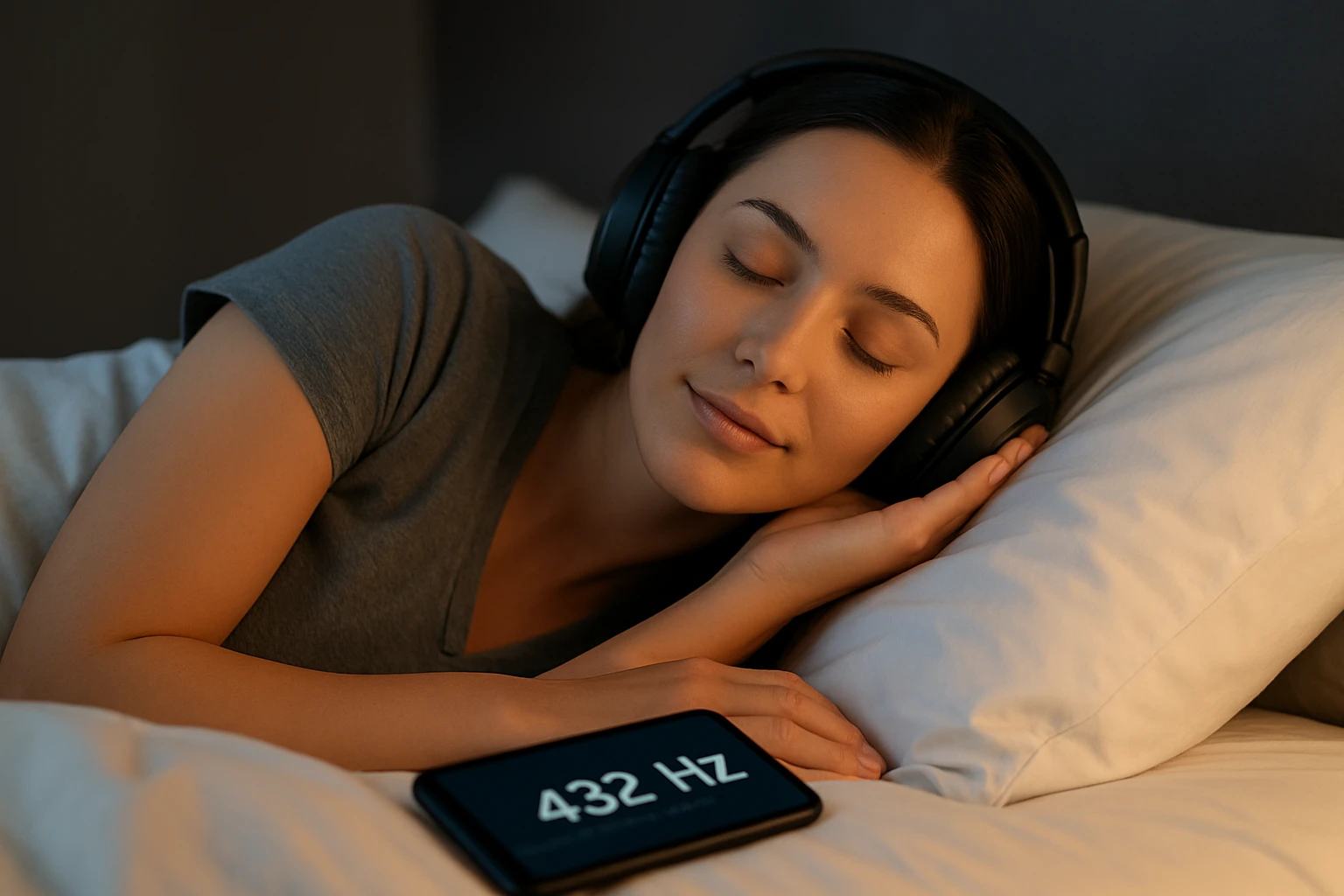
If you love simplicity, start with a short 432 Hz (hertz) playlist and add a wearable only after a week of consistency. If pain or nightly tension is your main blocker, begin with Frequana for pre-bed relief, then layer in music. If stress or racing thoughts dominate, lean toward Alpha Wearable plus a 20-minute audio window.
Decision framework:
- Main issue is pain or soreness: Frequana pre-bed, 432 Hz (hertz) tracks for 15 minutes.
- Main issue is stress or rumination: Alpha Wearable, slow-breathing drill, and 20 minutes of calming 432 Hz (hertz) ambient music.
- Main issue is staying asleep: Charisma Ring overnight with a brief 432 Hz (hertz) warm-up at lights-out.
- Data lover: journal metrics and adjust placement, volume, and timing every 7 to 14 days.
Expert Tips and Best Practices
Keep volume just above the threshold of audibility; too loud increases arousal. Aim for a consistent bedtime and start the ritual at the same clock time each night. If you use headphones, choose comfortable over-ear designs with low clamping force, and always test a short session first. Remember, these tools are supportive wellness approaches and not substitutes for medical care; talk with your clinician if you have conditions that affect sleep or if you use implanted electronics.
For a mental picture, imagine a gentle waveform decaying into quiet instead of a jagged sawtooth. That’s how your bedroom should feel. Pair that vibe with Anywhere Healing’s advanced biosensors and precise frequency delivery, and you create a repeatable, science-aligned environment that supports healthy circulation, detoxification, and the calm communication your cells are built for.
Research Snapshot and Real-World Results
Various studies report that pre-sleep music routines can reduce sleep onset time and improve perceived sleep quality, with benefits building over several weeks. Public health organizations note that adults who regularly wind down before bed enjoy better sleep than those who do not. In the real world, users often describe fewer nighttime awakenings and easier mornings when combining 432 Hz (hertz) playlists with adaptive wearables that respond to their body’s signals.
Anywhere Healing positions itself at the intersection of comfort and precision. When natural cellular frequencies become disrupted, the result can be pain, stress, poor sleep, and other health imbalances. Anywhere Healing’s wearable devices use biosensors to detect and correct these disrupted frequencies, helping the body initiate its natural recovery processes for improved well-being. That alignment is why pairing the devices with calming audio can feel exponential rather than additive.
Comparison: Sound-Only vs Sound Plus Wearable
| Approach | What You Do | Pros | Considerations |
|---|---|---|---|
| 432 Hz (hertz) Music Only | Play a calming playlist 20 to 45 minutes before bed | Simple, low cost, easy habit | Might not address pain or stubborn stress patterns |
| Music + Anywhere Healing Wearable | Combine playlist with adaptive frequency support | Targets disrupted cellular frequencies, supports circulation and relaxation | Requires choosing the right device and routine |
In short: both help, but together they can cover more bases. If you’ve tried music alone without consistent results, the adaptive layer a wearable brings may be the missing link that helps your system truly settle.
Conclusion
Sound tuned to feel soothing and frequency support tuned to your body can transform the way you fall asleep and stay asleep.
Imagine the next 12 months where your wind-down routine is second nature, discomfort quiets quickly, and you wake with a clear, steady mind. With a few smart tweaks, your nights can feel unhurried and deeply restorative. What would change in your days if 432 hz music for sleep and precise, non-invasive support became your most reliable evening ritual?
Elevate 432 Hz Sleep Nights with Anywhere Healing
Experience precise frequency delivery to reduce pain, improve sleep, and restore balance as wearables read biosignals and guide natural recovery for individuals seeking non-invasive, drug-free support.
Sleep Better Tonight


