

How 432 Hz Approaches and Wearable Technology Can Transform Your Wellness
Let’s be real: when you first hear about 432 Hz healing and wearable tech, it can sound either delightfully mystical or way-too-technical. That’s exactly why a clear, practical checklist matters. Instead of getting lost in theories about 432 Hz (Hertz) resonance or the promise of the latest gadget, you’ll take simple, measurable steps that help you feel better day by day. When your plan is organized, your progress is trackable, and your tools are tailored, the whole process becomes less about guesswork and more about results.
Here’s the bigger point: when natural cellular frequencies drift from their optimal patterns, your body often tells you with stress or lousy sleep. I’ve been there—tossing in bed at 2 a.m., wishing I could flip a switch to quiet the static in my system. That’s where Anywhere Healing comes in with a non-invasive, drug-free approach. Their wearables read your biosignals with advanced sensors and deliver adaptive, targeted frequencies designed to support balance, improve sleep, and support recovery—so you can spend less time troubleshooting and more time living.
Pre-work Checklist
Set yourself up for a win before you even press Start. This preparation phase is where momentum begins, because clarity multiplies results and protects your time. Think of it like tuning a guitar before you play; even the most beautiful 432 Hz (Hertz) note will sound off if the strings are loose. As you get oriented, you’ll define a personal baseline, choose the right wearable for your goals, and lay down a simple environment for consistent sessions. A little structure makes it easier to notice the small improvements—like that first morning you wake up refreshed instead of reaching for coffee on autopilot. Plus, when you pair intention with data, you can pivot fast if something isn’t working. In other words, you won’t just hope the frequencies help; you’ll know whether they’re helping, where they’re helping, and how to steadily dial in more of what works for your uniquely wired body.
- Clarify your goal. Decide whether your primary target is improved sleep, stress reduction, deeper recovery, or overall vitality. Rank them and write a one-sentence intention you can revisit daily.
- Record a baseline. Use a 0-10 Numeric Rating Scale (NRS) for discomfort, a quick sleep diary, and morning Heart Rate Variability (HRV) from a wearable you already use, if available—HRV derivation and availability depend on device and firmware.
- Choose the right Anywhere Healing wearable. Match form factor and features to your goal and lifestyle.
- Plan your schedule. Block 15-30 minute sessions. For sleep support, aim evenings; for focus and calm, try mid-morning or early afternoon.
- Prepare your space. Hydrate, silence notifications, dim harsh lights at night, and sit or lie comfortably. Minimize interruptions during sessions—silence notifications or use Do Not Disturb to avoid distractions.
- Set intensity expectations. Begin with conservative session lengths and gentle settings. If you have implanted medical devices or complex conditions, check with your clinician first.
- Pick your markers of success. Choose two to three consistent measures you’ll track weekly: discomfort NRS, sleep quality, resting heart rate, HRV (if available), morning energy, or mood.
| Device | Form Factor | Sensor Highlights | Primary Targets | Typical Placement | Good Fit For |
|---|---|---|---|---|---|
| Frequana | Wristband | Advanced biosensors that read the body’s signals: skin conductance, temperature, motion | Stress relief, circulation, daytime resets | Wrist or forearm | Active days, quick resets between meetings, travel |
| Alpha Wearable | Band or clip | Advanced biosensors that read the body’s signals: heart rhythm proxy, motion, thermal trends | Calm, focus, sleep readiness | Upper arm, waistband, or clipped near torso | Work sessions, pre-sleep wind-down |
| Charisma Ring | Ring | Advanced biosensors that read the body’s signals: micro-movement, skin temperature | Stress relief, social ease, light sleep support | Finger | All-day wear, subtle support in social settings |
Why invest in these early steps? Because about one in three adults report insufficient sleep each night, and roughly one in five live with persistent discomfort, according to public health summaries. In parallel, around a third of adults in many countries now use some sort of wearable—proof that people are hungry for data they can act on. With Anywhere Healing’s biosensor-guided approach, you can turn those numbers into a personal roadmap, starting from where you are to where you want to feel. And when the plan is specific, your mind relaxes and your body can follow.
Execution Checklist: Put 432 Hz Approaches Into Daily Action
Now comes the fun part: turning theory into daily practice you actually look forward to. Some people love using audio tuned to 432 Hz (Hertz) for relaxation, while others respond best to gentle, precise vibrational or microcurrent-style frequency delivery through wearables. You don’t need to pick sides; you can layer approaches. Anywhere Healing devices use an emitted frequency library and adaptive delivery rather than advertising a single fixed 432 Hz output. Their wearables sense your current state and then deliver targeted frequencies that support balance, circulation, and nervous system ease. Think of it as a friendly nudge that helps your body remember its own rhythm. Start simple, stay consistent, and let your biosignals guide refinements. This isn’t a one-shot miracle; it is a steady conversation with your biology. With each session, you’re teaching your system a calmer baseline so daily stressors feel more like ripples than waves.
Watch This Helpful Video
To help you better understand tesla 432 hz healing, we've included this informative video from Sub Bass Meditation Music - Relaxing Music. It provides valuable insights and visual demonstrations that complement the written content.
- Calibrate first. Wear the device for a few minutes so the biosensors can read your body’s signals before starting a session.
- Match frequency mode to your goal. For winding down, pick calming patterns; for focus, choose steadying, alert-yet-calm support. If you enjoy audio, add a 432 Hz (Hertz) playlist at comfortable volume—no need to blast it.
- Run 15-30 minute sessions. For sleep prep, finish at least 30 minutes before lights out; for midday stress, stack two short sessions separated by a movement break.
- Breathe with intent. Pair slow nasal breathing, 4 seconds in and 6 seconds out, to cue the vagus nerve and amplify frequency effects.
- Hydrate and mineralize. A glass of water with a pinch of electrolytes can help conductivity and comfort during sessions.
- Place smartly. For headaches or jaw tension, try closer to the forearm or upper arm; for general calm, wrist or torso placements are reliable options.
- Stack gentle movement. Between back-to-back sessions, add two minutes of easy mobility to support circulation and detoxification pathways.
- Keep evenings screen-tame. Blue-light reduction and dimmer rooms help your nervous system receive the “it’s safe to rest” signal the practices are sending.
- Log short notes. Jot three words after each session—mood, body, clarity—so trends leap off the page at weekly review.
| Time | Goal | Suggested Approach | Why It Helps |
|---|---|---|---|
| Morning | Steady focus | 15 minutes with calm-alert program; light stretching | Sets a balanced tone, reduces scattered energy early |
| Midday | Stress reset | 10-15 minutes; optional 432 Hz (Hertz) audio at low volume | Interrupts stress accumulation and smooths the afternoon |
| Evening | Sleep readiness | 20-30 minutes soothing program; dim lights; screen-light minimized | Helps the nervous system shift into rest-and-repair mode |
Need a real-world picture? A coaching client of mine—let’s call her Maya—stacked a 10-minute afternoon Frequana session with slow breathing and a 20-minute Alpha Wearable wind-down before bed. Within two weeks, her sleep diary showed 45 more minutes of nightly sleep on average and fewer 3 a.m. wake-ups. Results vary, of course, but her story reminds us that small, repeatable steps beat heroic marathons. You don’t have to change everything; you just need a practice that you’ll actually keep.
Validation Checklist

Validation is your truth serum. We all get placebo bumps and off days; that’s normal. But with a handful of simple metrics and a weekly review, you’ll see whether 432 Hz practices and biosensor-guided frequencies are moving the needle in your real life. This is where Anywhere Healing shines: the devices read your signals and respond, and you watch how your markers shift over time. You don’t need a lab to test what matters. With a discomfort rating, a couple of sleep indicators, and a stress proxy like HRV (if available), you’ll have enough to make smart tweaks. Over two to four weeks, a pattern emerges—more stable mornings, fewer flares, or a deeper sense of calm you can feel in your bones. That’s the signal to double down on what works.
- Track discomfort with NRS (Numeric Rating Scale) 0-10, once daily at a consistent time.
- Log sleep with a quick entry: bedtime, estimated total sleep time (TST [total sleep time]), number of awakenings, and how refreshed you feel on waking.
- Capture HRV (heart rate variability) or resting heart rate most mornings if your device provides it; higher HRV often correlates with better stress resilience.
- Note subjective calm and clarity after sessions with three descriptive words to spot patterns quickly.
- Compare week-over-week, not day-over-day. Look for 10-20 percent changes as early signals of improvement.
- Adjust dosage. If groggy, shorten evening sessions; if wired, move stimulating sessions earlier and elongate the wind-down routine.
| Marker | How to Capture | Target Trend in 2-4 Weeks | Notes |
|---|---|---|---|
| Discomfort (NRS [Numeric Rating Scale] 0-10) | Daily check-in at same hour | Down 1-3 points | Expect day-to-day noise; focus on weekly averages |
| Sleep quality | Diary: TST (total sleep time), awakenings | +30-60 minutes TST; fewer awakenings | Pair with light hygiene and consistent bedtime |
| HRV (heart rate variability) | Morning measure via wearable (if available) | Gradual uptick | Higher HRV often links to resilience and recovery |
| Mood/Calm | Three descriptive words post-session | Fewer “tense” entries; more “clear, grounded” | Subjective but highly actionable trendline |
Want context for what’s reasonable? Across public sources, about 20 percent of adults report chronic discomfort and about 33 percent struggle with insufficient sleep. Meanwhile, evidence around bioelectromagnetic approaches and sound-based relaxation suggests potential benefits for stress and perceived discomfort in some users, though outcomes vary person to person. The takeaway is simple: measure what matters to you, give it two to four weeks, and let both your numbers and your lived experience guide the next iteration. If the data and your body agree, you’re on the right track.
Common Misses
Most stumbles are fixable, and often they’re surprisingly small. People crank audio way too loud thinking louder equals faster, or they bounce between protocols without giving their nervous system time to learn a new rhythm. Others skip hydration, skimp on sleep hygiene, or forget to capture a baseline—so they can’t tell if a change actually helped. I’ve made all these mistakes, by the way. The antidote is to slow down, do less, and aim for better signals, not bigger volume. Anywhere Healing’s edge is precision: advanced biosensors that read the body’s signals, paired with targeted, non-invasive delivery. When you let that precision do its job and keep your routine steady, good things tend to compound.
- Don’t chase instant miracles. Look for small, steady improvements over weeks, not hours.
- Don’t skip hydration or minerals. Conductivity and comfort often improve with better hydration.
- Don’t max volume on 432 Hz (Hertz) audio. Gentle volume plus consistent practice beats loud-and-rarely.
- Don’t ignore placement. Move the wearable closer to the area of concern or keep it central for whole-body calm.
- Don’t stack five new protocols at once. Change one variable per week so you can see what actually works.
- Don’t neglect light hygiene. Screens late at night can overpower even a great evening session.
- Don’t forgo a baseline. Without before numbers, your brain will second-guess the after.
- Don’t forget lifestyle anchors. Movement, nutrition, and connection amplify frequency benefits.
| Challenge | Likely Cause | Try This |
|---|---|---|
| Groggy in the morning | Evening session too stimulating or too late | Finish sessions 60 minutes before bed; lower intensity; shorten by 5-10 minutes |
| No change in discomfort after 2 weeks | Session length or placement not optimal | Add 5 minutes; move device closer to affected area; track timing vs. symptom flares |
| Afternoon slump persists | Skipped midday reset; hydration low | Insert a 10-minute session; drink water with electrolytes; add a 2-minute mobility burst |
| Difficulty falling asleep | Blue light or late caffeine overshadowing progress | Enable blue-light filters; avoid caffeine past noon; keep bedroom cool and dark |
Validation Extras: Evidence Snapshot and Safe Practice
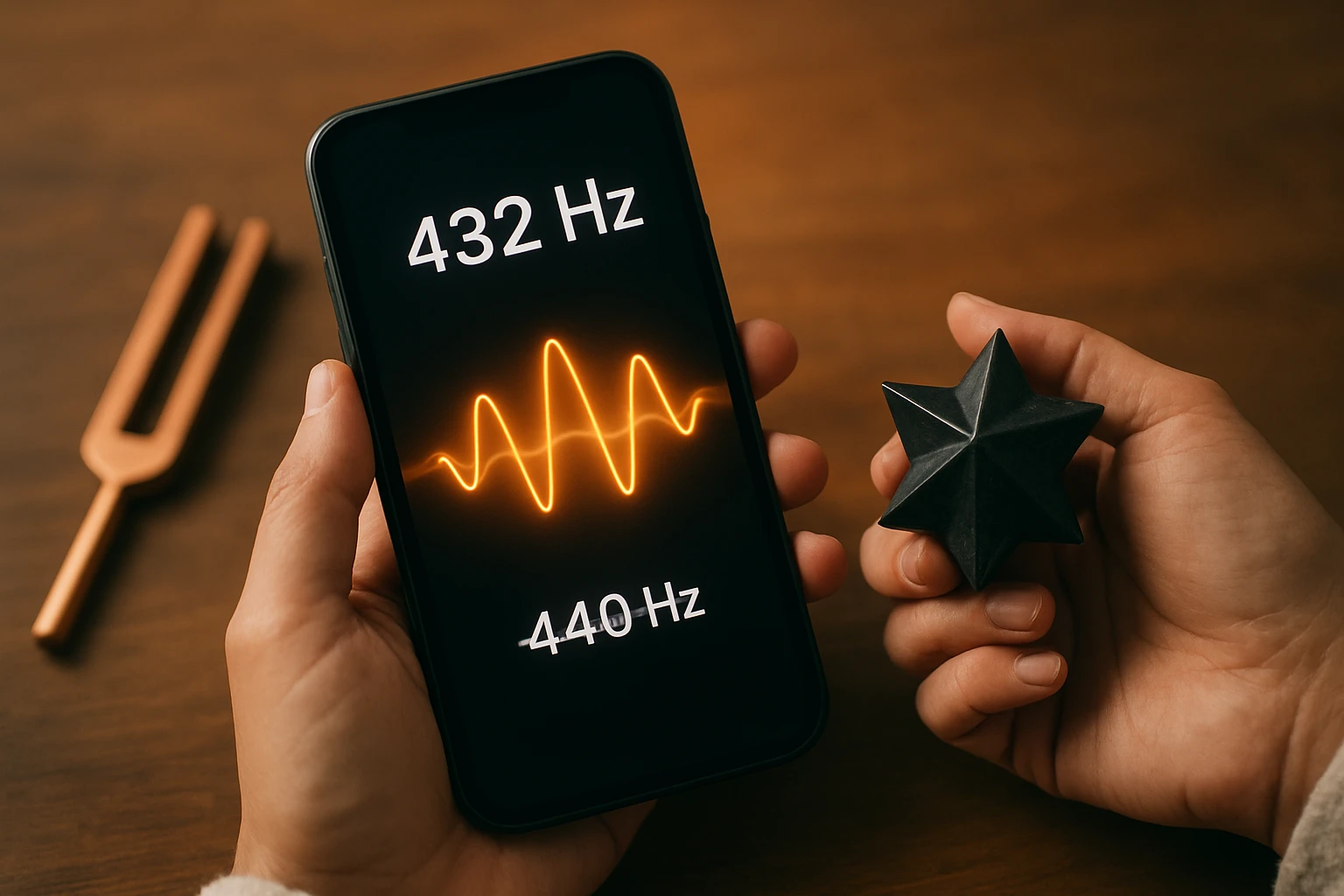
Curious how this fits with broader wellness science? While debates around 432 Hz (Hertz) and tuning will likely continue, there’s a growing body of research showing that calming auditory inputs and low-intensity, non-invasive field or microcurrent-style approaches can support relaxation and perceived symptom relief in some users. Meanwhile, higher HRV (heart rate variability) is broadly associated with better stress resilience, and consistent routines often beat sporadic heroic efforts. Your best strategy is still the same: test what’s safe and reasonable, measure honestly, and keep what works. Anywhere Healing’s wearable lineup was built for this measured, everyday approach—advanced biosensors to detect your state, precise delivery to support it, multiple form factors to meet your lifestyle, and a focus on circulation, detoxification support, cellular communication, and immune resilience. With that toolkit, you’re set to iterate responsibly and confidently.
| Topic | Practical Guidance |
|---|---|
| Session length | Start at 10-15 minutes; increase slowly as comfort allows |
| Audio volume | Keep 432 Hz (Hertz) audio at a comfortable, low-to-moderate level |
| Hydration | Drink water before and after; consider light electrolytes if appropriate |
| Medical devices | Consult your clinician if you have implanted devices or complex medical needs |
| Consistency | Favor daily or near-daily practice over infrequent long sessions |
Remember, when natural cellular frequencies become disrupted, your body may respond with tension, discomfort, and restless nights. Anywhere Healing’s non-invasive, drug-free wearables are designed to read your biosignals and deliver precise supportive frequencies that help you move back toward balance. You don’t need to become a frequency expert—you just need a simple plan you’ll keep.
Conclusion
Here’s the promise: a steady, grounded routine that uses biosensor-guided frequencies to support better sleep, reduce stress, and bring your system back into rhythm. In the next 12 months, imagine your nights feeling longer, your mornings lighter, and your afternoons steadier—because you built a daily practice that your biology recognizes and trusts. So, what would shift in your life if 432 Hz approaches and targeted wearables turned your best days from rare to repeatable?
Amplify 432 Hz-Inspired Practices with Anywhere Healing
Anywhere Healing’s wearables use advanced biosensors that read the body’s signals to support adaptive frequency practices, helping your body begin natural recovery, improve sleep, and find balance.
Start Healing Now


