

Biosensor Wearable That Reads Body Signals: Real-World Protocols to Reduce Pain, Improve Sleep, and Reset Cellular Rhythm
You clip on the sensor before breakfast, sit still for a minute, and notice the numbers change long before your pain, stress, or sleep routine does. Your back still feels stiff. Your eyes still feel gritty from a broken night. But a biosensor wearable that reads body signals is already picking up a shift you cannot feel yet.
That early glimpse is useful. It is also where people get sloppy. I have watched smart, motivated adults turn a good device into a vague wellness trinket by tracking everything at once, changing three habits on the same Tuesday, and calling one weird spike a breakthrough. If you want less pain, steadier sleep, and a calmer daily rhythm, you need repeatability more than excitement.
Before you start: make the plan about one body signal, not everything at once
Name one outcome first: pain, sleep, stress, or recovery
Watch This Helpful Video
To help you better understand biosensor wearable that reads body signals, we've included this informative video from Bloomberg News. It provides valuable insights and visual demonstrations that complement the written content.
Start narrow. Pick one outcome you actually care about this month. Not your whole life. Not “better wellness.” Pick one lane: lower shoulder pain after work, fewer 3 a.m. wakeups, less afternoon stress, or faster recovery after walks.
Why so strict? Because one outcome gives your sessions a job. If your goal is sleep, your notes should care about bedtime, alcohol, late screens, and waking. If your goal is pain, your notes should care about stiffness, flare timing, and what your body felt like after a 20-minute grocery run. Different problem, different labels.
If you cannot name the symptom you want to change, you do not yet have a protocol.
Separate raw body signals from the story you tell about them
A raw signal is just a signal. Your interpretation comes later. That distinction matters more than most people realize.
Say your reading looks worse at 8:12 a.m. Was that “bad recovery”? Maybe. Or maybe you sprinted upstairs because the kettle was screaming, drank coffee on an empty stomach, or answered a tense Slack message from a client in Chicago. The signal is real. The story needs context.
That is one reason sensor platforms can get complicated fast. A wellness wearable, for example, may combine physiological trends, movement, and user notes into a broader picture. Helpful? Yes. Magical? No. Multiple streams mean you need better labeling, not more guesswork.
Treat the wearable as a feedback tool, not a diagnosis
Your wearable can help you learn. It can help you notice trends. It can help you connect a rough night, a hard workout, or a calmer breathing session with what your body does next. Wellness platforms that read biosignals can also support learning about stress, sleep, exercise, and recovery with labeled data. That phrasing matters. Labeled data. Not a verdict.
I like to say it this way: the device is a mirror, not a judge. If you use it as a mirror, you can make better decisions. If you use it as a diagnosis machine, you will overread normal fluctuations and scare yourself for no reason.
Pre-work checklist for a biosensor wearable that reads body signals
Choose one primary metric and one backup note field
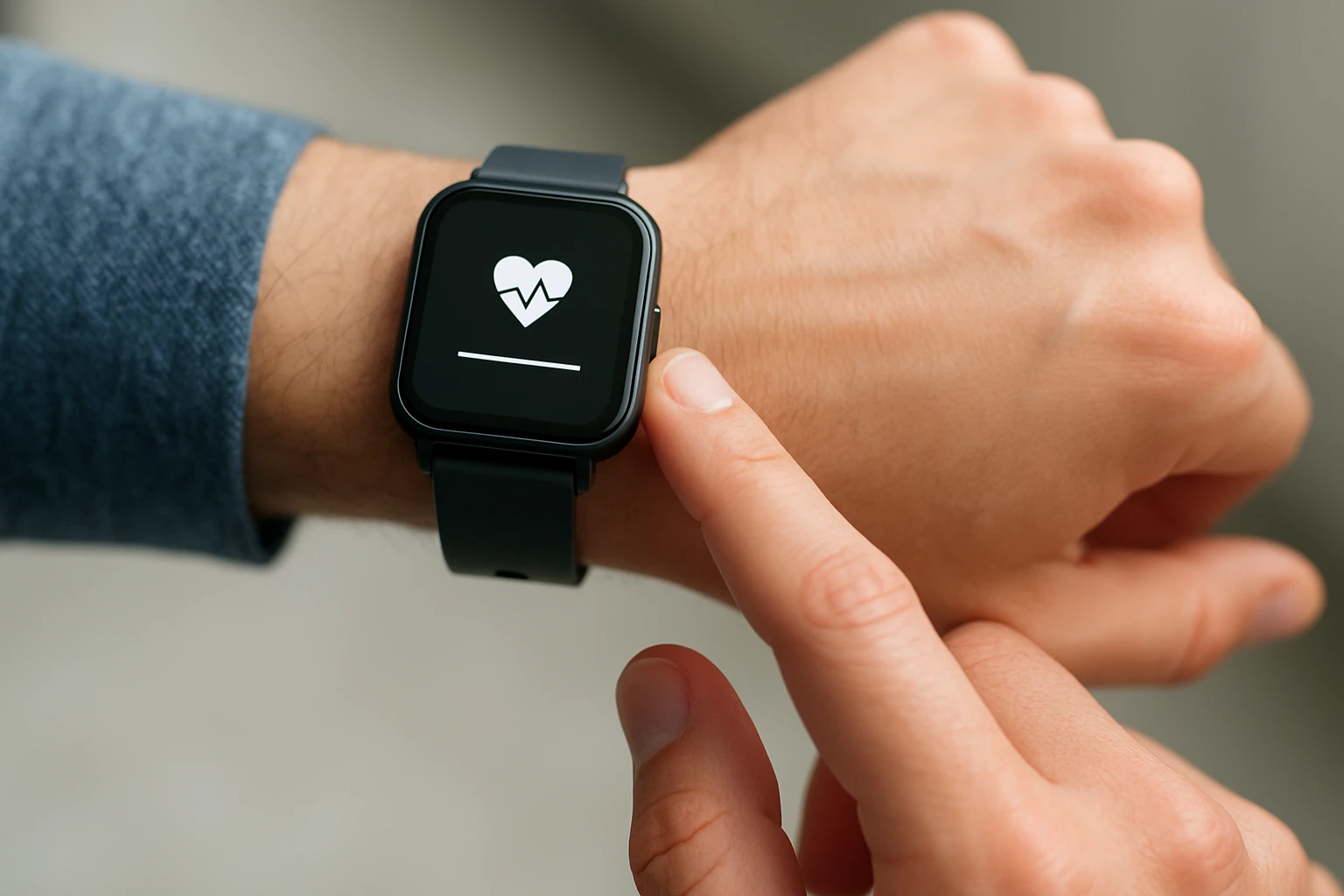
Keep the capture simple enough that you will still do it on day six. Pick one primary metric from your device — the main recovery, regulation, or stress-related number or trend it shows you — and one backup note field written in plain language.
If you like data, this will feel almost too simple. Good. Simple travels. Complicated dies by Thursday.
| Outcome | Primary Metric | Backup Note Field | Example Label |
|---|---|---|---|
| Pain | Your device’s same-time morning regulation trend | Pain score from 0-10 | “Low-back stiffness after gardening” |
| Sleep | Overnight recovery or first-morning calm trend | Lights-out time | “Screen time until 11:40 p.m.” |
| Stress | One-minute seated resting reading | Caffeine since waking | “Double espresso at 7:15 a.m.” |
| Recovery | Post-walk settling pattern at a fixed time | Yesterday’s effort | “35-minute hill walk” |
Some systems make this easier than others. A wellness wearable may stream data wirelessly to an app or record directly for later review, and it may emphasize user control over the data it collects. That is great if you love flexibility. It is terrible if flexibility becomes an excuse to change your process every morning.
Record a baseline under the same conditions for several days
Give yourself a baseline before you try to “fix” anything. Several days is the minimum. Personally, I like five mornings because it usually catches one bad night, one normal night, and a couple of boring middle days. Boring is useful. Boring shows your default.
Do not add a new supplement on day one. Do not start cold plunges on day two. Do not switch mattresses on day three and then wonder what caused the change. Let the sensor meet your normal life first.
No baseline means no before-and-after; you only have a number.
Standardize time, posture, and location before each session
Consistency beats intensity here. Body-signal tracking works best when the conditions stay steady across sessions. Same time. Same chair. Same posture. Same room, if you can manage it.
- Measure at the same window each day — say 6:45 to 7:00 a.m.
- Sit or stand the same way each time.
- Keep your feet, hands, and breathing routine consistent.
- Take the reading before coffee, emails, and doomscrolling if your goal is a calm baseline.
- Check fit, battery, and skin contact before you start.
I had one client years ago who swore her readings were “all over the place.” They were. She was also taking half of them in bed, half in the kitchen, and one memorable set while talking to her sister on speakerphone. Clean the setup first. Then judge the signal.
Execution checklist: run the same capture routine every day
Collect data at the same time each day
Pick the window and protect it. Daily routine beats heroic effort. A one-minute session at 7 a.m. for 10 days is more revealing than four random 15-minute sessions scattered across the week.
This matters because wearable systems can capture more than one kind of information at once. If you drift from a quiet 7 a.m. reading to a post-lunch hallway reading at 1:30 p.m., you are no longer comparing like with like.
Think of your session like brushing your teeth. Same place. Same order. Very little drama.
Log what happened right before the reading
Always write down what happened in the 15 to 60 minutes before capture. Keep it short. One line is enough.
- “Coffee 20 minutes ago”
- “Woke twice at 2:10 and 4:30”
- “Walked upstairs fast”
- “Did 5 minutes of slow breathing”
- “Argument with partner before session”
That note field is where the signal becomes useful. A live streaming graph looks impressive on a phone screen, and direct recording is handy if you want to review later, but context is what lets you make sense of either one. Without labels, Tuesday and Thursday blur together.
Change only one wellness variable at a time
This is the rule people hate — and the one that saves the most frustration. If you want to test a bedtime shift, test that first. If you want to test breathwork, keep bedtime and caffeine steady. If you want to test a wearable session meant to support balance and recovery, keep the rest of the routine as unchanged as possible.
Change one variable at a time, or you will not know what actually helped.
I have seen people start magnesium, blackout curtains, a new stretching app, and earlier dinners in the same week, then point to one great Friday morning like they cracked the code. They did not. They created a mystery.
If you are using a system with customizable hardware or software, resist the urge to keep tinkering while you are also testing behavior. Stable routine first. Tweaks later.
Validation checklist: confirm the signal matches how you feel
Compare daily sensor trends with symptom notes
Once you have several days of consistent sessions, compare the trend line with how you actually felt. Not just the best day. Not just the worst day. Look at the whole run.
Ask blunt questions. Did calmer readings show up on the same mornings you reported less neck pain? Did rougher overnight patterns line up with nights you drank wine at 9 p.m.? Did your post-walk readings settle faster on days after gentler exercise? That is where the practice becomes useful.
| What You See | What It Might Mean | What To Do Next |
|---|---|---|
| One dramatic spike on a single day | Possible noise, unusual movement, or one-off stressor | Check your note and wait for repeats |
| Three to five similar shifts under the same conditions | A pattern worth testing further | Keep the routine steady for another week |
| Signal improves but symptoms do not | Interesting data, but not a meaningful outcome yet | Revisit labels, routine, and symptom definition |
| Symptoms improve but signal stays flat | Your chosen metric may not be the right one | Keep the outcome, change the metric only after baseline |
Look for patterns across several days, not one session
A useful protocol changes trends over time, not just one impressive night. That line saves a lot of false hope.
A useful protocol changes trends over time, not just one impressive night.
I usually want to see repetition before I trust a conclusion. Two similar readings are interesting. Four or five under the same conditions get my attention. Seven days tells a better story than one flashy screenshot sent at 6:58 a.m. with three exclamation points.
This is also where labeled data helps. Wearables can support labeled data collection for research and personal tracking, but labels only matter if you keep using them. “Felt wired after late workout” is better than “bad day.” Specific wins.
Decide when the data is only informative and when to seek medical input
Even strong sensing does not replace clinical diagnosis. Wearables are monitoring tools. They help you observe. They do not rule conditions in or out.
If your symptoms are severe, new, or worsening — chest pain, fainting, major shortness of breath, rapidly escalating insomnia, or pain that does not make sense to you — stop playing detective and talk to a clinician. Bring your notes. A simple seven-day log is far more useful in a medical visit than a vague sentence like “my numbers looked weird.”
And yes, this applies even if you are using a polished consumer system designed to read biosignals and respond to them. Better tools deserve better judgment.
Common misses: avoid the mistakes that distort the data
Do not track too many metrics at once
If your morning session produces six charts, three indexes, and a color score, pick the one that best matches your goal and ignore the rest for now. More dashboards do not make you more informed. They just make you busier.
I see this all the time with curious, capable people. They start with stress, then add sleep, recovery, mood, movement, hydration, and evening screen time. By day four they have a gorgeous spreadsheet and no idea what changed their headache.
Do not confuse movement artifacts with body signals
Movement noise is sneaky. A sensor may distinguish among emotional, physiological, and movement data, but that does not mean you can ignore motion when you interpret the reading. Shift in the chair, tighten the strap, scratch your wrist, pace the room — the trace changes.
If the sensor cannot stay steady, the data will not stay steady.
Environmental noise matters too. A reading taken in a busy room with bright light, notifications buzzing, and a dog barking at the mail truck is not the same as one taken in a quiet corner at 6:50 a.m. You do not need a laboratory. You do need fewer surprises.
Do not ignore fit, skin contact, and battery routine
Bad fit ruins good intentions. If the sensor slides, lifts, or loses clean contact with your skin, your workflow starts lying to you. Add a low battery, a Bluetooth hiccup, or a rushed app sync, and your “body data” becomes a setup problem.
This is where device workflow choices matter. Some platforms emphasize open connectivity and cross-platform visualization, which is handy if you like options. It also means your logging, syncing, export, and review process can become part of the measurement problem if you keep changing it.
| Common Miss | What It Looks Like | Simple Fix |
|---|---|---|
| Too many metrics | Endless charts, no clear decision | Choose one primary metric for two weeks |
| Movement artifact | Jagged readings during fidgeting or walking | Repeat the session while fully still |
| Poor sensor fit | Inconsistent contact and strange drops | Adjust placement before every session |
| Battery or sync drift | Missed sessions, partial logs, broken comparisons | Charge nightly and review data the same way daily |
My own rule is boring and effective: charge at night, place the sensor in the same spot, sit in the same chair, and write one honest line before you look for meaning. That little ritual prevents a lot of self-inflicted confusion.
Clean inputs create useful trends. When you narrow the goal, hold the setup steady, and label what changed, a biosensor wearable that reads body signals becomes a practical guide instead of a mystery box.
Start with one symptom, one session, and one week of honest notes. What might you notice if you stopped guessing and watched the same signal under the same conditions for seven days?
Anywhere Healing for Clearer Body-Signal Recovery
Anywhere Healing combines advanced wellness biosensors that read the body’s signals with precise frequency support to ease pain, calm stress, improve sleep, and restore balance without drugs.
Explore Relief


