

Is Spectrum Mobil E Affecting Your Wearable Healing Device? How Mobile Spectrum Impacts Biosensor Accuracy
You place the wearable on your wrist, set your phone beside the bed, and notice the readings change every time the screen lights up. Tap the display once — the number shifts. Tap it again — it shifts again. At 10:47 p.m., half tired and more than a little annoyed, you start wondering whether spectrum mobil e is interfering with the device or whether your sleepy brain is seeing a pattern that is not really there.
I get why this feels slippery. If you search for help, the current results are mostly telecom and retail pages, not biosensor guidance, and the Spectrum.net excerpts in the scrape were gated by disabled cookies and JavaScript. That means you can waste 20 minutes reading about phone plans when what you actually need is a simple, repeatable way to separate wireless noise from setup mistakes, bad contact, or a shaky baseline.
Why this matters before you blame the wearable
Name the symptom you’re actually seeing
Start with the plainest version of the problem. Not “the device is off.” Not “something feels weird.” Write what changed, when it changed, and what was happening around it.
- Write the exact reading or behavior you saw.
- Note the trigger you suspect — phone screen wake, call, charger, Bluetooth earbuds, or moving the phone from the dresser to the nightstand.
- Record timing in minutes or seconds if you can.
A useful note looks like this: “At minute 4 of a 12-minute session, the reading jumped when the phone screen lit up 12 inches from my wrist.” A useless note looks like this: “It acted wrong again.” Those are very different starting points.
Separate signal problems from fit and motion problems
Before you chase phone spectrum, ask an annoying but necessary question: did the reading also change when you rolled over, flexed your wrist, adjusted the strap, or got a little sweaty? Motion and poor contact affect a lot of wearables. A loose strap, dry winter skin, or lotion residue can make a device look unstable even when the phone has nothing to do with it.
| What you see | What to suspect first | First check |
|---|---|---|
| Reading changes when the phone lights up | Possible proximity effect or session artifact | Repeat with the phone 6 to 10 feet away |
| Reading changes when you move or roll over | Motion or loose fit | Repeat seated and still |
| Reading drifts the whole session | Baseline, contact, or battery issue | Clean skin, reset fit, log battery state |
If you can’t reproduce the problem, you can’t diagnose it.
I have seen people blame “interference” when the real culprit was a strap one notch too loose. I have also seen the opposite — a phone placed right next to the wrist did line up with changes. The point is not to guess. The point is to separate the suspects.
Set one baseline you can repeat later
Pick one calm session that you can do again tomorrow and next Tuesday. Same wrist. Same strap tension. Same chair. Same time block if possible. Ten or 15 minutes is plenty for a home test. You are not building an FCC lab in your bedroom — you are creating a repeatable baseline that makes comparison possible.
- Sit still for 2 to 3 minutes before you start.
- Use the same body position each time.
- Keep the phone in one defined spot for the baseline, such as across the room on a dresser.
- Use a paper notebook or one note on your phone after the session ends.
That last part matters more than it sounds. A list is useful any time several variables can affect the same reading at once, and wearables are exactly that kind of situation.
Pre-work: strip the environment down before a spectrum mobil e test
Move obvious wireless sources out of the test zone
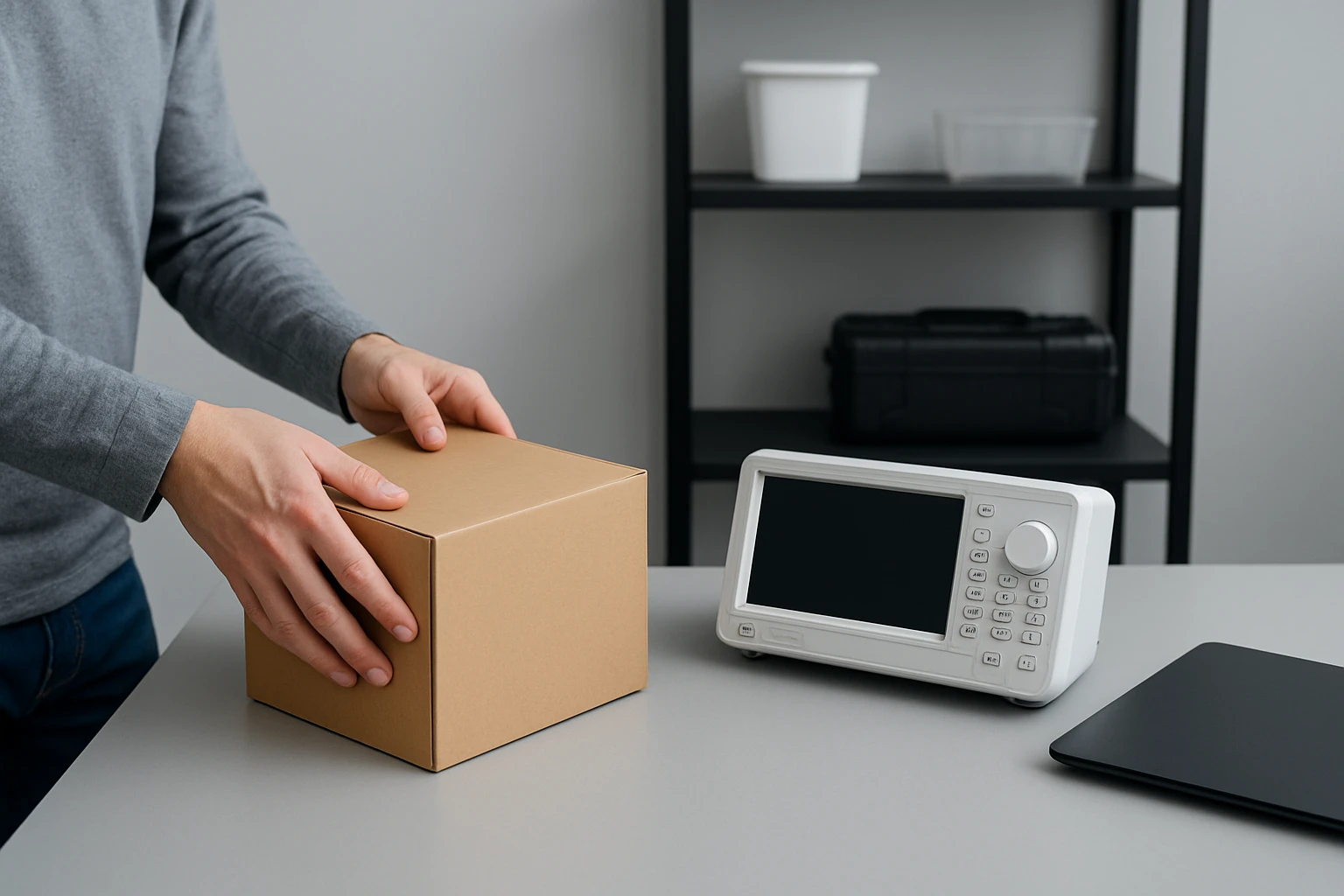
Now clear the deck. If you are testing whether nearby mobile activity changes the wearable, do not leave three other wireless devices humming next to it. Move the obvious culprits first: your phone, Wi-Fi router if practical, Bluetooth headphones, smart speaker, tablet, smartwatch charger, and anything else that pings or connects in the background.
- Put the phone several feet away unless it is the variable you are actively testing.
- Turn off Bluetooth accessories you do not need.
- Move charging docks and extra wearables off the bedside table.
- If a router or smart hub cannot move, leave it where it is and note that in your log.
Change only one thing per test run.
That rule saves you from fooling yourself. If you move the phone, switch wrists, tighten the band, and change session length all at once, you learn exactly nothing. I still use painter’s tape to mark a phone position on a desk when I want a clean comparison. Cheap trick. Works every time.
Match posture, placement, and session length
Do not run the first session sitting upright at a kitchen table and the second half reclined in bed with your elbow tucked under a pillow. Keep posture, device placement, and session length boringly consistent. Boring is good here.
- Use the same wrist or finger for each run.
- Set the strap or ring fit the same way every time.
- Pick one session length — 10 minutes, 12 minutes, 15 minutes — and stick to it.
- Keep your arm supported if that helps you stay still.
Even a small posture change can alter contact and pressure. If your forearm is floating in one run and resting on the mattress in the next, you have introduced a variable. That is how a simple bedtime test turns into a mess.
Write down the starting conditions before each run
A clean baseline only works when the starting conditions are documented the same way each time. You do not need a spreadsheet worthy of NASA. A short run log is enough, but it has to be consistent.
- Date and time.
- Phone distance and whether airplane mode is on.
- Wearable battery status and whether anything is charging nearby.
- Posture, wrist or finger used, and strap tightness.
- Room notes such as fan on, router nearby, or Bluetooth off.
- Any symptom you already notice before starting — stress, pain, restlessness, tingling, or nothing at all.
On my own bench tests, a yellow legal pad beats a fancy app because it stops me from improvising. Write first. Interpret later.
Execution: run the same session two ways
Run a near-field test with the phone close by
First, test the thing you actually suspect. Put the phone where it normally lives during use — maybe 12 inches from your wrist on the nightstand, maybe in a hoodie pocket, maybe right next to the pillow. If the screen waking seems to be the trigger, wake it at the same point in the session each time, such as minute 3 and minute 8.
- Sit or lie in your chosen position for 2 to 3 minutes.
- Start the wearable session.
- Place the phone in the near position.
- If relevant, wake the screen at preset times.
- Write down any reading change, lag, or odd behavior right away.
Keep this run simple. Do not text, doomscroll, or answer a call halfway through unless that is part of what you are testing. A clean near-field run tells you more than a “normal life” run full of random interruptions.
Run a control test with the phone farther away or in airplane mode
Next, create a control. Move the phone several feet away — across the room is great — or switch it to airplane mode for a separate run. Same wearable. Same body position. Same session length. Same time of night if you can manage it.
- Use the same phone if possible.
- Keep the room and routine unchanged.
- Do not add a charger in one run but not the other.
- If you want extra clarity, test both “far away” and “airplane mode” on different runs.
A good test has a control, not just a suspicion.
This matters because a single weird reading means almost nothing on its own. Two otherwise identical sessions tell a much better story. If the device behaves the same with the phone beside you and 8 feet away, your answer is starting to take shape already.
Keep the routine identical across both tests
Now get strict. Use the same breathing pattern, same chair, same session time, same hydration state if you can, and the same mode on the wearable. If you are testing a device from Anywhere Healing, keep the same program or session setting across both runs. Change the phone condition, not the rest of your life.
- Do one run at 9 p.m. and the other around 9 p.m., not noon versus midnight.
- Do not eat a big snack before one run and skip food before the other.
- Keep the wearable on the same skin location.
- Use the same warm-up period before each session.
A lot of “phone interference” stories fall apart right here. The first run was quiet and focused. The second included caffeine, a Slack notification, a dog barking, and a different body position. That is not a fair test. That is Tuesday.
Validation: decide whether the difference is real
Repeat the test on separate days

Do not hang your whole answer on one Monday night. Repeat the comparison on separate days — three is a solid start for home use. Bodies are noisy. Rooms are noisy. Sleep, stress, and timing can all shift what you see from one day to the next.
- Repeat at roughly the same time of day.
- Keep the same phone positions for near and control runs.
- Use the same session length every day.
- Log anything unusual, like poor sleep, heavy exercise, or a restless evening.
Repeated observations are simply more trustworthy than one-off impressions. If a result disappears the moment you repeat it, you are probably looking at noise, not a stable effect.
Look for the same distance-related pattern each time
Do not obsess over exact numbers matching. Home testing is rarely that tidy. Look for the pattern instead. Does the reading shift only when the phone is within 12 inches? Does it settle when the phone is on a dresser 8 feet away? Does airplane mode remove the effect on two out of three nights?
| What pattern shows up | What it likely means | What to do next |
|---|---|---|
| Near-phone runs shift repeatedly, control runs stay stable | Possible proximity-related effect worth respecting | Keep the phone farther away and re-test later |
| Both near and control runs look unstable | Baseline, fit, contact, or battery issue is more likely | Rebuild the setup before blaming wireless noise |
| Only one day shows a difference | Probably noise or a confounding variable | Repeat again before changing your routine |
| No clear difference at all | Phone proximity may not be the issue | Investigate fit, app state, firmware, and contact |
If the pattern vanishes on repeat, treat it as noise until proven otherwise.
That sounds skeptical because it should. A repeatable pattern earns your attention. A dramatic one-night blip does not.
Check whether symptoms and sensor changes line up
Track two things side by side: what the wearable reports and what you actually feel. User comfort can lag behind sensor changes, and sometimes the reverse happens too. A reading shift at minute 5 does not always mean you will feel different at minute 5.
- Write down stress, pain, warmth, tingling, sleepiness, or restlessness.
- Use simple notes such as “felt calmer,” “no change,” or “more alert than expected.”
- Compare symptom notes against the reading pattern after the session, not during it.
If the sensor changes but your symptom notes never move, that is still useful information. If your sleep feels worse only on the nights the phone sits right by the pillow, that is useful too. Just do not force a story where the data does not support one.
Common misses: stop overlooking the easy culprits
Check charger noise, battery level, and cable placement
Before you call it interference, look at the plain hardware stuff. Low battery can change how devices behave. Charging accessories can muddy a session. A cable draped across the nightstand or pressed against the wearable can create a very different setup from the one you think you are testing.
- Compare runs with similar battery levels when possible.
- Do not charge the phone in one run and leave it unplugged in the next.
- Keep cables away from the wearable and note where they sit.
- Remove extra charging pucks, magnetic docks, and adapters from the test area.
Most “interference” complaints are really fit, contact, or setup problems.
That line sounds contrarian, but after enough bedside tests, it stops sounding edgy and starts sounding obvious. The easy culprits are common because they are, well, easy to miss.
Check skin contact, lotion, sweat, and strap tension
Skin contact matters more than most people expect. Lotion, sweat, dry flaky skin, or a band that is a little too loose can change contact-based readings. I see this constantly after evening skincare routines — people moisturize, put the wearable back on, and assume the odd reading must be the phone.
- Clean and dry the skin before testing.
- Wipe the sensor surface if the manufacturer allows it.
- Tighten or loosen the strap to the same comfortable point each run.
- Avoid testing right after heavy sweating if you can.
Too tight is not good either. A band that digs in can create its own problems. Aim for steady contact, not a tourniquet.
Check app updates, firmware changes, and calibration resets
Software can move your baseline without any wireless issue at all. If the app updated overnight, the firmware changed, or the device recalibrated, you may be comparing two different states of the same product. That is not a fair read on spectrum-related behavior.
- Note recent app or firmware updates.
- Check whether the device restarted, repaired, or reset.
- Follow the manufacturer’s calibration steps before testing again.
- Do not compare last week’s pre-update session with tonight’s post-update session as if nothing changed.
Sometimes the “mystery interference” begins the same day a background update rolled out. That is not glamorous, but it is real. And it is a lot easier to fix than an invisible spectrum villain.
Here’s the promise: you can separate real phone-related effects from ordinary setup noise with a repeatable home test.
Before you ditch the wearable or blame spectrum mobil e, run the same session two ways, log the starting conditions, and repeat it on a few different days. That gives you evidence instead of vibes.
When you test your own device this way, what pattern only shows up when the phone moves closer?
See Stronger Signals With Anywhere Healing
When spectrum mobil e muddies readings, Anywhere Healing uses advanced biosensors and precise frequency support to ease pain, calm stress, improve sleep, and restore balance.
Explore Healing


